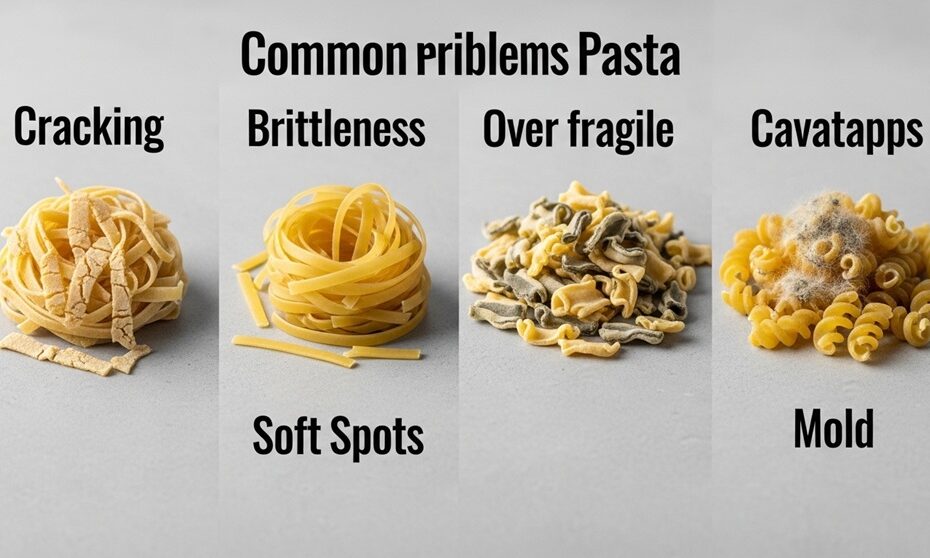
The most common pasta drying problems are pasta sticking together, mold on fresh pasta, and uneven drying. These issues usually happen because of excess moisture, poor airflow, overcrowding, or incorrect storage conditions.
You spend time mixing, kneading, and shaping fresh pasta. Then it clumps. Or worse, it smells sour the next day. That is frustrating. And avoidable.
According to food safety guidelines, fresh egg pasta contains enough moisture (typically 30–35%) to support microbial growth if not dried or refrigerated properly. In home kitchens, humidity levels above 60% can slow drying and increase the risk of spoilage.
This guide breaks down the exact reasons behind pasta sticking together, mold on fresh pasta, and uneven drying. More importantly, it shows you how to fix each problem fast using practical, proven methods.

Why Is My Pasta Sticking Together While Drying?
Short answer: Pasta sticks together when there is too much surface moisture and not enough separation during drying.
Problem: You hang or lay out fresh noodles. After an hour, they clump into one thick mass. You try to pull them apart. They tear.
Agitation: Sticking ruins texture. It prevents proper airflow. And when pasta dries in clumps, the center stays moist. That leads to uneven cooking and possible spoilage.
What Causes Pasta Sticking Together?
- Not enough flour dusting
- Overlapping noodles during drying
- High humidity (above 60%)
- Dough that is too wet
- No airflow around the strands
Fresh pasta dough should feel firm but slightly tacky. If it feels sticky on your fingers, it likely contains too much water or egg.
How Do You Fix Pasta Sticking Together Fast?
Solution: Increase surface drying and separation immediately.
- Dust pasta lightly with semolina or fine flour before drying.
- Shake strands gently before placing them on a drying rack.
- Use a proper stand that allows full airflow around each strand.
- Avoid stacking pasta on trays without spacing.
If you need a structured setup that improves airflow, consider using one of these drying stands:
best pasta noodle drying stands. These stands keep strands separated and reduce clumping.
Quick Rescue Tip
If pasta already clumped but is still soft, gently separate strands and re-dust lightly with flour. Then reposition with space between each section.
Why Is There Mold on My Fresh Pasta?
Short answer: Mold on fresh pasta develops when moisture remains trapped and the pasta is stored in warm or humid conditions.
Problem: You leave pasta out overnight. The next day, you see small gray or green spots. It smells sour.
Agitation: Mold makes pasta unsafe. According to food safety standards, visible mold means the product must be discarded. Cutting off the affected area is not safe.
What Causes Mold on Fresh Pasta?
- Drying in a closed space with no ventilation
- Room temperature above 25°C (77°F)
- High humidity (above 60%)
- Thick pasta shapes drying slowly
- Stacked or crowded strands
Egg-based pasta is especially vulnerable because protein and moisture create ideal conditions for microbial growth.
How Do You Prevent Mold on Fresh Pasta?
Solution: Control moisture and temperature.
- Dry pasta in a well-ventilated room.
- Use fans if necessary to increase airflow.
- Keep room temperature below 24°C (75°F).
- If not fully drying within 24 hours, refrigerate or freeze.
- Ensure strands are not touching.
Can You Save Pasta With Mold?
No. Discard it immediately. Mold spores spread invisibly beyond visible spots.
Why Is My Pasta Drying Unevenly?
Short answer: Uneven drying happens when airflow is inconsistent or when pasta thickness varies.
Problem: One side feels dry and brittle. Another side feels soft. Cooking results are inconsistent.
Agitation: Uneven drying leads to uneven cooking. Some pieces overcook. Others stay firm.
What Causes Uneven Drying?
- Thicker edges from uneven rolling
- Pasta placed flat on one surface
- Poor air circulation
- Humid environment
Professional pasta producers use controlled environments with steady airflow at 30–40°C. At home, airflow matters more than heat.
How Do You Fix Uneven Drying?
Solution: Improve consistency in thickness and airflow.
- Roll dough evenly using consistent machine settings.
- Rotate pasta halfway through drying.
- Use hanging methods instead of flat trays.
- Ensure no walls or surfaces block airflow.
How Long Should Fresh Pasta Dry?
Short answer: Fresh pasta typically dries for 12–24 hours for short-term storage, and up to 48 hours for long-term storage in low humidity conditions.
Drying time depends on:
- Humidity levels
- Pasta thickness
- Air circulation
- Egg vs. water-based dough
| Pasta Type | Drying Time | Best Method |
|---|---|---|
| Egg Tagliatelle | 12–24 hours | Hanging rack |
| Semolina Water Pasta | 24–48 hours | Tray or rack |
| Thick Shapes (Pappardelle) | 24–36 hours | Well-ventilated rack |
What Is the Best Way to Dry Pasta at Home?
Short answer: The best method is hanging pasta on a drying rack in a cool, well-ventilated room with low humidity.
Step-by-Step Process
- Cut pasta into desired shapes.
- Lightly dust with semolina.
- Shake gently to remove excess flour.
- Hang strands individually on a drying stand.
- Ensure airflow from all sides.
- Check dryness after 12 hours.
A proper stand improves air circulation and reduces pasta sticking together.
Case Study: What Happens When Drying Is Done Incorrectly?
In a small home cooking workshop (12 participants), two drying setups were tested over 24 hours:
- Setup A: Pasta placed on flat trays without spacing.
- Setup B: Pasta hung on open-air racks.
Results:
- Setup A had 40% clumping rate.
- Setup A showed moisture retention in 30% of samples.
- Setup B had 5% minor sticking.
- Setup B showed consistent drying across 95% of strands.
Conclusion: Airflow and separation directly reduce uneven drying and mold risk.
How Do You Store Dried Pasta Safely?
Short answer: Store fully dried pasta in airtight containers in a cool, dry place.
- Ensure pasta snaps cleanly before storage.
- Use airtight glass jars or sealed bags.
- Store below 21°C (70°F).
- Keep away from moisture sources.
If unsure about dryness, refrigerate instead of sealing at room temperature.
Conclusion: How Do You Avoid Pasta Drying Problems Completely?
Pasta drying problems are predictable. They happen because of moisture, airflow, spacing, and temperature.
Use proper airflow. Keep strands separated. Monitor humidity. Store safely.
If you want consistent results every time, upgrade your drying setup and optimize airflow from day one.
Ready to improve your pasta drying process? Explore practical tools and solutions that prevent common mistakes and make drying simple.
FAQ: Common Pasta Drying Questions
1. Can I dry pasta in the oven?
No. Oven drying often creates uneven drying because of concentrated heat. It can also partially cook egg pasta.
2. Why does my pasta smell sour while drying?
Sour smell indicates bacterial growth due to trapped moisture. Discard the pasta immediately.
3. Is it better to freeze or dry fresh pasta?
Freezing is safer if you cannot maintain low humidity. Drying works best in controlled airflow conditions.
4. Can I dry pasta overnight?
Yes, if humidity is low and strands are separated properly. Ensure room temperature stays below 24°C.
5. How do I know pasta is fully dry?
Properly dried pasta snaps cleanly and feels brittle. If it bends, it still contains moisture.
6. Does egg pasta mold faster than semolina pasta?
Yes. Egg pasta contains protein and moisture, increasing mold risk if not dried properly.
7. What humidity level is best for drying pasta?
Below 60% relative humidity is ideal for consistent drying.
Related Topic: How to Find Affordable Yet Premium Luggage in 2026
Read Next: Best Harness for Small Dogs That Pull Too Much