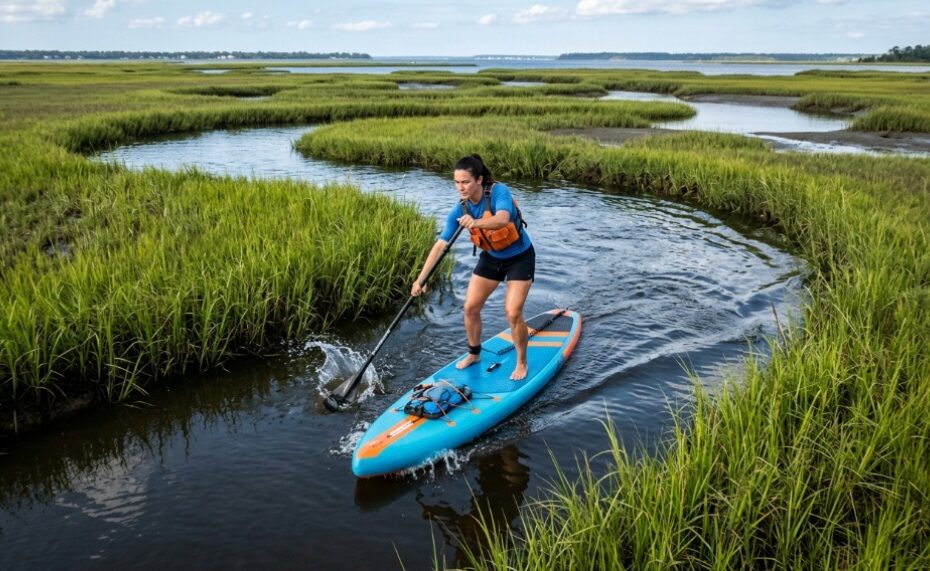
The Outer Banks look like a paddleboarder’s dream from the road — open water everywhere, calm sounds on one side, rolling surf on the other. Then you actually put in at the wrong spot and spend an hour fighting wind, dodging boat wakes, or drifting toward a bridge piling. Choosing the right launch matters more here than in most coastal areas, because conditions change dramatically from one sound to the next. Whether you’re planning a first flat-water session or looking for a new paddle boarding North Carolina route to add to your list, the locations below are organized by what they’re actually good for: beginners, wildlife, open-water distance, and surf. For a closer look at the board side of the equation, this guide to the paddle boarding North Carolina setup covers what works well in these waters.
Quick Answer
The best all-around paddleboarding spots on the Outer Banks are the Roanoke Sound near Nags Head and Kitty Hawk for beginners, Jockey’s Ridge Sound access for sunsets and easy parking, Pea Island and the Alligator River area for wildlife paddling, and Ocracoke’s sound-side flats for a quieter, more remote experience. The ocean side is only for confident paddlers on small-swell days. Wind, not distance, is the main variable that decides whether a session is enjoyable.
Key Takeaways
- Sound-side locations are almost always the safer, more enjoyable choice on the Outer Banks because they offer flat water and protection from ocean swell.
- Wind direction and tide matter more than which specific launch you pick — a good spot on a bad wind day is worse than a mediocre spot on a good one.
- The Roanoke Sound and Pamlico Sound are shallow, which means choppy, steep waves build quickly when wind opposes the current.
- Wildlife-rich areas like Pea Island and the Alligator River require extra distance planning, since there’s little shelter and few exit points.
- Summer afternoon sea breezes are reliable enough to plan around: paddle early, or paddle the sheltered shoreline later.
Why the Sound Side Usually Wins on the Outer Banks
Direct answer: the sound side offers flat, shallow water with predictable wind-driven chop, while the ocean side offers surf, shore break, and currents that demand real ocean experience. For the vast majority of paddlers, the sounds are where you’ll spend your time.
The Outer Banks separates two very different bodies of water. The Atlantic side faces open ocean swell. The sound side — Roanoke Sound, Pamlico Sound, and the smaller bays between them — is protected by the barrier islands themselves. That protection is why the sounds are popular for kayaking, kiteboarding, and paddleboarding alike.
The trade-off is that shallow water amplifies wind. In deeper water, wind energy has room to disperse. In two to four feet of water, a 15 mph breeze can turn a glassy surface into short, steep chop within minutes. This is the single most common reason a paddle that looks perfect in a photo turns unpleasant in reality. Check the wind forecast, not just the temperature.
How Wind Direction Changes Your Launch Choice
A simple rule works well here: paddle into the wind first, and let the wind push you home. If the forecast calls for a southwest breeze, launch from a southwest-facing shore and work upwind, then cruise back. Doing the opposite — downwind first — leaves you fighting to return when you’re already tired.
On the Outer Banks, summer typically brings southwest winds that build through the afternoon. That pattern is why early morning paddles are so much calmer. If you only have an afternoon window, pick a shoreline that puts land between you and the wind direction.
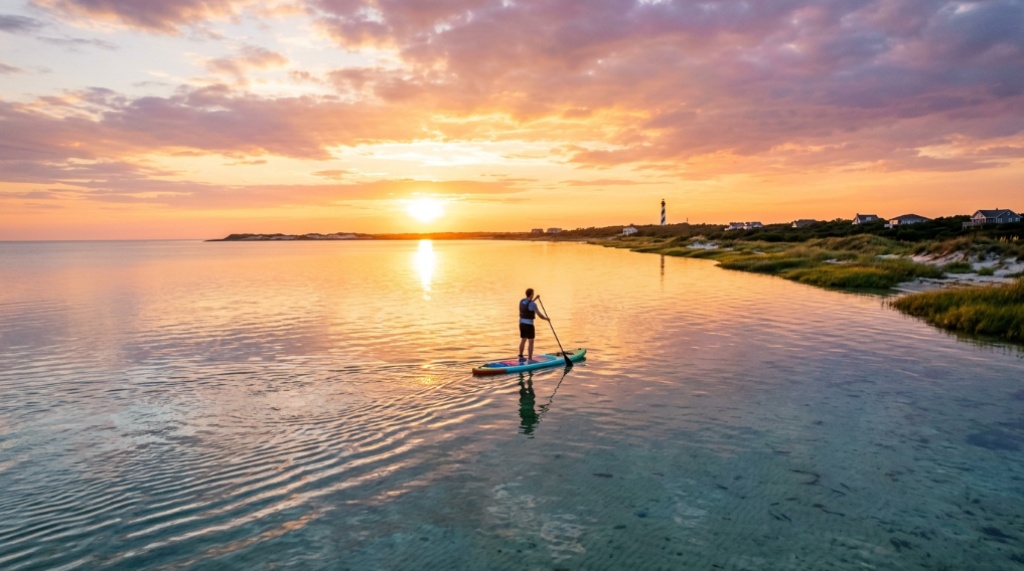
Best Spots for Beginners and First-Timers
Direct answer: the Roanoke Sound shoreline from Nags Head through Kitty Hawk, plus the calm bays near Manteo, offer the most forgiving conditions for new paddlers.
Nags Head and Kitty Hawk Sound Accesses
Several public sound accesses run along the Nags Head–Kitty Hawk corridor. They share useful traits: shallow water, easy entry, and short distances to sheltered shoreline. Because the water is knee- to waist-deep for a long way out, a fall is low-consequence — you’re standing up in seconds, not swimming.
The catch is parking. Many accesses are small residential-style lots with limited spaces, and they fill quickly on summer mornings. Arrive early or have a backup location in mind.
Manteo and Shallowbag Bay
Manteo’s waterfront sits on protected water with a town atmosphere, which makes it a good choice if you want to combine paddling with lunch or a walk. The bay is sheltered, but boat traffic near the marina means you should stay alert and keep to the edges rather than the channel. Boat wakes, not waves, are the main annoyance here.
Best Spots for Wildlife and Quiet Water
Direct answer: Pea Island National Wildlife Refuge and the Alligator River area offer the best wildlife paddling, but both require more planning because shelter and exit points are limited.
Pea Island National Wildlife Refuge
Pea Island sits on the northern end of Hatteras Island and is known for birdlife, including waterfowl and shorebirds that use the refuge’s impoundments and sound-side flats. Paddling here is about observation, not speed. Keep distance from nesting areas and follow refuge rules, which generally restrict access to certain zones at certain times of year.
Because the sound side here is expansive and open, wind exposure is significant. On a calm morning it’s serene. On a windy afternoon it can feel far from shore in every direction.
Alligator River and mainland-side creeks
The Alligator River National Wildlife Refuge, on the mainland side of the sound, offers calm, dark-water creeks and swamp margins that feel completely different from the beach. It’s a genuinely quiet paddle with strong wildlife potential. The trade-off: fewer services, less cell coverage in places, and limited emergency exit points. Go with a partner and a plan.
Best Spots for Distance and Open-Water Paddling
Direct answer: the Pamlico Sound near Hatteras and Ocracoke, and the wide Roanoke Sound crossings, suit paddlers comfortable with navigation and sustained effort.
Open sound paddling on the Outer Banks is not technical surfing — it’s navigation and stamina. Landmarks are low, distances are deceptive, and a headwind can double your return time. If you’re planning a crossing-style paddle, carry a phone in a waterproof case, know your turnaround time, and treat the wind forecast as the deciding factor, not a suggestion, before heading out on your next coastal adventure, check out how to save money on sup fin kits without sacrificing performance to keep your gear budget-friendly.
Ocracoke Sound-Side Flats
Ocracoke is reached by ferry and feels noticeably quieter than the northern beaches. The sound-side flats are shallow and expansive, good for long, flat-water sessions with plenty of space to yourself. Because you’re on an island with limited services, plan your water, sun protection, and return logistics carefully.
Paddling the Ocean Side: When It Makes Sense
Direct answer: only paddle the ocean side on small-swell days, and only if you’re comfortable reading surf and currents. Otherwise, stay on the sound.
The Atlantic side is not off-limits, but it’s a different sport. Shore break, rip currents, and sudden sets mean a leash is mandatory and a helmet is reasonable. Conditions that look manageable from the beach often look very different once you’re in the impact zone. If you’re unsure, the sound side will give you a better session with far less risk.
Comparing the Main Outer Banks Paddle Areas
| Area | Best For | Conditions | Main Drawback |
|---|---|---|---|
| Roanoke Sound (Nags Head–Kitty Hawk) | Beginners, short sessions | Shallow, flat, wind-sensitive | Limited parking |
| Manteo / Shallowbag Bay | Town access, easy logistics | Sheltered, some boat traffic | Wakes near the channel |
| Pea Island | Wildlife, quiet paddling | Open, exposed to wind | Few exit points |
| Alligator River | Wildlife, calm creeks | Sheltered, dark water | Remote, less coverage |
| Pamlico Sound / Ocracoke | Distance, solitude | Open, choppy when windy | Ferry logistics |
Launch Logistics, Tides, and Rules to Know
Direct answer: most sound-side launches are free and open, but parking, refuge rules, and tide timing are the three things that most often derail a paddle before it starts.
- Tides: Sound-side tides are smaller than ocean tides, but they still change where shallow flats become mud. Launching at low tide in some areas means a long walk through muck.
- Refuge rules: National wildlife refuges restrict access to certain areas and seasons, particularly for nesting birds. Check current rules before you go.
- Parking: Many accesses have small lots with no overnight parking and no trailers. Confirm before you load up.
- Boat channels: Stay out of marked channels where possible. Wakes from passing boats are the most common source of splashes for sound-side paddlers.
- Sun: There is almost no shade on the water. Sunscreen, a hat, and water are not optional in summer.
Common Mistakes Paddlers Make on the Outer Banks
Direct answer: the most common mistakes are ignoring wind, underestimating distance, and paddling the wrong side of the island for the conditions.
- Checking the air temperature and calling it a forecast. Wind speed and direction determine whether the sound is glassy or miserable.
- Paddling downwind first. It feels great until you have to come back.
- Assuming shallow means safe. Shallow water can mean stronger current in narrow spots and easier grounding on flats.
- Leaving the leash at home. A board without a leash in wind is a board you’ll be swimming after.
- Picking a remote spot for a solo first paddle. Start somewhere with other people and easy exits.
Frequently Asked Questions
Is paddleboarding on the Outer Banks good for beginners?
Yes, if you stay on the sound side. Shallow, protected water makes falling low-risk, and there are multiple easy-access launches along the Nags Head–Kitty Hawk corridor. Avoid the ocean side until you’re comfortable reading surf and current.
What’s the best time of day to paddle the Outer Banks?
Early morning. Wind is typically lightest before the afternoon sea breeze builds, and the water is calmest. If you can only paddle in the afternoon, choose a shoreline sheltered from the day’s wind direction.
Do I need a permit to paddle on the Outer Banks?
Most public sound accesses don’t require a permit for a paddleboard. National wildlife refuges do have their own access rules and seasonal restrictions, so check the specific refuge before launching. Some towns also have local ordinances about where you can put in.
Can you paddleboard to see wild horses or dolphins?
Wildlife sightings happen, particularly around Pea Island and quieter sound-side areas, but they shouldn’t be the goal. Keep a respectful distance from all wildlife, and never approach nesting shorebirds. Dolphins are more commonly seen from the beach than from a board.
Is it safe to paddleboard alone on the sound?
It can be, if you pick a busy, sheltered access point, carry a phone in a waterproof case, tell someone your plan, and stay within easy swimming distance of shore. Remote areas like Alligator River are better paddled with a partner.
What board works best for Outer Banks conditions?
A stable, wider board around 10 to 11 feet handles the sound’s wind chop well and is forgiving for beginners. Inflatable boards are popular here because they pack easily for the drive out and handle the shallow, sandy bottom without damage.
Conclusion
The Outer Banks rewards paddlers who plan around wind rather than around scenery. For most people, the sound-side accesses near Nags Head, Kitty Hawk, and Manteo deliver the best combination of easy launch, flat water, and short distances. Once you’re comfortable, Pea Island, the Alligator River, and Ocracoke open up quieter and more remote paddling. Check the wind, launch into it, and keep your return trip in mind — that single habit will improve almost every session more than any location choice.