
Why Is a Swivel Leash Important for Safer Surf Sessions?
A swivel leash reduces tangles, improves board control, and helps surfers stay safer in strong waves. It prevents the leash cord from twisting around your legs, which lowers the risk of wipeout injuries and delayed board recovery.
Nothing ruins a surf session faster than a tangled leash pulling at your ankle while a wave crashes overhead. Many surfers underestimate how dangerous leash tangles can become in crowded lineups or heavy surf conditions. A twisted cord can slow your paddle-out, create dangerous drag, and even increase the chance of losing your board during a wipeout.
A high-quality swivel leash solves this problem by allowing the cord to rotate freely. The swivel mechanism prevents twisting and keeps the leash straight during movement. Combined with durable urethane cords and comfortable ankle cuffs, modern no-tangle leash systems are now considered essential surf safety gear.
Professional surfers and surf instructors regularly recommend double-swivel designs because they improve mobility and reduce unnecessary tension during turns and duck dives. Whether you ride a shortboard, fish, or longboard, choosing the right swivel leash can improve both performance and safety in the water.
In simple terms, a swivel leash is a surfboard leash with rotating connection points that stop the cord from twisting and tangling during surfing.
What Is a Swivel Leash and How Does It Work?
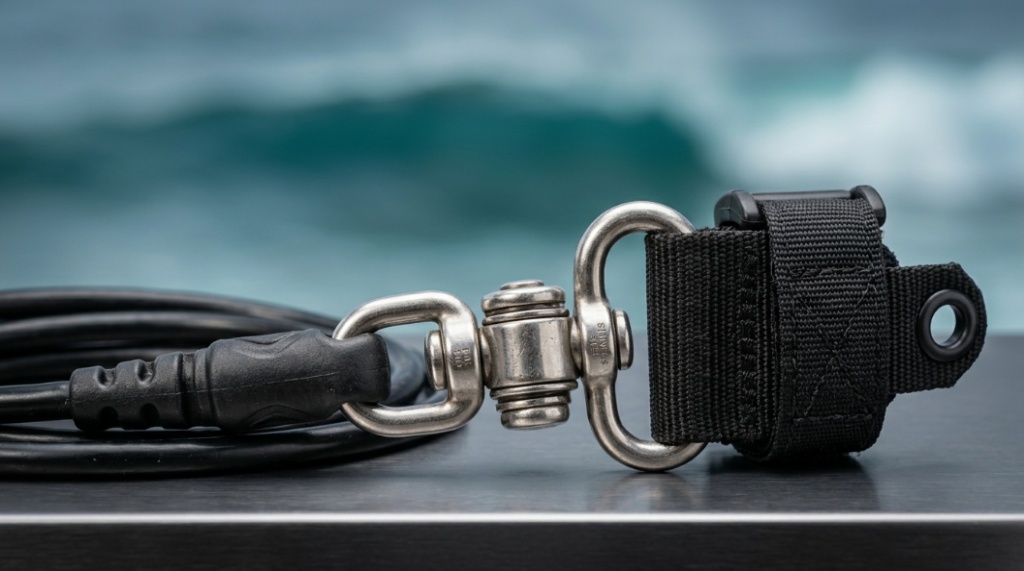
A swivel leash uses rotating metal connectors at one or both ends of the leash to prevent twisting. These swivels allow the cord to spin freely as the surfer moves.
Traditional surf leashes often twist after repeated turns, wipeouts, and paddling motions. Over time, the coiled tension can wrap around a surfer’s legs or create resistance in the water. Swivel systems eliminate this issue.
Most modern surfboard leashes include:
- Marine-grade stainless steel swivels
- Durable urethane leash cords
- Neoprene ankle cuffs
- Quick-release tabs
- Rail savers to protect the surfboard tail
Premium no-tangle leash models usually include dual swivels. One swivel sits near the ankle cuff while the second connects near the rail saver. This setup maximizes rotation and minimizes leash memory.
Why Do Surfers Prefer Double Swivels?
Double swivels reduce cord twisting more effectively than single-swivel designs. They improve freedom of movement during aggressive turns and long surf sessions.
Surfers riding in overhead conditions often notice less drag and fewer interruptions when using double-swivel surf leashes. This is especially useful in reef breaks and point breaks where constant movement causes repeated leash rotation.
How Does a No-Tangle Leash Improve Surf Safety?
A no-tangle leash improves safety by reducing leg entanglement, lowering drag, and helping surfers regain control of their board faster after wipeouts.
Surfboards can become dangerous projectiles in crowded surf zones. A tangled leash delays board recovery and increases collision risk for both the surfer and nearby riders.
According to surf injury studies published in sports medicine journals, leash-related accidents account for a significant percentage of beginner and intermediate surfing injuries. Many incidents occur when surfers become tangled during heavy surf conditions.
A swivel leash helps prevent:
- Ankle entanglement
- Leash wrapping during duck dives
- Delayed board retrieval
- Unexpected tension during turns
- Cord stress damage
Modern surf safety gear has evolved beyond flotation vests and helmets. Today, advanced leash systems play a major role in injury prevention and overall surf performance.
Can a Swivel Leash Prevent Serious Injuries?
A swivel leash cannot eliminate all risks, but it can significantly reduce avoidable accidents caused by tangled cords and delayed board control.
In fast-moving surf, even small delays matter. A properly functioning leash system keeps the board connected without restricting movement.
What Features Should You Look for in the Best Swivel Leash?
The best swivel leash should include strong swivels, durable cord material, comfortable cuffs, and a leash thickness matched to wave conditions.
Not all surf leashes perform equally. Cheap models often fail at the swivel joints or stretch excessively after repeated use.
Key Features to Prioritize
| Feature | Why It Matters |
|---|---|
| Double Swivel Design | Reduces tangles and twisting |
| Marine-Grade Steel | Prevents rust and corrosion |
| Urethane Cord | Improves strength and flexibility |
| Padded Ankle Cuff | Increases comfort during long sessions |
| Rail Saver | Protects surfboard tail from damage |
| Quick Release Tab | Allows emergency removal if needed |
What Leash Thickness Is Best?
Thicker leashes provide more strength for large waves, while thinner leashes create less drag for small-wave performance surfing.
General recommendations include:
- 5mm–6mm leash: small to medium waves
- 7mm leash: larger surf and stronger conditions
- Competition leashes: ultra-thin for performance
Wave power matters more than surfer size when selecting leash thickness.
Which Swivel Leash Length Should You Choose?
Your leash should generally match the length of your surfboard for optimal safety and performance.
Using a leash that is too short can cause snapping under tension. A leash that is too long may create unnecessary drag and entanglement.
Common Surf Leash Sizing Guide
- 6′ board = 6′ leash
- 7′ funboard = 7′ leash
- 9′ longboard = 9′ leash
Some surfers choose a leash slightly longer than the board for added comfort in larger surf conditions.
Do Longboarders Need Swivel Leashes?
Yes. Longboards create more leash movement due to their size and turning radius, making swivels especially useful.
Longboard surfers often walk the board, cross-step, and perform wide turns. A no-tangle leash helps maintain smoother movement during these transitions.
What Are the Best Swivel Leash Types for Different Surf Conditions?
The best swivel leash depends on wave size, surf style, and board type. Different conditions require different levels of strength and flexibility.
Small-Wave Performance Surfing
Thin competition leashes with dual swivels work best for speed and reduced drag.
Ideal features include:
- Lightweight cord
- Minimal ankle cuff
- Fast swivel rotation
Heavy-Wave Surfing
Large surf requires thicker cords and reinforced swivel connections.
Big-wave surfers often prioritize:
- 7mm+ cord thickness
- Extra-strength urethane
- Heavy-duty rail savers
- Wide padded cuffs
Beginner Surfing
Beginners benefit most from durable no-tangle leash systems because they experience more wipeouts and board separation.
Comfort and reliability matter more than ultra-lightweight performance features for new surfers.
How Does a Swivel Leash Compare to a Standard Surf Leash?
A swivel leash offers better movement, fewer tangles, and improved comfort compared to traditional non-swivel leashes.
| Feature | Swivel Leash | Standard Leash |
|---|---|---|
| Tangle Prevention | Excellent | Limited |
| Mobility | High | Moderate |
| Comfort | Better during long sessions | Can twist around ankle |
| Performance Surfing | Ideal | Less efficient |
| Safety | Improved board control | Higher tangle risk |
Most experienced surfers eventually upgrade to double-swivel designs after dealing with repeated tangles using traditional leashes.
What Materials Make a Surf Leash More Durable?
High-quality urethane, stainless steel swivels, and reinforced stitching create the most durable surf leash systems.
Saltwater exposure, UV rays, and repeated tension place enormous stress on surf leashes. Inferior materials wear out quickly.
Best Materials for Long-Term Performance
- German urethane cords for elasticity
- Marine-grade stainless steel swivels
- Triple-wrap rail savers
- Molded neoprene ankle cuffs
Premium surf brands often test leash strength using machine-pull tension systems to simulate heavy wipeouts.
How Often Should You Replace a Surf Leash?
Most surfers should replace their leash every 6–12 months depending on usage and wave conditions.
Warning signs include:
- Cord discoloration
- Stretched urethane
- Rusty swivels
- Frayed rail saver stitching
- Loose cuff Velcro
Even minor wear can lead to leash failure during critical moments.
Are Expensive Swivel Leashes Worth It?
Higher-priced swivel leashes often provide better durability, stronger swivels, and improved comfort, making them worthwhile for frequent surfers.
Budget surf leashes may appear similar visually, but performance differences become obvious during long sessions or larger waves.
Premium models usually include:
- Stronger rotational hardware
- Better corrosion resistance
- Lower drag design
- Longer lifespan
- More comfortable ankle support
For surfers who paddle out multiple times per week, investing in reliable surf safety gear often reduces long-term replacement costs.
What Are the Most Common Surf Leash Mistakes?
The most common mistakes include using the wrong leash size, ignoring wear damage, and choosing low-quality swivels.
Common Problems Surfers Face
- Using oversized leashes
- Surfing heavy waves with thin cords
- Failing to rinse saltwater after sessions
- Ignoring stretched leash cords
- Buying non-swivel budget leashes
Leash maintenance is simple but important. Rinsing your surf gear with fresh water after each session helps extend swivel life and prevents corrosion.
Should You Travel With a Backup Leash?
Yes. Experienced surfers almost always carry at least one backup leash during surf trips.
Leash failures are unpredictable. A backup no-tangle leash can save an entire surf trip, especially in remote coastal destinations.
Which Surfers Benefit Most From a No-Tangle Leash?
Beginners, intermediate surfers, longboarders, and heavy-wave surfers benefit most from swivel leash technology.
While all surfers can benefit from reduced tangles, certain groups notice the biggest improvements.
Ideal Users for Swivel Leashes
- New surfers learning board control
- Longboard riders
- Surfers in crowded breaks
- Travel surfers
- Competitive shortboard surfers
- Big-wave riders
Instructors frequently recommend no-tangle surf safety gear because it helps beginners focus on wave positioning rather than leash management.

Can a Swivel Leash Improve Surf Performance?
Yes. A swivel leash reduces drag and distraction, helping surfers move more naturally during turns and paddling.
Small performance gains matter in surfing. Reduced leash resistance can improve:
- Duck diving efficiency
- Rail-to-rail transitions
- Paddle speed
- Board responsiveness
- Wave positioning
Professional surfers often choose lightweight double-swivel systems because consistent movement matters during critical maneuvers.
Conclusion: Why Is a Swivel Leash Essential for Modern Surfing?
A swivel leash is one of the simplest upgrades surfers can make for better safety, comfort, and performance. By preventing tangles and improving board control, it reduces distractions and helps surfers stay focused in the water.
Modern no-tangle leash systems combine durable urethane cords, corrosion-resistant swivels, padded ankle cuffs, and reinforced rail savers to create safer surf experiences across all wave conditions. Whether you are a beginner learning basic paddling or an advanced surfer charging overhead waves, the right surf safety gear matters.
Choosing a high-quality swivel leash is not just about convenience. It directly affects mobility, recovery time after wipeouts, and overall confidence during surf sessions.
If your current leash constantly twists, stretches, or wraps around your legs, upgrading to a double-swivel no-tangle leash can immediately improve your sessions. Reliable gear allows you to spend less time fighting equipment and more time surfing clean waves.
Before your next paddle-out, inspect your leash carefully. A small investment in better surf safety gear can prevent major problems in the lineup.
FAQ: Best Swivel Leash for Safer Surf Sessions
What is the difference between a swivel leash and a regular leash?
A swivel leash includes rotating connectors that prevent twisting and tangling, while a regular leash may coil and wrap during surfing.
Are double-swivel surf leashes better?
Yes. Double-swivel leashes provide smoother rotation and reduce tangles more effectively than single-swivel designs.
How long should a surf leash be?
Your surf leash should generally match the length of your surfboard. Some surfers choose slightly longer leashes for larger waves.
Do professional surfers use swivel leashes?
Yes. Most professional surfers use swivel leash systems because they improve mobility and reduce drag during performance surfing.
Can a surf leash snap during big waves?
Yes. Thin or worn-out leashes can snap under heavy tension. Big-wave surfers typically use thicker heavy-duty leashes for added strength.
How do you maintain a swivel leash?
Rinse the leash with fresh water after every session, dry it away from direct sunlight, and inspect the swivels regularly for corrosion or wear.
What is the best surf safety gear besides a leash?
Important surf safety gear includes wetsuits, helmets for reef breaks, flotation vests for heavy surf, surf wax, and properly fitted fins.
📌 Related Reads
Discover: How to Select the Best Hats for Golfers of All Skill Levels
Explore: How to Pick the Right Golf GPS Watch for Smarter Course Navigation