
Traveling puts your gear through a lot. Sunglasses get tossed into bags, sat on by accident, and exposed to sun, salt, sand, and rain. Most cheap pairs do not survive a single long trip. Therefore, picking the right travel sunglasses is not just about looking good. It is about finding a pair that performs well and holds up over time.
This guide covers everything you need to know. From lens quality to fit, from materials to price, you will leave with a clear idea of what to buy and what to avoid.
Why Travel Sunglasses Deserve More Thought
Most men grab the first pair of sunglasses they see at an airport kiosk or a beachside shop. That pair usually breaks within weeks. The lenses scratch. The hinges loosen. The frame warps in the heat.
Good travel sunglasses, however, are a long-term investment. They protect your eyes from UV damage, reduce glare in bright environments, and stay comfortable during long days outdoors. Additionally, a reliable pair means you never have to scramble for a replacement in the middle of a trip.
The right choice comes down to a few key factors: lens quality, frame material, fit, and durability. Getting all four right makes a huge difference.
Start With Lens Quality
The lens is the most important part of any pair of sunglasses. Everything else supports it. Therefore, always evaluate the lens first before looking at the frame or style.
UV Protection Is Non-Negotiable
Every pair of travel sunglasses should block 100 percent of UVA and UVB rays. This is not optional. Long-term UV exposure damages the eyes and increases the risk of cataracts and other conditions.
Look for a label that says “UV400.” This means the lenses block all light with wavelengths up to 400 nanometers, which covers the full UV spectrum. Many cheap sunglasses have dark tints but no real UV protection. A dark lens with no UV filter is actually worse than wearing nothing, because your pupils dilate in the shade and let in more harmful light.
Polarized Lenses for Glare Reduction
Polarized lenses cut through glare from water, roads, and snow. If you travel to beaches, ski resorts, or tropical locations, polarized lenses are worth every extra dollar.
They reduce eye strain and make it easier to see clearly in bright conditions. However, they can make it harder to read some phone screens and LCD displays. This is a minor trade-off for the comfort they provide outdoors.
Lens Material: Glass vs. Polycarbonate
Glass lenses offer the best optical clarity. They are scratch-resistant and do not distort vision. However, they are heavier and can shatter on impact, which is a concern for active travelers.
Polycarbonate lenses are lighter and much more impact-resistant. They are a better fit for outdoor adventures, sports, and everyday travel. The trade-off is that they scratch more easily, so a proper lens coating is important.
Trivex is another option. It sits between glass and polycarbonate in terms of clarity and weight. It is less common but worth considering for high-end pairs.
Choosing the Right Frame Material
The frame determines how long your sunglasses last. It also affects weight and comfort. Travelers need frames that can handle heat, cold, humidity, and the occasional drop.
Titanium Frames
Titanium is one of the best frame materials for travel. It is incredibly strong yet very light. Titanium frames resist corrosion, flex without breaking, and maintain their shape over years of use.
The downside is price. Titanium frames cost more than most other options. However, if you travel frequently, the investment pays off quickly.
Acetate Frames
Acetate is a type of high-quality plastic. It is more flexible than regular plastic, which means it is less likely to crack under pressure. Acetate also holds color well and comes in a wide range of styles.
The material does have one weakness. It can warp in extreme heat, such as when left on a car dashboard in the summer. As long as you store your sunglasses properly, acetate frames last for years.
TR90 Nylon Frames
TR90 is a thermoplastic material used in many sports and travel sunglasses. It is extremely lightweight and flexible. TR90 frames can bend significantly without snapping, making them a great choice for travelers who are hard on their gear.
Additionally, TR90 is resistant to temperature changes and chemicals like sunscreen, which is a common culprit for frame degradation.
Stainless Steel Frames
Stainless steel frames offer a good balance of durability and affordability. They are heavier than titanium but still light enough for daily wear. They resist rust and hold their shape well over time.
For men who prefer a classic, slim look, stainless steel is a solid and dependable choice.
The Importance of Lightweight Sunglasses for Travel
Weight matters more than most people realize. A heavy pair of sunglasses can cause headaches and discomfort after hours of outdoor activity. Lightweight sunglasses, on the other hand, are easy to forget you are wearing them — and that is exactly the goal.
When you are hiking, exploring a city, or sitting on a long flight, comfort is everything. Lighter frames put less pressure on your nose and ears. They are especially important for men with sensitive skin or those who wear sunglasses for extended periods.
Most lightweight sunglasses come in at under 30 grams. Some premium titanium and TR90 models weigh as little as 15 to 20 grams. When comparing options, always check the listed weight.
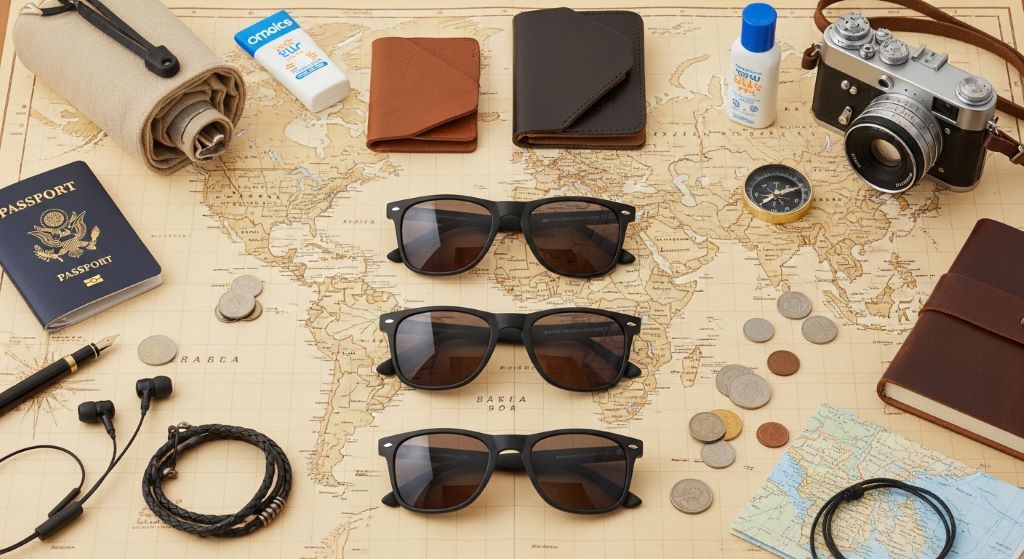
Why Durable Frames Are Worth Paying For
A pair of sunglasses that breaks on day two of a trip is money wasted. Durable frames save you from that frustration. They handle drops, bag pressure, and the general wear of travel without failing.
Look for spring hinges, which allow the temples to flex outward without stressing the frame. This single feature significantly extends the life of a pair of sunglasses. Most budget pairs lack spring hinges, which is one reason they break so easily.
Additionally, durable frames often come with better screws and tighter construction. The hinges should feel solid. Nothing should rattle. If you can feel looseness in a brand-new pair, walk away.
Finding the Right Fit for Your Face Shape
Even the most durable frames will not work well if they do not fit your face properly. A poor fit leads to slipping, discomfort, and reduced sun protection on the sides.
Oval and Round Faces
Rectangular or square frames tend to balance rounder facial features. They create a sense of structure and proportion. Wayfarer-style frames work particularly well for this face shape.
Square and Angular Faces
Rounded or oval frames soften strong jawlines and broad foreheads. Aviator styles are a classic choice for men with square faces.
Narrow or Long Faces
Wider frames add balance to longer or narrower faces. Look for frames with tall lenses and wide bridges to fill out the proportions.
The bridge fit is also crucial. The sunglasses should rest comfortably on your nose without pinching or sliding. Many travel sunglasses come with adjustable nose pads, which make it easier to get the right fit regardless of face shape.
Lens Tint and Color: What Works for Travel
Different lens colors serve different purposes. The tint you choose affects how well you see in various environments.
Gray tints are the most versatile. They reduce brightness without distorting colors, making them ideal for everyday travel in sunny conditions.
Brown or amber tints enhance contrast and depth perception. They work well for driving, fishing, and any environment with variable light.
Green tints offer excellent color accuracy and reduce glare effectively. They are a popular choice for outdoor use in bright sunshine.
Yellow or orange tints improve visibility in low-light or overcast conditions. They are not ideal for bright sunny days but are useful for dawn and dusk activities.
For most travelers, a gray or brown polarized lens covers the widest range of situations.
Wraparound vs. Classic Styles
The style of the frame affects more than just looks. It also determines how much sun exposure reaches your eyes from the sides.
Wraparound frames provide maximum coverage. They block sunlight from the sides and reduce wind exposure, making them a great choice for beach trips, cycling, and hiking. However, some men find them too sporty for casual city wear.
Classic styles like aviators and wayfarers offer less side coverage but suit a wider range of settings. They work in restaurants, on flights, and during sightseeing tours just as well as on the beach.
Therefore, consider where you travel most often before deciding on a style. A dedicated outdoor traveler might want two pairs — one sporty, one casual.
Storage and Care on the Road
Even the best sunglasses will not last long without proper care. A hard case is essential for travel. It protects the lenses from scratches and the frame from getting crushed in a packed bag.
Always store sunglasses in a case when not in use. Tossing them loose into a backpack pocket is one of the fastest ways to ruin them.
Use a microfiber cloth to clean the lenses. Avoid using shirts or tissues, which can scratch the lens coating over time. A small cleaning kit weighs almost nothing and is a worthwhile addition to any travel bag.
Rinse your sunglasses with clean water after exposure to saltwater or sunscreen. Both substances can degrade lens coatings and frame materials over time if left on the surface.
Price vs. Value: How Much Should You Spend?
You do not have to spend a fortune to get a reliable pair of travel sunglasses. However, you should expect to invest at least $50 to $100 for a pair with proper UV protection, quality lenses, and a durable build.
In the $100 to $200 range, you start finding models with polarized lenses, spring hinges, and lightweight materials. These are the sweet spot for most travelers.
Premium brands in the $200 and above range offer superior optics, lifetime warranties, and top-tier materials. If you travel constantly and rely heavily on your sunglasses, the higher price is justified.
Avoid very cheap options below $20 unless you know the lenses carry a genuine UV400 certification. Many do not, regardless of what the packaging claims.
Brands Worth Knowing
Several brands have earned strong reputations for travel sunglasses. Maui Jim is known for exceptional polarized lenses. Oakley builds frames with durability in mind, especially for active use. Ray-Ban offers timeless styles with solid build quality. Costa del Mar is a favorite among water sports enthusiasts for its lens clarity.
Additionally, brands like Goodr and Native Eyewear offer excellent value at lower price points, particularly for men who need lightweight sunglasses for sports and outdoor activities.
Conclusion
Picking the right travel sunglasses comes down to a handful of clear priorities. Always start with UV protection and lens quality. Then, evaluate the frame material based on how hard you are on your gear and where you travel most. Look for lightweight sunglasses that will not weigh you down on long days, and choose durable frames that can handle the unexpected bumps of travel life.
Pay attention to fit, because comfort drives whether you will actually wear them. Consider lens tint based on your most common travel environments. And do not forget that proper storage and care extend the life of even the most premium pair.
A good pair of travel sunglasses is not just an accessory. It is a tool that protects your eyes, reduces strain, and makes every outdoor moment more enjoyable. Choose wisely, and the right pair will travel the world with you for years.
Frequently Asked Questions
What makes sunglasses good for travel specifically?
Travel sunglasses need to be durable, lightweight, and offer full UV protection. They should also be comfortable for extended wear, easy to store, and able to handle different climates and environments without degrading quickly.
Are polarized lenses necessary for travel sunglasses?
Polarized lenses are not strictly necessary, but they are highly recommended for travel. They reduce glare from water, roads, and reflective surfaces, which makes outdoor activities much more comfortable and safer for your eyes.
How do I know if my sunglasses actually block UV rays?
Look for a UV400 label or a tag stating 100 percent UVA and UVB protection. If there is no certification label, the sunglasses may not offer real UV protection, regardless of how dark the tint appears.
What frame material lasts the longest for frequent travelers?
Titanium and TR90 nylon are among the most durable options. Titanium is extremely strong and corrosion-resistant. TR90 is flexible and handles drops well. Both are excellent choices for men who travel regularly and need long-lasting frames.
How should I clean and store my travel sunglasses?
Store them in a hard case when not in use. Clean lenses with a microfiber cloth and lens cleaning solution. Rinse the frame with clean water after saltwater or sunscreen exposure. Avoid leaving them in hot cars, as heat can warp certain frame materials.
Related Topics:
How to Find Cheap Padded Bike Shorts That Actually Last
How to Choose the Best Cordless Tools for Home Projects