
The surfing community has always shared a deep connection with the ocean. However, the equipment we use often contradicts our love for marine environments. Traditional surfboard fins contain plastics and resins that harm ecosystems. Fortunately, 2026 brings exciting innovations that allow surfers to protect waves while maintaining peak performance.
Making the switch to sustainable equipment doesn’t mean compromising your ride quality. Modern biodegradable fins offer comparable responsiveness, durability, and speed to conventional options. This guide will walk you through everything you need to know about transitioning to environmentally responsible fin choices.
Understanding the Environmental Impact of Traditional Fins
Conventional surfboard fins create significant ecological problems. Most contain fiberglass, carbon fiber, and petroleum-based resins. These materials take centuries to decompose. When fins break or get discarded, they contribute to ocean pollution.
Manufacturing traditional fins also consumes substantial energy and releases harmful chemicals. The production process involves toxic resins that pose health risks to workers. Additionally, shipping these products globally increases carbon footprints considerably.
The surfing industry produces thousands of fins annually. Each discarded fin adds to the growing problem of plastic pollution. Marine animals often mistake fin fragments for food, leading to devastating consequences for ocean life.
What Makes Fins Truly Eco-Friendly
Not all products marketed as sustainable actually deliver environmental benefits. Understanding what qualifies as genuinely eco-friendly helps you make informed decisions. Several key factors determine whether fins deserve the green label.
Material sourcing represents the first consideration. Truly sustainable fins use renewable resources like plant-based resins, recycled materials, or natural fibers. These alternatives reduce dependence on petroleum products while minimizing environmental damage.
Manufacturing processes matter equally. Eco-conscious companies employ low-impact production methods that reduce energy consumption and eliminate toxic chemicals. Therefore, researching a brand’s manufacturing practices proves just as important as examining materials.
End-of-life disposal completes the sustainability cycle. Biodegradable fins break down naturally without leaving harmful residues. Some companies even offer take-back programs where old fins get recycled into new products.
Exploring Material Options for Sustainable Fins
Several innovative materials have emerged as viable alternatives to traditional fin construction. Each option offers unique benefits and characteristics worth considering.
Plant-based resins derived from sources like soybeans or algae provide excellent alternatives to petroleum resins. These materials offer similar strength and flexibility while decomposing naturally. Moreover, they produce fewer emissions during manufacturing.
Recycled plastics represent another promising avenue. Companies now create high-performance fins from reclaimed ocean plastics and recycled fishing nets. This approach removes existing pollution while creating functional equipment.
Natural fiber composites combine materials like hemp, flax, or bamboo with eco-friendly resins. These fins deliver impressive strength-to-weight ratios. Additionally, they often match or exceed the performance of conventional options.
Cork-based materials have gained popularity recently. Cork grows sustainably without harming trees and provides natural flexibility. When combined with other green materials, cork creates responsive fins suitable for various surfing styles.
Performance Considerations When Switching
Many surfers worry that green surfing gear cannot match traditional equipment’s performance. However, modern sustainable fins have largely closed this gap. Understanding how to evaluate performance helps ease the transition.
Flex patterns significantly influence how fins respond during turns and maneuvers. Quality biodegradable fins now offer carefully engineered flex that mimics conventional designs. Testing different options helps identify which flex pattern suits your style.
Drive and speed depend on fin shape and material stiffness. Eco-friendly materials can achieve similar rigidity to fiberglass when properly engineered. Therefore, well-designed sustainable fins provide comparable acceleration and momentum.
Durability concerns often arise with natural materials. Modern biodegradable fins undergo rigorous testing to ensure longevity. Many brands now offer warranties comparable to traditional manufacturers, demonstrating confidence in their products’ lifespan.
Weight differences between sustainable and conventional fins typically remain minimal. Advanced manufacturing techniques produce lightweight eco-friendly fins that don’t compromise board handling or responsiveness.
Finding the Right Fin Configuration
Fin setup affects performance regardless of material choice. Understanding different configurations helps optimize your sustainable fin selection.
Thruster setups remain the most popular choice among surfers. Three-fin configurations offer balanced performance suitable for various conditions. Eco-friendly thrusters perform excellently in small to medium waves.
Quad setups provide increased speed and drive. Four fins generate more lift and work well in powerful waves. Sustainable quad options have proven particularly effective for progressive surfing styles.
Twin fin configurations suit cruisy, skatey riding. Two-fin setups reduce drag while increasing maneuverability. Natural material twins often excel in this application due to their inherent flex characteristics.
Single fin designs emphasize traditional surfing aesthetics. One fin offers smooth, flowing turns perfect for longboarding. Eco-friendly single fins capture this classic feel while reducing environmental impact.
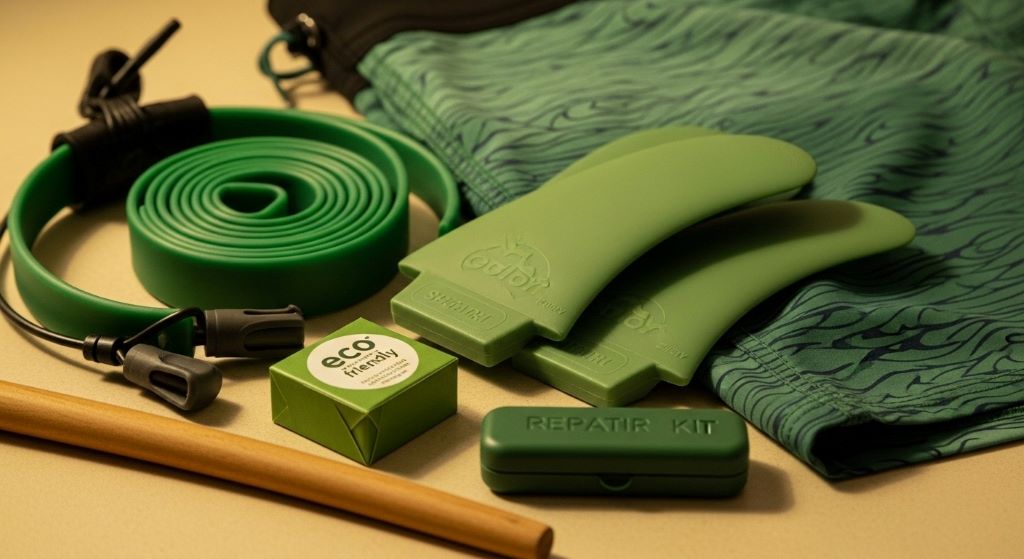
Transitioning Gradually to Sustainable Equipment
Switching completely to eco-friendly equipment doesn’t need to happen overnight. A gradual transition allows you to adapt while testing different options.
Start by replacing one fin set while keeping your current backup options available. This approach lets you experience sustainable performance without fully committing initially. Most surfers find they quickly adjust to the new materials.
Consider beginning with smaller waves or casual sessions when first testing biodegradable fins. This low-pressure environment lets you evaluate performance objectively. However, many surfers report no noticeable difference from the first session.
Join surf communities focused on sustainability for recommendations and reviews. Fellow surfers provide valuable insights about specific brands and models. Additionally, these groups often share discount codes and special offers.
Document your experiences with different sustainable options. Taking notes about performance in various conditions helps identify which fins work best for your needs. Therefore, you can make informed decisions about future purchases.
Evaluating Brands and Certifications
Not all companies claiming sustainability credentials deliver genuine environmental benefits. Learning to evaluate brands ensures your purchases support truly eco-conscious manufacturers.
Look for third-party certifications that verify environmental claims. Organizations like the Sustainable Surf Environmental Certification provide independent verification. These certifications indicate companies meet specific ecological standards.
Research company transparency regarding materials and manufacturing. Reputable brands openly share information about sourcing and production processes. Conversely, vague marketing language often signals greenwashing rather than genuine commitment.
Consider companies that support ocean conservation initiatives. Many sustainable fin manufacturers donate portions of profits to environmental organizations. This additional commitment demonstrates authentic concern for marine ecosystems.
Read independent reviews from multiple sources before purchasing. Customer experiences reveal real-world performance and durability. Moreover, reviews often highlight issues companies don’t advertise.
Maintenance Tips for Eco-Friendly Fins
Proper care extends the life of sustainable fins while maximizing their performance benefits. These maintenance practices apply specifically to natural and biodegradable materials.
Rinse fins thoroughly with fresh water after each session. Salt water and sand accelerate degradation of natural materials. However, simple rinsing prevents premature wear significantly.
Store fins away from direct sunlight when not in use. UV exposure breaks down plant-based resins faster than traditional materials. Therefore, keeping fins in board bags or cases preserves their integrity.
Avoid extreme temperature fluctuations that might stress natural materials. Don’t leave fins in hot cars or expose them to freezing conditions unnecessarily. Moderate temperatures maintain optimal material properties.
Inspect fins regularly for damage or excessive wear. Natural materials may show different wear patterns than traditional fins. Early detection of issues prevents problems from worsening during sessions.
Apply protective coatings designed for eco-friendly materials if recommended by manufacturers. Some brands offer natural waxes or sealants that enhance durability. These treatments help sustainable fins last longer while maintaining performance.
Cost Considerations and Long-Term Value
Sustainable surfing equipment often carries higher initial costs than conventional alternatives. Understanding the complete value proposition helps justify this investment.
Premium pricing for green surfing gear reflects ethical manufacturing, quality materials, and research investment. Companies developing biodegradable fins invest heavily in creating performance-equivalent alternatives. Additionally, sustainable sourcing typically costs more than petroleum-based materials.
Long-term value extends beyond purchase price. Durable eco-friendly fins often last as long as traditional options. Therefore, higher initial costs become comparable when calculated over the product’s lifespan.
Environmental benefits provide intangible value that justifies premium pricing. Reducing ocean pollution and supporting sustainable practices offers returns beyond monetary savings. Many surfers consider this their most important purchasing factor.
Some brands offer trade-in or recycling programs that offset replacement costs. These initiatives provide discounts on future purchases when returning old equipment. Consequently, the long-term expense becomes more manageable.
Supporting the Broader Sustainable Surfing Movement
Individual equipment choices contribute to larger industry transformation. Understanding how your purchases influence the market amplifies your positive impact.
Consumer demand drives innovation in sustainable materials. Every purchase of biodegradable fins signals manufacturers that eco-friendly options deserve continued investment. Therefore, your buying decisions help shape future product development.
Share your experiences with sustainable equipment through social media and local surf communities. Personal testimonials influence others more effectively than corporate marketing. Moreover, honest reviews help fellow surfers make confident decisions.
Support surf shops and brands that prioritize sustainability throughout their operations. Businesses demonstrating comprehensive environmental commitment deserve customer loyalty. Additionally, local shops often provide personalized guidance for selecting appropriate equipment.
Participate in beach cleanups and conservation efforts beyond equipment choices. Holistic environmental stewardship extends your positive impact significantly. However, choosing sustainable gear represents an important foundation for this broader commitment.
Addressing Common Misconceptions
Several myths about eco-friendly surfing equipment persist despite evidence to the contrary. Dispelling these misconceptions helps more surfers make the switch confidently.
The belief that sustainable fins perform poorly compared to traditional options lacks current validity. Modern engineering has eliminated significant performance gaps. Testing confirms that most surfers cannot distinguish between quality biodegradable and conventional fins during blind comparisons.
Concerns about durability often prove unfounded with reputable brands. Well-manufactured eco-friendly fins withstand normal surfing stresses comparably to traditional materials. Proper maintenance ensures these fins last multiple seasons.
Assumptions that sustainable equipment limits style or progression misunderstand modern product capabilities. Professional surfers now use biodegradable fins successfully in competition. Therefore, these fins support advanced techniques and aggressive surfing.
The notion that eco-friendly options aren’t widely available no longer applies. Numerous brands now offer comprehensive ranges of sustainable fin configurations. Online retailers ship globally, making access easier than ever.
Preparing for Future Innovations
The sustainable surfing industry continues evolving rapidly. Staying informed about emerging technologies helps you make forward-looking equipment decisions.
Researchers are developing new bio-materials that may surpass current options. Innovations using mushroom mycelium, seaweed derivatives, and advanced plant composites show promising potential. These materials might offer superior performance alongside environmental benefits.
Manufacturing techniques continue improving efficiency and reducing costs. As production scales increase, prices for sustainable equipment should decrease. Therefore, eco-friendly fins may soon reach price parity with conventional alternatives.
Industry standards for sustainability certification are becoming more rigorous. Clearer guidelines will help consumers distinguish genuinely green products from greenwashing attempts. This transparency benefits conscious purchasers significantly.
Circular economy models where fins get continuously recycled into new products are emerging. These systems eliminate waste entirely while maintaining material quality. Supporting brands pioneering these approaches accelerates industry transformation.
Making Your Final Decision
Choosing sustainable fins requires balancing multiple factors specific to your situation. This decision-making framework helps you select the best option.
Assess your skill level and surfing style honestly. Different fin designs suit various approaches to wave riding. Match eco-friendly options to your specific needs rather than choosing based solely on environmental claims.
Consider the wave conditions you typically surf. Fin performance varies depending on wave size and power. Select sustainable designs optimized for your local breaks.
Evaluate your budget realistically while considering long-term value. Higher-quality biodegradable fins justify their cost through extended lifespan and superior performance. However, entry-level options provide good starting points for budget-conscious surfers.
Research specific brands and models thoroughly before purchasing. Read reviews, watch video comparisons, and seek recommendations from experienced users. This investment of time prevents disappointing purchases.
Conclusion
Switching to eco-friendly surfboard fins represents a meaningful step toward protecting the oceans we love. Modern biodegradable fins deliver performance comparable to traditional options while significantly reducing environmental impact. By understanding available materials, evaluating brands carefully, and maintaining equipment properly, surfers can make this transition confidently.
The sustainable surfing movement continues gaining momentum as more riders recognize their responsibility toward marine ecosystems. Your equipment choices contribute to broader industry transformation while supporting innovation in green surfing gear. Though initial costs may exceed conventional alternatives, the environmental benefits and long-term value justify this investment.
Starting with one sustainable fin set allows you to experience these benefits firsthand without overwhelming commitment. As you become comfortable with eco-friendly performance, expanding your sustainable equipment collection becomes natural. Together, the global surfing community can protect waves for future generations while maintaining the high performance we demand from our equipment.
Frequently Asked Questions
Do biodegradable fins really break down completely?
Quality biodegradable fins decompose naturally over time when exposed to appropriate environmental conditions. The breakdown process varies depending on materials used, typically taking several years rather than centuries like traditional fins. However, these fins maintain structural integrity throughout their functional lifespan, only decomposing after disposal in proper conditions.
Will switching to eco-friendly fins affect my surfing performance?
Most surfers notice minimal to no performance difference when using quality sustainable fins. Modern manufacturing techniques and advanced materials have eliminated significant performance gaps. Some professional surfers actually prefer certain eco-friendly options for their unique flex characteristics and responsiveness.
Are sustainable fins more expensive than traditional options?
Initially, eco-friendly fins typically cost more than conventional alternatives due to premium materials and ethical manufacturing. However, their comparable durability means the long-term cost often equals traditional fins. Additionally, some brands offer trade-in programs that reduce replacement expenses over time.
How do I know if a brand’s sustainability claims are legitimate?
Look for third-party certifications, transparent material sourcing information, and detailed manufacturing process descriptions. Legitimate companies openly share specifics about their environmental practices. Reading independent reviews and researching company involvement in conservation initiatives also helps verify authenticity.
Can I use eco-friendly fins in competitive surfing?
Yes, sustainable fins are competition-legal and many professional surfers now use them. Performance regulations focus on fin dimensions and configurations rather than materials. Several biodegradable fin models meet competition standards while delivering the responsiveness required for high-level surfing.
Related Topics:
Beginner’s Guide: Buying a Skateboard for Kids Under 6
Fabien Diomande Net Worth: A Deep Dive Into His Wealth and Success