
Putting accounts for roughly 40% of your total strokes during a round, making it the highest-leverage skill you can improve. For golfers in Washington, where the season is short and greens stay wet and slow for much of the year, having the right flatstick isn’t optional—it’s survival. Many WA golfers struggle with distance control on poa annua greens that roll differently in the morning than they do by noon, and the wrong putter amplifies those inconsistencies.
If you’ve ever three-putted your way to a frustrating 88 when you deserved an 82, you already know the pain. The solution starts with understanding how Washington’s unique course conditions demand a specific kind of putter—one that matches your stroke type while compensating for slower, grainy surfaces.
How Washington Greens Differ From the Rest of the Country
Washington courses predominantly feature poa annua and bentgrass blends. Poa annua becomes bumpy and inconsistent by mid-afternoon, especially on public tracks like Jackson Park or West Seattle Golf Course. This means your putter needs a higher moment of inertia (MOI) to keep the face stable on off-center strikes, which are far more common on bumpy surfaces that deflect the ball offline.
The Cost of Playing the Wrong Putter Style
A blade putter with minimal forgiveness might feel amazing on a perfectly manicured private course in California, but on a typical WA municipal course, that same putter will punish you. Mis-hits lose more distance and accuracy, and slower greens force you to swing longer, which exaggerates face rotation. The result? You start aiming differently, altering your stroke, and eventually losing confidence entirely.
What Makes a Putter Ideal for Washington’s Climate and Course Conditions?
An ideal putter for Washington golfers combines mid-to-high MOI, a heavier head weight (360g or more), and a face insert that performs well on slower, moisture-heavy greens. The heavier head helps you maintain a smooth tempo on slow greens without forcing you to stab at the ball, while the higher MOI keeps putts on line even when you don’t strike the sweet spot perfectly.
Additionally, you want a putter with alignment features that work on visually busy greens. Many WA courses feature mottled shadows, wet spots, and leaf litter in the fall, so a putter with a clear sightline or alignment rails helps you lock onto your start line without getting distracted by the visual noise around the hole.
Head Weight and Its Impact on Tempo and Distance Control
Heavier putter heads (360–400g) promote a pendulum-like stroke that resists wrist breakdown. On slow, wet greens, this heavier weight allows you to make a longer, smoother stroke rather than a short, jabby one. Players who switch from a 340g blade to a 370g mallet often report immediate improvement in distance control because they stop decelerating through impact.
Face Technology: Why Inserts Beat Solid Faces on Wet Greens
Soft face inserts like Surlyn or polymer-based materials create a trampoline effect that adds a bit of ball speed on slower greens. Solid steel or milled faces, while providing great feel, require a firmer strike to achieve the same distance. On saturated fairways and greens common in WA’s rainy season, that extra ball speed from an insert makes a measurable difference in reducing three-putts from long range.
How to Analyze Your Stroke Type Before Buying a New Putter
Before you spend money on any putter, determine whether you have a straight-back-straight-through stroke or a slight arc. Most golfers fall somewhere in between, but knowing your dominant pattern is crucial because putters are designed with specific toe hang to match either stroke style. Putters with face balance suit straight strokes, while putters with toe hang (like blades) suit arcing strokes.
A quick way to test at home is the 45-degree balance test. Balance the putter shaft on your finger at the point where it naturally balances. If the face points upward, it’s face-balanced. If the toe points downward, it has toe hang. Match this to your stroke type and you’ll immediately notice better contact and a more consistent roll.
As you refine your stroke with top-tier equipment, making the right equipment choices extends beyond the green—learn more by checking out our guide on picking golf balls picking golf balls for Texas golfers.
Step-by-Step: How to Identify Your Stroke Pattern
Set up a straight gate drill using two alignment rods and practice putts from three feet. If your putter head moves inside the gate smoothly without deviating, you have a straight-back stroke. If you naturally swing the club inside coming back and inside through, you have an arc. Most players reveal their tendency within ten putts without overthinking it.
Matching Toe Hang to Your Natural Motion
If your stroke is straight-back-straight-through, choose a face-balanced mallet like the Odyssey White Hot Versa. If your stroke has a pronounced arc, look for a putter with 20–30 degrees of toe hang, such as the Scotty Cameron Newport. Getting this match right matters more than brand loyalty—it’s physics working with your body, not against it.
Which Putter Styles Perform Best on Poa Annua Greens?
Mid-mallets and high-MOI mallets consistently outperform blades on poa annua greens because they resist twisting on off-center hits, which are inevitable when the ball bounces over grain and footprints. You don’t need a massive, spaceship-looking mallet, but you do want something with a deeper head and rear weight distribution to stabilize the face through impact.
Putter manufacturers now design “mid-mallets” that offer forgiving performance without looking oversized at address. These fit perfectly between traditional blades and bulky mallets, giving you confidence for alignment while still providing the forgiveness Poa annua demands.
Blade Putters Are Still an option—but only for the right player.
If you have a perfect arc, a pure strike, and play on elite private courses with consistently rolled greens, a blade still works. But if you’re a weekend golfer playing public WA courses, the math is against you. On a full round with 30 putts, even two or three off-center hits that lose line because of low MOI cost you two or three strokes.
Alignment Aids That Work on Noisy Visual Backgrounds
Look for putters with high-contrast alignment lines, like white dots or rails against a dark head. These stand out against wet, patchy greens. Many WA golfers also benefit from putters with a single sightline rather than complex alignment systems, which can feel overwhelming when you’re trying to focus on pace rather than line.
How Does Putter Length Affect Your Setup and Consistency?
Putter length directly impacts your eye position over the ball, which influences your ability to see the line correctly. A putter that’s too long forces you to stand too upright, pushing your eyes inside the target line. A putter that’s too short makes you crouch, pulling your eyes outside the line. The ideal length has your eyes directly over the ball or just slightly inside it.
For most golfers between 5’8” and 6’0”, a 34-inch putter works well. Taller players (6’1”+) often prefer 35 inches, while shorter players (under 5’7”) frequently do better with 33 inches. However, arm length and posture matter more than height alone, so get fitted whenever possible.
Why “One Length Fits All” Is a Marketing Myth
Golfers who play a stock-length putter without considering their posture often develop compensations like bending their elbows or moving their heads during the stroke—destroying consistency. A proper fitting measures your wrist-to-floor distance and preferred stance width to recommend a precise length, typically within half an inch.
The Rise of Counterbalanced Putters for Stability
Counterbalanced putters feature extra weight in the grip end (about 50g), which helps quiet your hands and promotes a shoulder-driven stroke. For nervous putters who fight the yips, this added stability can be a game-changer, especially on the slick, fast greens you’ll find at higher-end WA courses.
Why Do Distance Control Issues Persist Even With a Great Putter?
Distance control problems usually stem from inconsistent strike location rather than the putter itself. If you strike the ball on the toe one time and the center the next, you’ll get wildly different roll distances even with identical swing lengths. A high-MOI putter minimizes these variations, but you still need repeatable contact to truly dial in distance.
Additionally, WA golfers often struggle to adjust between slow greens in the morning and faster ones after a dry afternoon breeze. The key is developing a tempo-based distance system rather than relying solely on feel, which varies too much from day to day.
The Gate Drill to Lock in Your Start Line
Set up two tees slightly wider than your putter head and practice rolling putts through them from three, five, and eight feet. This drill forces you to hit the center of the face consistently, teaching your hands and arms to work together. Repeat for ten minutes daily and you’ll see dramatic improvement in both line and distance control.
How to Practice Lag Putting Like a Tour Player
Instead of trying to make every 30-foot putt, focus on leaving each putt within a three-foot circle around the hole. This “lag putting” mentality relieves pressure and leads to easier tap-ins. On fast WA greens, the rule of thumb is that the ball should die at the hole rather than rolling past, so always aim for a two-foot radius past the hole on breaking putts.
Is the Fitting Process Worth It for Beginner and Intermediate Golfers?
Yes—in fact, fitting benefits mid-handicappers even more than experts because they have more inconsistent strokes that need the extra forgiveness a fitted putter provides. A proper fitting analyzes your stroke path, face angle at impact, tempo, and lie angle using a launch monitor. The process takes about 30 minutes and can shave three to five strokes off your round by optimizing gear to your unique motion.
Many WA golf shops like Puetz Golf or Pro Golf Discount offer free basic putter fittings with purchase. The investment of time pays back immediately because you’ll leave with a putter tailored to your exact stance, stroke type, and common miss pattern.
Understanding Lie Angle and Its Impact on Starting Direction
If the lie angle is too upright, you’ll tend to pull putts; too flat, and you’ll push them. A fitting measures your lie angle at address dynamically while you’re in your natural putting posture. Most putters come standard at 70 degrees, but you may need 68 or 72 degrees depending on your wrist angle and hand position.
Grip Size Matters More Than Most Golfers Think
Grip diameter significantly impacts wrist action during the stroke. Oversized grips reduce wrist hinge, promoting a stable, pendulum motion ideal for beginners and those with shaky hands. Standard grips allow for more wrist freedom, which some better players prefer for feel. Test multiple sizes—the difference in performance is often dramatic.
When Should You Upgrade Your Putter to Improve Your Scoring?
Upgrade your putter when you notice consistent mishits, a lack of confidence over short putts, or when your current putter is older than five years with significant wear on the face. As face inserts wear down, ball speed becomes inconsistent, and alignment aids fade, all of which hurt your performance more than you might realize.
Additionally, if you’ve recently changed your stroke or posture—perhaps due to a back injury or a swing change—your old putter may no longer fit your body or motion. A new putter that matches your current setup will feel like a breath of fresh air.
Signs Your Current Putter Is Holding You Back
- You regularly strike the ball off the toe or heel without realizing why
- Your putts lip out more often than they drop
- You struggle to read greens because you’re compensating for a misaligned putter
- Your distance control is fine on the practice green but terrible on the course
A Quick Technical Progress Check at Your Local WA Course
Spend 15 minutes on a practice green testing your current putter against a friend’s or a demo model. If you consistently lose strokes to your playing partner with a newer putter, it’s time to upgrade. Alternatively, ask a local pro to watch your stroke and evaluate whether the putter matches your natural motion.
Which Budget-Friendly Putters Deliver the Best Performance for WA Golfers?
You absolutely don’t need to spend $400+ on a premium putter to improve your scores. Brands like Cleveland, Wilson, and Kaymi offer excellent putters in the $100–$180 range with face inserts, high MOI, and solid alignment features that rival their pricier counterparts. The key is finding a putter that fits your stroke mechanics, not one that looks impressive in your bag.
In fact, mid-range putters often outperform “tour-level” blades for high-handicap players because they feature forward weighting and face inserts designed specifically for added forgiveness. When comparing your options, focus on the specs—head weight, toe hang, and alignment—rather than the brand name or price tag.
Value Picks That Don’t Sacrifice Performance
The Cleveland Frontline series offers a weighted forward face that stabilizes the strike for around $130. The Wilson Harmonized line features a classic look with a milled face for under $80. Both offer substantial improvements over basic, no-name putters and are available at major WA sporting goods stores like Dick’s and Golf Galaxy.
When Buying Local Makes Sense Versus Online Ordering
Buying from a local shop allows you to test the putter on a real green, assess weight and feel, and get a lie-angle check on the spot. However, online retailers like Global Golf offer deeper discounts and pre-owned options with far greater variety. The smart approach is to get fitted locally, then search online for the best deal on that exact spec.
How Can You Maintain Your Putter to Perform Well Year-Round?
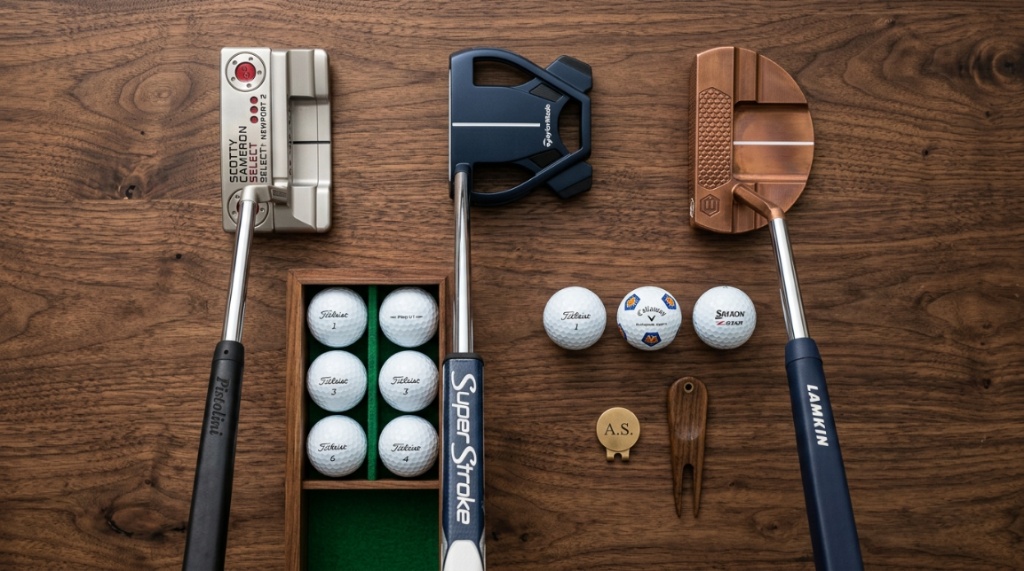
Your putter faces harsh conditions—rain, sand, mud, and moisture—throughout a Washington season. Regular cleaning keeps the face and alignment marks in top condition, which is essential for consistent ball contact and reliable visual cues. Wipe the face and grip after every round with a damp cloth, and use a soft-bristle brush to clear debris from milled grooves.
Also, inspect the grip regularly. A worn, slick grip causes unnecessary wrist movement and alters your grip pressure. Replacing your putter grip every 6–12 months, depending on frequency of play, costs only $10–$20 but can feel like getting a brand-new putter.
Storing Your Putter for Off-Season Preservation
In Washington, where the season can pause for weeks of heavy rain, store your putter indoors at room temperature to avoid moisture damage. Keep the headcover on to prevent dings, and occasionally wipe down the shaft with a silicon cloth to stop rust buildup. These small steps extend the life and performance of your flatstick significantly.
The Easiest Way to Freshen Up Your Putter’s Grip and Feel
If you love your current putter but it’s lost its feel, try regripping it with a larger, softer grip from brands like SuperStroke or Lamkin. This simple change adds weight, reduces wrist action, and gives you a new feel without the cost of a new putter. Many golfers find this upgrade as impactful as buying new equipment.
How to Build a Pre-Round Putting Routine That Translates to Lower Scores
A consistent pre-round putting routine trains your brain and body to repeat the same stroke under pressure, whether you’re on the practice green in Tacoma or the 18th green in Spokane. Start by hitting five three-foot putts around the hole, then move to eight-footers with a focus on speed, then finish with lag putts from thirty feet. This progression warms up all the skills you’ll need during the round.
The most important part of your routine is developing trust. Once you’ve warmed up, stop analyzing mechanics on the course and rely on feel. Overthinking during a round leads to tension, which destroys tempo. Trust your new putter’s weight and alignment to do the work.
A Simple 10-Minute Putting Warm-Up Sequence
- Two minutes of three-footers—focus on center-face contact
- Three minutes of six-to-eight-foot putts—work on start line
- Three minutes of fifteen-to-thirty-foot lag putts—distance control only
- Two minutes of breaking putts from different angles—read greens
How to Handle Fast Greens in Eastern Washington vs. Slow Greens in Western Washington
Eastern Washington courses like Apple Tree feature dry, fast greens, while Western WA tracks like Chambers Bay or Gold Mountain are often wet and slow. On fast greens, reduce your backswing length and let gravity release the putter. On slow greens, lengthen your backswing but maintain equal tempo. Your new putter becomes your best tool for making these adjustments feel natural.
Frequently Asked Questions
What type of putter is best for beginners in Washington?
Beginners should choose a high-MOI mallet with a face insert and strong alignment aids. These putters provide maximum forgiveness on off-center hits and help promote confidence on slow, bumpy greens common across Washington’s public courses.
Does toe hang really matter for casual golfers?
Yes, toe hang matters for everyone. If you have a straight-back stroke and use a toe-hang putter, you’ll inadvertently pull putts. Understanding your stroke type prevents buying a putter that fights your natural motion, regardless of your skill level.
How often should I replace my putter?
Replace your putter when the face noticeably wears down, with reduced grip responsiveness, or when your stroke changes. Most golfers benefit from upgrading every 5–7 years, though replacing the grip and keeping the face clean can extend performance considerably.
Are expensive putters actually better than budget models?
Not necessarily. A $400 putter offers premium materials and craftsmanship, but a properly fitted $150 putter will outperform a mismatched premium model. Fit—including lie angle, length, and head weight—matters far more than price or brand prestige.
Can I use the same putter for all seasons in Washington?
Yes, but you must adapt your stroke to varying green conditions. When greens are slow and wet, use a longer stroke with an even tempo; when fast and firm, shorten your backswing. A putter with a heavier head works best year-round because it offers more consistent distance control across these varying speeds.
What’s the quickest way to fix my putting stroke at home?
Use the gate drill with two tees and a straight edge for five minutes daily to reinforce a square stroke path. Additionally, practice hitting five putts in a row from three feet without missing—this builds both mechanical consistency and mental confidence.
Conclusion
Improving your putting in Washington starts with using a putter that fits your stroke and handles the course conditions skillfully—not just one that looks high-end. Focus on high-MOI designs, heavier head weights, and clear alignment aids. Pair that gear with a consistent pre-round routine and targeted practice drills, and the strokes you’ll save each round will add up faster than you think.
Remember: the best putter in the world won’t sink putts for you. But a properly fitted putter minimizes your mistakes, boosts your confidence, and ensures that when you do read a line correctly, your stroke delivers the ball where you aimed. Start by seeking a professional fitting to dial in your specs, then practice intentionally, whether it’s on the practice green or even indoors during the rainy season.
Take action today: assess your current flatstick, check the grip, and book a fitting at a local WA golf shop. You’ll walk away with a putter that finally matches your game—and that’s the first real step toward breaking your scoring plateau. This season, give yourself the chance to make putts when they matter.