
Walk onto any beach today and you’ll see the shift immediately: surfers in fitted long-sleeve tops instead of baggy cotton tees, paddlers in lightweight UV shirts, and foilers in flexible neoprene alternatives that didn’t exist a decade ago. Surf apparel has moved from purely functional to genuinely technical, and understanding that evolution matters whether you’re replacing a worn-out rash guard or buying your first piece of serious gear. For a clear starting point on what modern sun-protective surf apparel actually looks like, this guide breaks down a representative example, but the bigger story is how the whole category changed—and why those changes affect what you should buy.
Quick Answer
Surf apparel evolved from cotton shirts, basic nylon boardshorts, and heavy neoprene into engineered fabrics built for UV protection, chafe resistance, flexibility, and quick drying. The biggest shifts came from the rise of synthetic performance fabrics, improved seam construction, UV-rated swim shirts, and boardshorts designed to move with the body instead of against it. Today, the right piece depends less on brand prestige and more on fiber content, fit, UV rating, seam type, and how the garment performs when wet—not just how it looks dry.
Key Takeaways
- Modern surf apparel is defined by fabric engineering—quick-dry synthetics, UV-rated knits, and stretch neoprene—rather than traditional cotton or basic nylon.
- Flatlock and glued seams reduce chafing, which matters most during long sessions and in salt water.
- UV ratings (UPF) on swim shirts are one of the clearest improvements over older rash guards, though they degrade with wear and stretch.
- Fit and fiber content usually determine comfort and performance more than price or branding.
- Different water sports (surfing, paddling, diving, foiling) have genuinely different apparel requirements, so one piece rarely covers everything well.
What Drove the Evolution of Surf Apparel?
The core driver was simple: surfers and water athletes spent more time in the water and wanted less discomfort. Early surf clothing was built from whatever was available—cotton t-shirts and basic boardshorts. Cotton absorbs water, gets heavy, causes chafing, and dries slowly. Once performance fabrics entered the market, the entire category shifted.
Three forces pushed the change:
- Materials science: polyester, spandex blends, and later recycled synthetics offered stretch, quick-drying behavior, and durability that cotton and basic nylon couldn’t match.
- UV awareness: as skin cancer awareness grew, swim shirts and rash guards became a practical sun-defense layer instead of an optional one.
- Expanded water sports: paddling, kitesurfing, foil surfing, and open-water swimming created demand for apparel that worked in different conditions than traditional surfing.
The result is a category that today blends sportswear engineering with marine practicality. The most useful perspective is that modern surf apparel is closer to technical activewear than to beach fashion—even when it looks casual, To learn more about essential gear protection, check out our guide on why is a swivel leash important for safer surf sessions?
How Have Fabrics and Materials Changed?
The most important change is the shift from single-material garments to engineered blends. Early boardshorts were often simple nylon; early rash guards were basic polyester. Today, most performance surf apparel uses combinations chosen for a specific job.
| Material | Typical Use | Why It Matters |
|---|---|---|
| Polyester | Rash guards, swim shirts, boardshorts | Quick-drying, durable, holds UV protection well |
| Spandex / Elastane | Stretch panels, fits, rash guards | Allows movement without restriction |
| Nylon | Boardshorts, some wetsuit linings | Light, strong, dries fast |
| Neoprene | Wetsuits, cold-water gear | Insulation through trapped air and water layer |
| Recycled polyester | Modern rash guards, eco-focused boardshorts | Reduces virgin plastic use without losing performance |
The key insight for buyers is that not all “performance fabric” is equal. A basic polyester swim shirt and a high-end UV shirt might look similar but differ in knit density, stretch recovery, and seam handling. These differences show up after repeated use and salt-water exposure, not on the first wear.
Why Do Seams and Fit Matter More Than You’d Expect?
The direct answer: seams and fit determine whether a garment stays comfortable after an hour of paddling or causes chafing within twenty minutes. This is one of the most under-discussed parts of surf apparel evolution.
Seam Construction
Older rash guards used standard overlock seams that create ridges against the skin. Once wet and under a wetsuit or board, those ridges rub. Modern performance apparel increasingly uses:
- Flatlock seams: lie flat against the skin, reducing friction.
- Glued or bonded seams: common in high-end wetsuits and some rash guards, minimizing bulk.
- Paneled construction: places stretch fabric where the body moves most.
Fit
A swim shirt that’s too loose traps water, balloons, and drags. One that’s too tight restricts shoulder rotation. The practical fit rule: snug through the torso, unrestricted at the shoulders, with no fabric bunching under the arms. This is true whether you’re surfing, paddling, or swimming—and it’s a major reason modern rash guards are cut differently than a decade ago.
How Has UV Protection Changed Surf Apparel?
UPF-rated swim shirts are one of the clearest, most measurable improvements in the category. Older rash guards offered some sun blockage simply because they covered skin, but they weren’t tested or rated. Today, many garments carry a stated UPF rating, commonly UPF 50+, which indicates the fabric blocks the vast majority of UV radiation that reaches it.
Two important limitations worth knowing:
- UPF ratings apply to the fabric as tested, usually in a relaxed state. When fabric stretches, UV protection can decrease.
- Protection fades with wear, repeated washing, and abrasion, especially in thin knits.
In practical terms, a UPF-rated long-sleeve swim shirt offers a more reliable sun-defense layer than a plain cotton tee, but it doesn’t replace sunscreen on exposed areas like the face, neck, and hands.
Boardshorts vs. Long-Sleeve Swim Shirts vs. Wetsuits: Which Do You Actually Need?
These three categories serve different purposes, and understanding the difference prevents wasted spending.
| Garment | Best For | Main Benefit | Main Limitation |
|---|---|---|---|
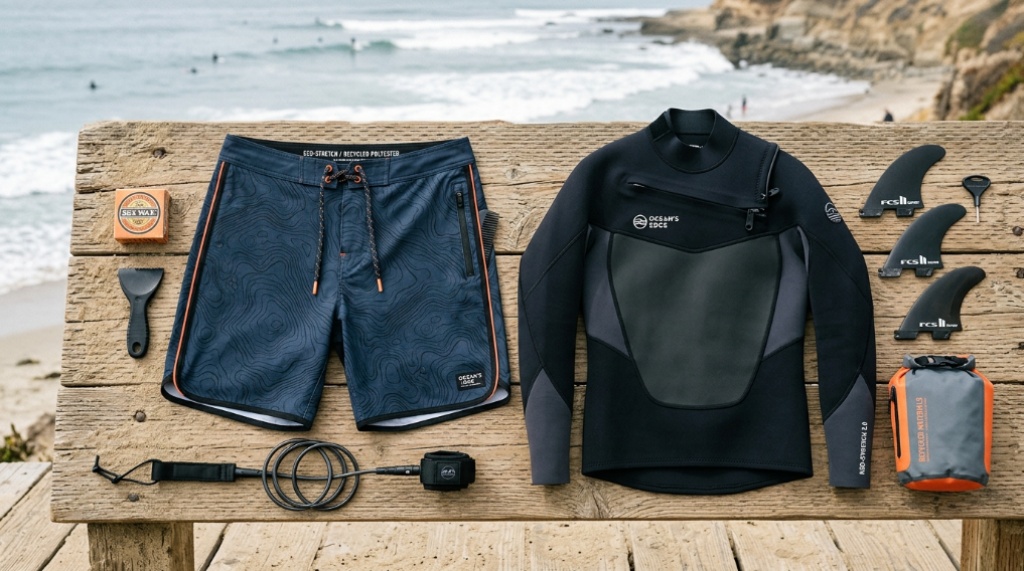
| Boardshorts | Warm water, surfing, beach use | Freedom of movement, quick drying | No sun or thermal protection for the torso |
| Long-sleeve swim shirt / rash guard | Warm to mild water, paddling, sun exposure | UV protection, reduces rash and chafe | Adds little warmth in cold water |
| Wetsuit | Cold water, extended sessions | Insulation, full coverage | Cost, reduced flexibility, overkill in warm water |
A practical approach: choose based on water temperature and session length first, then add sun protection second. Many warm-water surfers wear only boardshorts and a swim shirt. Cold-water surfers layer a rash guard under a wetsuit for comfort and easier entry. The two aren’t competitors—they’re layers.
What Mistakes Do Buyers Still Make?
Even with better apparel available, common purchasing mistakes persist:
- Buying cotton for the water. Cotton soaks, sags, and chafes. It has no place in serious water sports.
- Choosing style over fit. A loose shirt that looks relaxed on land becomes a drag and chafe source in the water.
- Ignoring seam type. Flatlock seams cost more for a reason—they reduce friction over long sessions.
- Assuming all rash guards are equal. Fiber content, knit weight, and UV rating vary widely.
- Overlooking shrinkage and stretch. Poorly made garments can lose shape, which affects both fit and sun protection.
Avoiding these mistakes usually matters more than choosing a specific brand.
How to Choose Surf Apparel That Actually Works
A simple decision process:
- Identify your primary activity. Surfing, paddling, diving, and swimming have different demands.
- Check water temperature. Warm water favors boardshorts and swim shirts; cold water requires neoprene.
- Match fabric to conditions. Polyester and spandex blends for warm water; neoprene for cold.
- Prioritize fit and seams. Snug torso, free shoulders, flat seams.
- Verify UV rating if sun exposure is a concern, and remember it isn’t permanent.
- Test before long sessions. Wear it briefly in the water to check for chafing before committing to a full session.
This process avoids the trap of buying based on aesthetics alone.
Frequently Asked Questions
Is a rash guard the same as a swim shirt?
Functionally similar, but not identical. Rash guards are usually designed for wear under wetsuits or against the skin during surfing, while swim shirts are often cut for standalone wear. Many modern garments blend both purposes.
How long does UPF protection last in a swim shirt?
It varies by fabric and care. Protection generally lasts as long as the fabric remains intact and unstretched, but it degrades with abrasion, chlorine, and repeated washing. Replace garments that thin or lose shape.
Can I wear a long-sleeve swim shirt instead of a wetsuit?
Only in warm water. A swim shirt offers sun protection and reduces chafe, but it provides almost no insulation. In cold water, you still need neoprene.
Do I need special apparel for paddling or foiling?
Not completely different gear, but fit and flexibility matter more. Paddling and foiling involve repetitive shoulder movement, so unrestricted cut and flat seams become more important than in casual surfing.
Is recycled polyester as good as standard polyester for surf apparel?
In most cases, yes. Modern recycled polyester performs similarly in terms of quick-drying and durability. Differences usually appear in feel and specific knit construction, not core function.
Conclusion
Surf apparel’s evolution comes down to one idea: garments built for water, not adapted to it. Fabric engineering, flatlock seams, UV ratings, and activity-specific cuts have replaced cotton shirts and generic nylon. The practical takeaway is to choose based on activity, water temperature, fit, and seam construction—not branding or looks alone. If you’re upgrading, start with one well-made long-sleeve swim shirt and one pair of proper boardshorts, then add neoprene only if your conditions demand it. That combination covers most warm and mild-water situations effectively.