Key Takeaways
- The most common problems with used cars hide in fluids, frames, and wiring.
- Flood damage shows up as smells, stains, and rust in strange places.
- NHTSA estimates over 450,000 cars are sold yearly with rolled-back odometers.
- Hidden liens and washed titles create legal headaches after the sale.
- A $200 mechanic inspection remains the best defense against every problem below.
My uncle Ray bought a minivan that looked like a miracle deal. Silver paint, low miles, and a price $3,000 below every listing around town—the exact kind of red flag automotive experts at Tradecarhub constantly warn buyers to avoid. He drove it home happy. Six months later, the windows stopped responding, the ABS light glowed permanently, and a musty smell crept from under the carpets. A mechanic peeled back the floor mat and found the truth. Water lines marked the inside of every door. The van had been flooded, cleaned, and sold fast.
Ray paid for that van twice, once at purchase and once in repairs. Therefore, I learned early that used cars reveal their pasts only to buyers who look. This guide covers the common problems with used cars, where each one hides, and the simple checks that expose them. Additionally, you will learn which findings mean negotiate, and which mean walk away.
Why Used Cars Hide So Many Problems
Every used car carries a history, and not all of it is pleasant. Previous owners, past crashes, and past neglect all ride along into your driveway. The problem is that modern cars hide their wear well. Fresh paint covers repairs, air fresheners mask odors, and computers reset their own warnings.
The financial stakes are high. According to AAA research, about one in three American drivers cannot pay for an unexpected car repair without going into debt. A hidden transmission fault or electrical fault can easily become a $2,000 surprise. Therefore, a careful purchase inspection is really a form of financial protection.
The problem is also widespread, not rare. The NHTSA odometer fraud page estimates that more than 450,000 vehicles are sold each year with false mileage readings, costing buyers over $1 billion annually. Meanwhile, flood cars migrate across state lines after every major hurricane season.
Here is the encouraging part. Almost every serious problem leaves physical evidence. Smells, stains, worn pedals, and mismatched paint all tell stories. Therefore, buyers who know what to look for hold all the power. The sections below cover the seven problems that cause the most pain.
Hidden Accident and Frame Damage
Collision damage is the most common serious problem in used cars. Minor fender-benders are normal and acceptable. However, structural damage changes everything, because it weakens the exact parts that protect you in the next crash.
Look for these clues during your walk-around:
- Paint on one panel that looks newer than the rest
- Uneven gaps between doors, hood, and fenders
- Wavy reflections when you sight along the body lines
- Overspray on rubber seals, trim, or inside the wheel wells
- Bolts on the hood, fenders, or doors that look freshly turned
Frame damage hides underneath, so get low. Check the frame rails, crumple zones, and underbody for welds, kinks, or fresh undercoating. Sellers sometimes spray thick black coating over repaired sections. Therefore, a flashlight costs nothing and reveals plenty.
Airbag history deserves special attention. A deployed airbag means a serious crash occurred. Additionally, replacing airbags is expensive, so dishonest sellers sometimes install fake covers or unplug the warning light. Turn the key to the on position and watch the dash. Every warning light should glow briefly, then disappear. A light that never turns on at all is a serious red flag.
History reports catch most reported accidents, so always pull one. However, cash repairs never enter any database. Therefore, combine the report with your own eyes and a mechanic’s final judgment before you commit.
Flood and Water Damage
Flood cars are the sneakiest problem on this list. Water destroys wiring, sensors, and computers slowly, and failures appear months later. By then, the seller is long gone. My uncle Ray’s electrical chaos followed this exact pattern.
Freshwater flooding is bad, but saltwater flooding is worse. Salt keeps corroding connections for years. Therefore, cars flooded by ocean storm surges should almost never be purchased.
Check these spots for water evidence:
- Musty or mildew smells inside the cabin
- Dampness or stiff, stained carpet under the floor mats
- Water lines or mud inside door pockets and the spare tire well
- Rust on seat rails, seat springs, and under the dashboard
- Foggy headlights or taillights with water inside
Additionally, inspect the trunk spare tire area closely. Mud deep inside the wheel well is hard to fake away. Then breathe deeply in the cabin. Strong air fresheners deserve suspicion, because sellers use them to mask mildew.
History reports list flood titles, however, title washing across state lines hides many of them. Carfax estimates that hundreds of thousands of flood-damaged vehicles return to the road after major hurricanes. Therefore, treat any suspicious smell or stain as a deal breaker. Electrical repairs on water-soaked cars often exceed the car’s value, and the problems never fully disappear.
Odometer Fraud and Tampering
Mileage drives price, so mileage attracts fraud. Rolling back an odometer is easier than ever with digital displays. Meanwhile, the profit is obvious. A car with 80,000 miles sells for thousands more than the same car at 180,000.
NHTSA’s numbers expose the scale. More than 450,000 vehicles are sold yearly with false readings, and buyers lose over $1 billion annually. Therefore, never trust the dashboard number alone.
Protect yourself with these checks:
- Pull the history report and compare its mileage entries over time
- Look for a decreasing or frozen odometer trail
- Match dashboard wear against the claimed mileage
- Check service records for gaps or sudden mileage jumps
- Verify readings on title, registration, and inspection stickers
Wear tells the truth. A car claiming 40,000 miles should not have a polished steering wheel, worn pedal rubber, or a faded driver’s seat. Additionally, tires carry a date code on the sidewall. Four-year-old tires on a low-mileage claim deserve questions.
Highway-driven cars are exceptions to worry. Steady interstate miles wear cars gently, and honest high-mileage vehicles often outlast abused low-mileage ones. Therefore, focus on documented consistency rather than chasing the lowest number. When records and wear disagree, believe the wear and walk away.
Engine, Transmission, and Fluid Problems
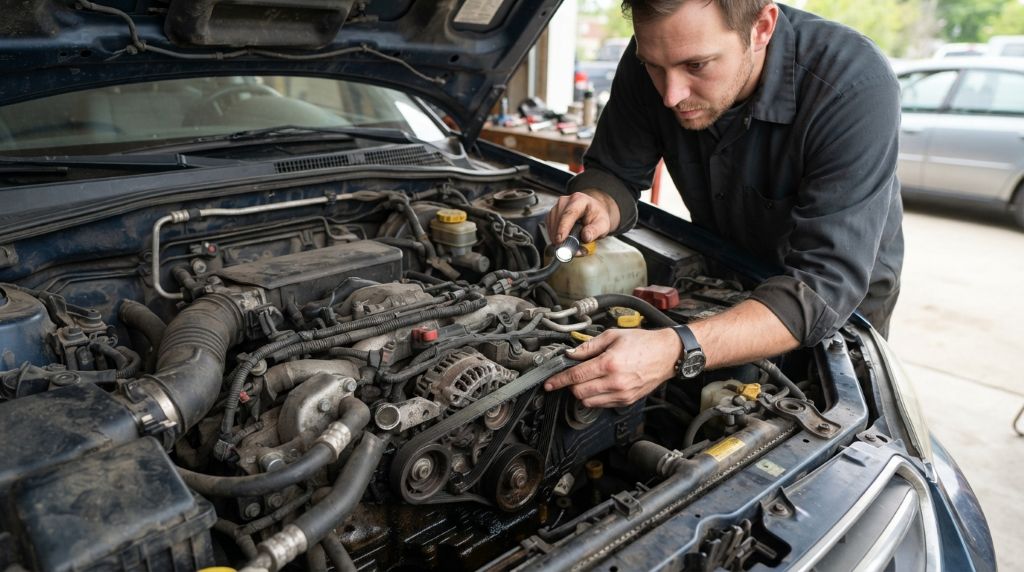
Mechanical problems are the most expensive category, therefore, they deserve the most inspection time. The good news is that fluids confess everything, if you check them before the engine warms up.
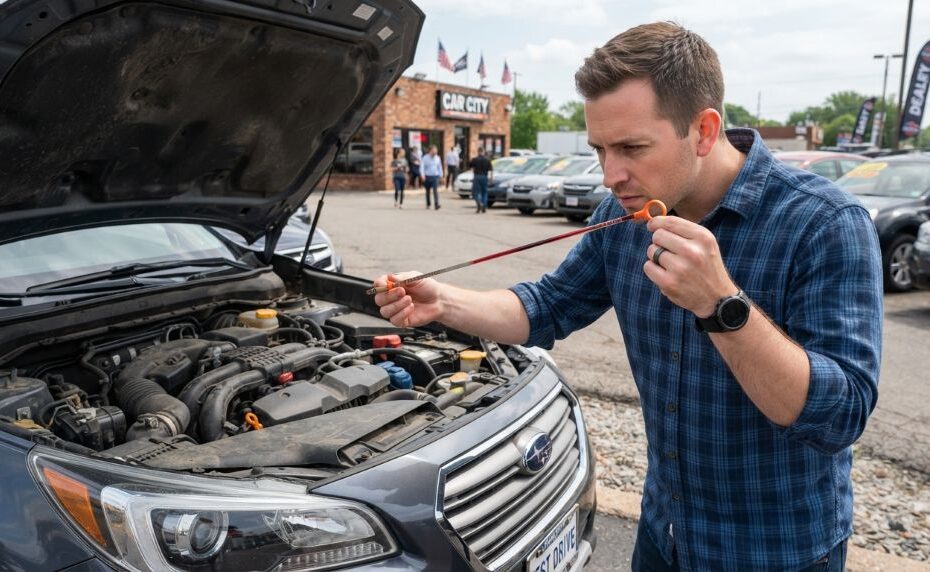
Ask the seller to leave the engine cold. Then pull the oil dipstick first. Healthy oil looks light brown and sits between the marks. Milky or chocolate-colored oil means coolant is mixing with oil, which often signals a blown head gasket. Additionally, white crust under the oil filler cap repeats the same warning.
Check the rest of the fluids next:
- Transmission fluid should be pink or red, never dark or burnt
- Coolant should be bright, with no oil floating on top
- Brake fluid should sit between the min and max lines
- Power steering fluid should be full and clean
Then start the engine and listen. Knocking, ticking, or long cranking all deserve explanations. During the test drive, the transmission should shift quickly and quietly. Hesitation, jerks, or clunks point to expensive internal wear. Therefore, drive for at least 20 minutes, including highway speed.
Watch the exhaust too. Blue smoke means burning oil, while white smoke that never fades means coolant is entering the engine. Small drips under a parked car matter as well. As a result, park over clean pavement after the drive and look below. Any one of these signs can mean a four-figure repair.
Title Troubles and Unpaid Loans
Paperwork problems do not rattle or leak, however, they can cost you the entire car. The most serious issue is a lien. When a previous owner financed the car and never paid it off, the lender legally owns part of it. If you buy that car, the lender can repossess it, even from an innocent buyer.
Protect yourself with three simple steps:
- Confirm the name on the title matches the seller’s ID.
- Check the title for the words lien, salvage, rebuilt, or flood.
- Verify the title status through the federal NMVTIS database.
An open title deserves special caution. This happens when the last owner never registered the sale, so the title still carries their name. Sometimes it is innocent. However, open titles also appear in curbstoning schemes, where unlicensed dealers pose as private sellers.
Salvage and rebuilt titles matter financially. These cars were declared total losses by insurers, and they sell for far less. That can be a fair deal for a skilled buyer, therefore, the key is honest disclosure. A seller who hides a salvage brand is hiding much more.
Finally, run the VIN through vehiclehistory.gov, the free federal database. It reveals title brands, junk records, and salvage auctions across states. Therefore, ten minutes of paperwork checking protects you from legal battles that cost far more than any repair.
Worn Brakes, Tires, and Suspension
Safety parts wear out predictably, and sellers rarely mention them. Therefore, check them yourself, because they become your first repair bills.
Start with tires. All four should wear evenly and match in brand. Mismatched tires suggest neglect or a partial replacement after damage. Then run the penny test on each tire. Place a penny into the tread with Lincoln’s head down. If you see the top of his head, the tire is at the legal minimum and needs replacement soon. Four new tires cost $400 to $800, so use this in your price negotiation.
Next, inspect the brakes through the wheel spokes with a flashlight. Pads thinner than a quarter coin need service. Listen during the test drive for squealing or grinding. Additionally, feel the pedal. It should be firm, and the car should stop straight without shaking.
Suspension reveals itself with motion. Push down hard on each corner of the car and release. A healthy suspension rises once and settles. Meanwhile, continued bouncing means worn shocks or struts. During the drive, listen for clunks over bumps, and feel for wandering steering.
These wear items are not deal breakers. In fact, every used car needs something. However, honest buyers use them as negotiating tools. Therefore, list every worn item you find, estimate the repair costs, and adjust your offer accordingly.
Electrical Faults and Open Recalls
Modern cars are computers on wheels, and electrical problems multiply quickly. Test every feature during your inspection, because small failures often point to bigger wiring issues.
Work through this list:
- All windows, locks, mirrors, and seats
- Air conditioning and heat at full power
- Radio, touchscreen, cameras, and charging ports
- Wipers, washer jets, horn, and every light function
- Dashboard warning lights that glow and then clear
Flickering displays, random resets, and clicking behind the dash all hint at wiring or battery trouble. Additionally, a battery older than four years deserves a free load test at any parts store.
Open recalls are the hidden danger most buyers forget. Millions of vehicles on American roads carry unfixed safety recalls. Therefore, run the VIN through NHTSA’s free recall lookup before you buy. Dealers repair recalled items for free, however, you need to know they exist.
Here is the practical approach. Small electrical issues become negotiation leverage. However, widespread electrical chaos, like my uncle Ray’s van, becomes a walk-away situation. Wiring problems hide inside harnesses and panels, and labor costs swallow budgets quickly. Therefore, count the failures during your inspection. One fault is a discount. Several faults are a warning.
Your Protection Checklist Before You Buy
Every problem above shares one solution. A careful, structured inspection exposes them all. Follow this sequence on every purchase:
- Match the VIN on the dash, door jamb, and title.
- Pull a history report and a federal NMVTIS check.
- Search the VIN for open recalls.
- Inspect the body in daylight for paint and gap issues.
- Smell the cabin and check under the carpets.
- Check every fluid with the engine cold.
- Test all electronics and warning lights.
- Drive for 20 minutes on varied roads.
- Negotiate using your list of findings.
- Get a professional inspection for $150 to $250.
The mechanic inspection is the final filter, and sellers who refuse it are telling you something. Therefore, treat refusal as a deal breaker. Ray’s minivan had a clean story and a dirty floor. One lift inspection would have exposed it instantly.
Final Thoughts
The common problems with used cars follow a pattern. Accidents, floods, odometer fraud, mechanical wear, title trouble, and electrical faults all leave evidence. Buyers who check fluids, carpets, panels, and paperwork catch nearly everything. Therefore, ten minutes of looking protects years of ownership, while understanding why your car’s paint needs correction after years of use can also help you spot signs of neglect or long-term wear.
Remember Ray’s flooded van. The musty smell and $3,000 discount were the clues, and both were visible on day one. Now you know exactly where to look.
Have you ever discovered a hidden problem after buying a used car? Share your story in the comments below. Additionally, share this guide with a friend who is shopping right now, because everyone deserves to dodge the flood van.
Frequently Asked Questions
What are the most common problems with used cars?
Hidden accident damage, flood history, odometer fraud, worn brakes and tires, and electrical faults top the list.
How can I spot a flood-damaged used car?
Check for musty smells, damp carpets, water lines in doors, and rust under seats or in the spare tire well.
Is a salvage title always a bad idea?
Not always, but it should be disclosed and priced 30 to 50 percent below market. Hidden salvage is a deal breaker.
Can a mechanic really find hidden problems?
Yes. Lifts reveal frame damage, leaks, and rust that no visual walk-around can catch. The fee often saves thousands.
What should I check first before buying a used car?
Match the VIN everywhere, pull a history report, and check for open recalls before you inspect the car itself.