

Calipers are essential tools for precise measurements, but their variety and functionality can be intimidating. This guide will demystify calipers, explaining their types, uses, and techniques for accurate results. Whether you’re a hobbyist, DIY enthusiast, or professional, understanding calipers will empower you with precise measurements for your projects. The content is provided by Best USA Tools.
What Are Calipers and Why Use Them?
Calipers are handheld tools designed to measure the dimensions of objects with high accuracy. Unlike rulers or tape measures, calipers can measure both external and internal dimensions, as well as depths.
This makes them invaluable for tasks where precision matters, such as:
- Engineering and Machining: Precise measurements ensure parts fit together correctly.
- Woodworking: Checking the thickness of boards or creating accurate joints.
- Jewelry Making: Measuring gemstones, wire gauges, and small components.
- 3D Printing: Verifying dimensions of printed parts for quality control.
- Automotive Repair: Checking clearances and tolerances on engine components.
Types of Calipers
There are several types of calipers, each suited to different applications:
- Vernier Calipers: These are the most common type, offering versatile measurement options (outside, inside, and depth) with a simple mechanical design. They require some practice to read accurately.
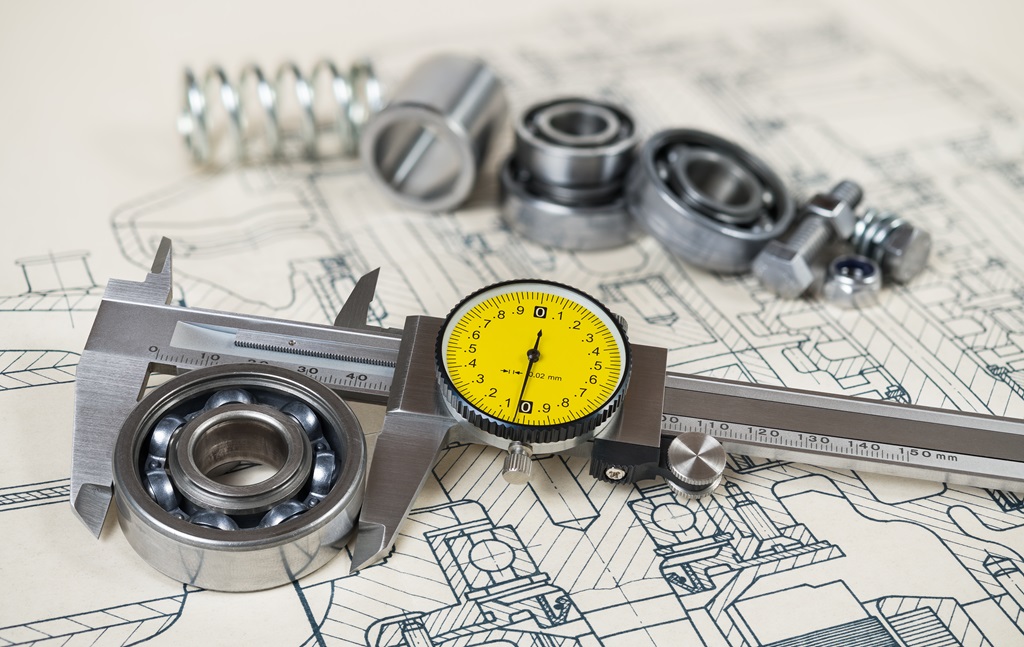
- Dial Calipers: Similar to vernier calipers, but with a dial for easier reading. They are preferred by those who prioritize quick and intuitive measurements.
- Digital Calipers: These provide the most user-friendly experience with a digital readout. They often offer additional features like fractional/decimal conversions and zeroing.
- Oddleg Calipers (Jenny Calipers): Designed for measuring the center of a cylindrical object, they have one leg that’s bent at a 90-degree angle.
Using Calipers: Step-by-Step
Here’s a basic guide to using calipers:
- Zeroing: Before measuring, ensure the calipers are closed and the display (if digital) or vernier scale reads zero. Most calipers have a small screw for fine adjustments.
- Measuring External Dimensions: Gently close the caliper jaws around the object you’re measuring. The measurement can be read from the main scale and, for vernier calipers, the vernier scale. Digital calipers display the measurement directly.
- Measuring Internal Dimensions: Extend the smaller jaws (usually on the back of the caliper) inside the object and gently push them apart until they contact the inside surfaces.
- Measuring Depth: Use the depth probe (a thin rod on the back of the caliper) and press it into the hole or recess you want to measure.
Related: How to Build a Gate for a Fence? Quick & Easy DIY
Tips for Accurate Measurements
- Hold the Calipers Correctly: Apply firm but gentle pressure. Avoid excessive force, which can distort the object or the caliper itself.
- Take Multiple Readings: Measure the same dimension a few times and average the results for greater accuracy.
- Clean the Calipers: Wipe down the measuring surfaces to remove debris that can affect the readings.
- Calibrate (If Needed): Some digital calipers allow calibration with a reference gauge to ensure accuracy.
Advanced Caliper Features
- Fractional/Decimal Conversions: Some digital calipers offer conversions between fractions and decimals, making it easier to work with different measurement systems.
- Zeroing at Any Position: This allows you to set the zero point at a specific measurement, simplifying comparative measurements.
- Data Output: High-end calipers can output data to a computer for further analysis or recording.
Choosing the Right Caliper
The best caliper for you depends on your needs and budget. Consider the following factors:
- Type of Measurement: What dimensions will you be measuring most often?
- Accuracy: How precise do your measurements need to be?
- Ease of Use: Do you prefer a digital display or are you comfortable with vernier scales?
- Features: Do you need any advanced features like fractional/decimal conversion or data output?
Beyond the Basics
Once you’ve mastered the fundamentals, you can explore more advanced caliper techniques:
- Differential Measurement: Measuring the difference between two dimensions.
- Indirect Measurement: Calculating dimensions that are not directly measurable.
- Using Accessories: Calipers can be used with accessories like depth gauges and inside micrometers for specialized measurements.
By understanding the different types of calipers, mastering proper techniques, and considering advanced features, you can confidently and accurately measure small parts for any project. For a comprehensive guide, you might find the Bestusatools review on how to measure calipers particularly useful.