
You care about your hair, so you wash it, condition it, and style it every day. However, as the hair experts at newjerseystylist.com/ frequently warn, some of those habits may be quietly damaging your strands. Hair damage rarely happens overnight. Instead, it builds up from small daily choices that seem harmless. A tight ponytail here, a hot iron there, and a rough towel dry every morning. Therefore, most people damage their hair without ever knowing the cause. In this post, you will find the ten most common hair care mistakes. You will also learn simple fixes for each one. Read on, because a few small changes can save your hair years of trouble.
Key Takeaways
- Tight hairstyles pull on roots and cause a type of hair loss called traction alopecia.
- Heat tools above 185°C permanently weaken the keratin inside each strand.
- Brushing wet hair with a fine brush snaps strands at their weakest point.
- Skipping heat protectant raises the risk of cuticle damage from hot tools.
- Daily washing with harsh sulfates strips the scalp of its natural oils.
- Sun, chlorine, and sleep friction damage hair slowly over months.
Mistakes 1 to 3: Heat, Wet Brushing, and Tight Styles
Mistake 1: Using Hot Tools Without Protection
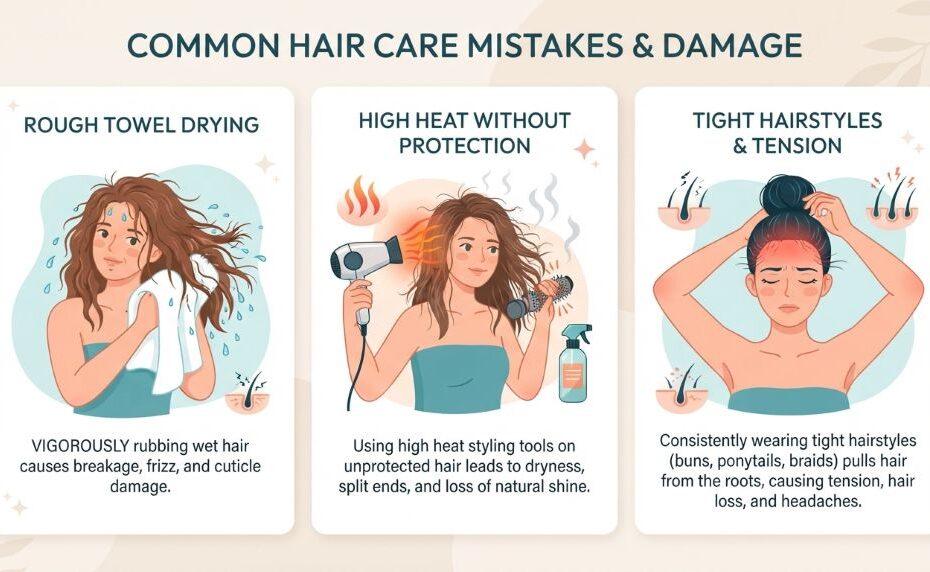
Heat is the fastest way to damage hair. Flat irons and curling wands often heat up to 230°C. However, research published in the Journal of Cosmetic Science shows that heat above 185°C permanently changes the keratin structure inside the strand. Additionally, high heat boils the water inside your hair and creates tiny weak spots. Therefore, every unprotected pass adds up. The fix is simple. Buy a heat protectant spray and use it every single time. Additionally, turn your tools down to the middle setting, because most hair types never need the top heat. One slow pass at a lower temperature also beats five fast passes at a high one. Consequently, you get better styles with far less damage.
Mistake 2: Brushing Wet Hair the Wrong Way
Wet hair is weak hair. When strands soak with water, they swell and lose strength. As a result, they stretch and snap far more easily than dry hair. Brushing wet hair with a fine-tooth brush is one of the worst things you can do. However, you still need to detangle after washing. The fix is to use a wide-tooth comb or a wet brush with flexible bristles. Additionally, start at the ends and work upward in small sections. Never rip downward from the roots, because that yanks out healthy strands. Moreover, apply a leave-in conditioner first, because it adds slip and cuts friction. Consequently, detangling becomes fast and painless instead of a daily battle.
Mistake 3: Wearing Tight Hairstyles Every Day
A sleek ponytail looks polished, but daily tension harms your roots. Constant pulling stresses the follicles along your hairline and around your edges. According to the American Academy of Dermatology, tight styles can cause traction alopecia, a form of hair loss from repeated tension. Furthermore, the same source notes that this damage can become permanent if the pulling continues for years. Therefore, change your habits now before trouble starts. Wear loose styles on most days and save tight ones for special events. Additionally, switch your part and your ponytail height often, so the same roots do not take all the stress. Use soft fabric ties instead of rubber bands, because metal and rubber cut into the strand.

Mistakes 4 to 6: Washing, Drying, and Product Habits
Mistake 4: Washing Every Day With Harsh Shampoo
Daily washing sounds like good hygiene, but it can backfire. Harsh sulfates strip the natural oils from your scalp. As a result, your scalp produces more oil to compensate, and your hair feels greasy faster. Therefore, you get trapped in a cycle of washing more and getting greasier. However, hair types differ. Fine, oily hair can handle washing every one to two days. Thick or curly hair does better with two to three washes a week. The fix is to choose a gentle, sulfate-free shampoo and wash only as often as your hair needs. Additionally, focus the shampoo on the scalp and let the rinse clean the ends. Consequently, your strands keep more of their natural protection.
Mistake 5: Rubbing Hair With a Rough Towel
That classic turban twist and rub routine damages the cuticle. Rubbing roughs up the outer layer of each strand and causes frizz and breakage. Additionally, wet hair is already at its weakest state. The fix is easy. Press out water gently with a microfiber towel or a soft cotton t-shirt. Additionally, squeeze section by section instead of scrubbing. Microfiber absorbs water faster with far less friction. Consequently, your hair dries smoother and breaks less. Give it ten minutes of gentle pressing, then let air drying finish the job whenever you can.
Mistake 6: Piling On Too Much Product
More product does not mean better hair. In fact, layers of silicone serums, oils, and creams build up on the strand. That buildup weighs hair down and blocks moisture from reaching the inside. According to a review in the International Journal of Trichology, product residue can attract dust and irritate the scalp over time. Therefore, simplify your routine. Use one leave-in product on damp hair and one finishing product at most. Additionally, add a clarifying wash once a month to strip the buildup away. Consequently, your regular products work again, and your hair feels lighter. Also, apply oils to the ends only, because the scalp makes its own oil.
Mistakes 7 to 8: Skipping Trims and Sun Protection
Mistake 7: Avoiding Haircuts to “Save” Length
Skipping trims feels like a way to grow longer hair. However, split ends do not stay in one place. They travel up the strand and thin the whole length over time. As a result, you keep more inches but lose density and quality. The fix is to book a light trim every eight to twelve weeks. You remove only a small amount, but you stop the damage from spreading. Additionally, healthy ends make the whole head look fuller. Consequently, regular trims are growth support, not growth sabotage.
Mistake 8: Ignoring Sun, Chlorine, and Salt Water
Your skin is not the only thing the sun harms. UV rays break down keratin and fade color-treated hair. Additionally, chlorine strips the cuticle, and salt water pulls moisture out of the strand. A study in the Journal of Photochemistry and Photobiology found that UV exposure weakens the hair fiber and degrades its proteins. Therefore, protect your hair outside. Wear a hat in strong sun, and wet your hair with clean water before swimming. Additionally, rinse right after you leave the pool or beach. A leave-in conditioner adds another shield before exposure.
Mistakes 9 to 10: Sleep Habits and Crash Diets
Mistake 9: Sleeping on Rough Cotton Pillowcases
Your hair rubs against your pillow for eight hours a night. Cotton grips the strand and roughs up the cuticle. As a result, you wake up with frizz, tangles, and broken strands on the pillowcase. The fix is to switch to silk or satin. These smooth fabrics let hair glide instead of snagging. Additionally, sleep in a loose braid to keep tangles down. Consequently, your hair keeps its moisture and you spend less time detangling in the morning.
Mistake 10: Crash Dieting and Skipping Protein
Hair is built from protein, and it grows slowly. Therefore, it shows nutritional problems early. Crash diets and very low protein intake often cause more shedding a few months later. Additionally, low iron and low vitamin D levels are linked to hair thinning in several studies, including research summarized by the American Academy of Dermatology. The fix is steady, balanced eating. Include protein at most meals, and get checked by a doctor if shedding feels sudden. Consequently, you protect not just your hair but your whole health.
Conclusion
Most hair damage comes from small daily habits, not one big disaster. Therefore, pick your weakest habit from this list first. Maybe it is the daily tight ponytail or the flat iron at full heat. Change that one thing for a month, and then tackle the next. Additionally, get a trim, buy a microfiber towel, and lower your heat settings tonight. And if hair thinning continues even after improving your routine, hair transplant techniques and aftercare tips may be useful to explore as part of your research.
Your hair responds to consistency more than any single product. So start today. Choose one mistake to fix, and give your hair the care it has been asking for.
FAQs
What is the most damaging hair care mistake?
Daily high heat without protection is the worst offender. Heat above 185°C permanently weakens keratin. Therefore, always use a heat protectant and keep tools on medium settings.
How often should I trim my hair to prevent damage?
Book a light trim every eight to twelve weeks. This stops split ends from traveling up the strand. Additionally, trims make hair look thicker instantly.
Can tight ponytails really cause hair loss?
Yes. Tight styles cause traction alopecia, a type of hair loss from constant pulling. However, early stages recover if you loosen up. Therefore, wear gentle styles most days.
Is it bad to sleep with wet hair?
It is risky. Wet hair is weak and rubs against the pillow all night. Consequently, you get more breakage and tangles. Dry your hair gently before bed when you can.
Do I need to change my diet for healthier hair?
Often yes. Hair needs protein, iron, and key vitamins to grow well. Crash diets frequently trigger shedding months later. Therefore, eat balanced meals and see a doctor if shedding is sudden.