
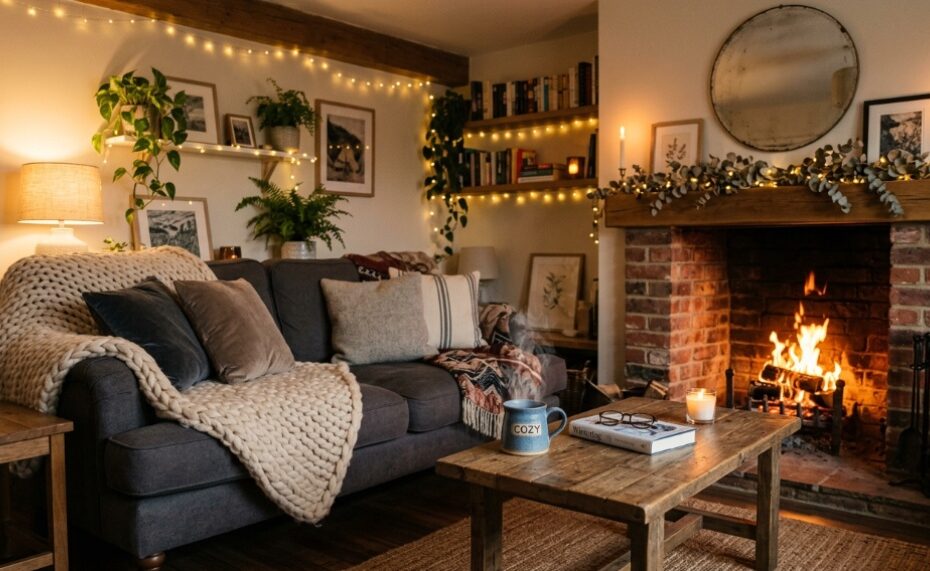
A sofa is often the most expensive and visually dominant piece of furniture in a living room, yet many sit in a neutral, unremarkable state. The reason is rarely the sofa itself. Usually, the transformation potential is hiding in the accessories. Decorative pillows change the color story, texture, and perceived comfort of a sofa faster than reupholstery or replacement. If you are exploring specific design directions, resources such as PillowShowcase illustrate how different accent shapes serve different aesthetic needs. The sections below explain how to choose, arrange, and balance pillows so a plain sofa looks intentional rather than unfinished.
Quick Answer
Decorative pillows transform a plain sofa by adding color, texture, pattern, and dimension that a single upholstery fabric cannot provide. The most effective approach is to use an odd number of pillows in varied sizes, anchor them with a solid base, layer a pattern or texture on top, and keep the palette to two or three coordinated colors. Scale matters more than quantity: pillows that are too small or too many make a sofa look cluttered rather than styled.
Key Takeaways
- Contrast drives the transformation. A light sofa needs darker or more saturated pillows; a dark sofa needs lighter or brighter ones.
- Mix at least two textures and one pattern to prevent a flat, catalogue-like look.
- Pillow size should relate to sofa width, not to personal preference alone; larger sofas need larger pillows.
- An odd number of pillows generally reads as more natural than an even, symmetrical arrangement.
- Insert quality and fill type affect how pillows hold their shape and how long the look lasts.
Why Neutral Sofas Look Plain in the First Place
A plain sofa looks plain because it presents one large, uninterrupted block of color and texture. Human perception reads large flat surfaces as background rather than focal point. A sofa in beige, grey, or charcoal is usually purchased for versatility, but that same versatility means it makes no visual statement on its own.
Decorative pillows solve this by introducing visual interruption and contrast. They create color blocking, add tactile variety, and give the eye a place to rest and travel. The sofa stays practical and neutral while the pillows carry the personality, which also means you can change the mood seasonally without replacing furniture.
How to Choose Pillows That Actually Change the Look
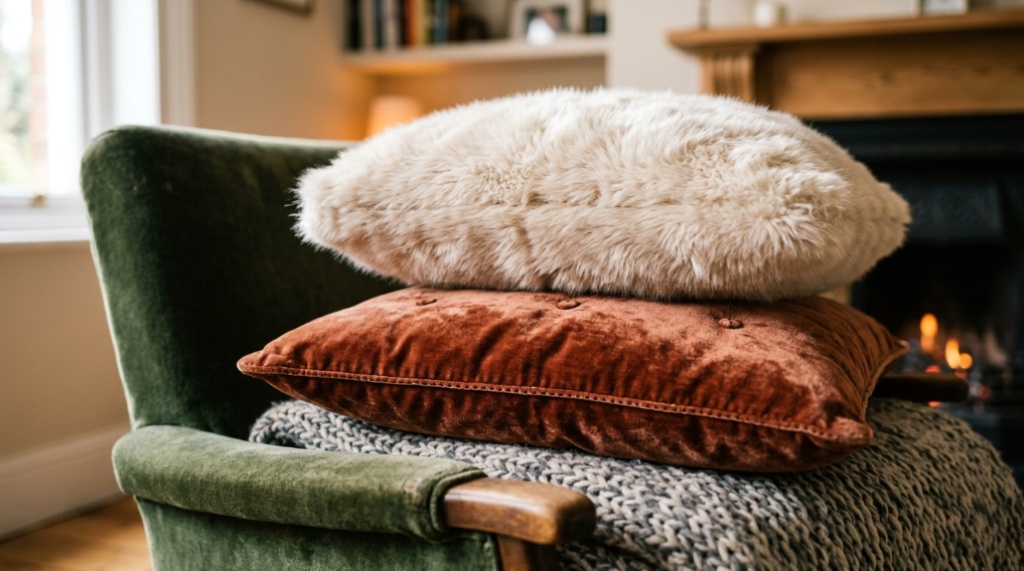
Choosing pillows is a design decision, not a shopping decision. Start with the outcome you want, then work backward to size, color, and texture.
Size and Scale
The most common mistake is buying pillows that are too small. A 16-inch pillow on a large sectional disappears. As a general guide, a standard two- or three-seat sofa handles 18- to 20-inch squares well, while larger sectionals and deep seats benefit from 20- to 24-inch pillows as the base layer. Smaller pillows, roughly 12 to 16 inches, work best as accents placed in front of larger ones, To ensure your comfort matches your newly styled aesthetic, check out our guide on the best bamboo pillows for side sleepers.
Color Strategy
Pick one of three approaches. A tonal scheme uses variations of the sofa’s own color for a calm, layered look. A contrasting scheme uses a color opposite or clearly distinct from the sofa for energy. An accent scheme keeps most pillows neutral and adds one strong color, which is the easiest to change later. Keeping to two or three colors prevents the arrangement from looking accidental.
Texture and Pattern
Texture is what separates a designed look from a flat one. Combine at least two of the following: smooth cotton, nubby linen, velvet, boucle, woven jute, or faux leather. Add one pattern, such as a stripe, geometric, or subtle floral, and let the solids support it. Two competing bold patterns usually fight each other.
Arrangement Rules That Work for Almost Any Sofa
The arrangement matters as much as the pillow selection. A few reliable patterns cover most situations.
- Classic odd-number layering: place three pillows with the largest at the back corners and one smaller in front center.
- Symmetrical pairs: two matching larger pillows at each end with one contrasting center pillow for a formal look.
- Asymmetrical grouping: cluster three or four pillows on one side and leave the other side more open, which suits modern and eclectic interiors.
- Sectional approach: treat each seating zone as its own small arrangement rather than lining pillows evenly across the entire length.
The “karate chop” crease in the center of a pillow is optional. It softens a stiff pillow and signals a relaxed, lived-in style, but it looks out of place on firm, formal pillows.
Pillow Inserts Matter More Than Most People Realize
A decorative cover is only half the equation. The insert determines how the pillow sits, how full it looks, and whether corners stay pointed.
Down and down-alternative inserts give a soft, sinkable look and hold a crease well. Polyester fills are firmer, more affordable, and easier for allergy-sensitive households, but they can look stiff over time. A practical rule is to buy an insert one to two inches larger than the cover so the pillow fills out completely rather than looking understuffed.
Common Mistakes That Undo the Transformation
Even well-chosen pillows can fail if a few basics are ignored.
- Using too many pillows, which crowds the seat and removes usable space.
- Matching everything perfectly, which flattens the arrangement and makes it look store-bought.
- Ignoring scale, so small pillows get lost on a large sofa.
- Choosing only one texture, which leaves the sofa looking one-dimensional.
- Forgetting that pillows should relate to the room, not just the sofa, so the palette connects with rugs, art, or curtains.
When Pillows Alone Are Not Enough
Decorative pillows can do a great deal, but they have limits. If a sofa’s shape, upholstery, or location is the real problem, pillows will only partially compensate. A sagging cushion, a damaged frame, or a sofa that is simply wrong for the room will not be fixed by accessories.
Pillows also cannot solve proportion problems on their own. Very low or very deep sofas may need a throw blanket, a different rug, or a slight furniture rearrangement to feel balanced. In those cases, pillows should be treated as one part of a broader styling plan rather than the whole solution.
How Many Pillows Does a Sofa Actually Need?
There is no single correct number, but practical guidance helps. A two-seat loveseat typically looks balanced with two to four pillows. A standard three-seat sofa works well with three to five. A large sectional often needs six to eight, distributed across seating zones rather than lined up evenly. The guiding principle is that every pillow should look intentional and no pillow should block comfortable seating.
Frequently Asked Questions
Do decorative pillows make a sofa look more expensive?
They can. A coordinated arrangement with contrasting textures and a controlled palette reads as intentional design, which generally makes a sofa look more considered and higher-end than a bare one.
Should pillows match the sofa or contrast with it?
Either can work. Matching or tonal pillows create a calm, cohesive look, while contrasting pillows create visual interest. Contrast is usually more effective at transforming a plain, neutral sofa.
What size pillows are best for a standard sofa?
For most standard sofas, 18- to 20-inch square pillows work as the primary layer, with 12- to 16-inch pillows used as accents in front. Larger sectionals often suit 20- to 24-inch base pillows.
How often should pillows be rotated or replaced?
Rotate the arrangement seasonally to refresh the look, and replace inserts when they lose loft or shape. Covers can be swapped far more often than the sofa itself, which is part of their value.
Can pillows be used on leather sofas?
Yes. Leather is smooth, so pillows with visible texture such as linen, boucle, or velvet create useful contrast. Solid colors and simple patterns usually work best against leather’s natural sheen.
Do I need to match pillows to the rug and curtains?
They do not need to match exactly, but they should relate. Pulling one or two colors from the rug or curtains into the pillow palette ties the room together without making it look repetitive.
Conclusion
Decorative pillows are one of the least expensive and most reversible ways to transform a plain sofa. The key is to treat them as a design decision rather than a random purchase: choose two or three coordinated colors, mix textures, add one pattern, and scale the sizes to the sofa. Inserts matter as much as covers for a polished result. Start with three or four well-chosen pillows, live with the arrangement for a week, and adjust from there. The sofa stays the same; the room simply looks finished.