
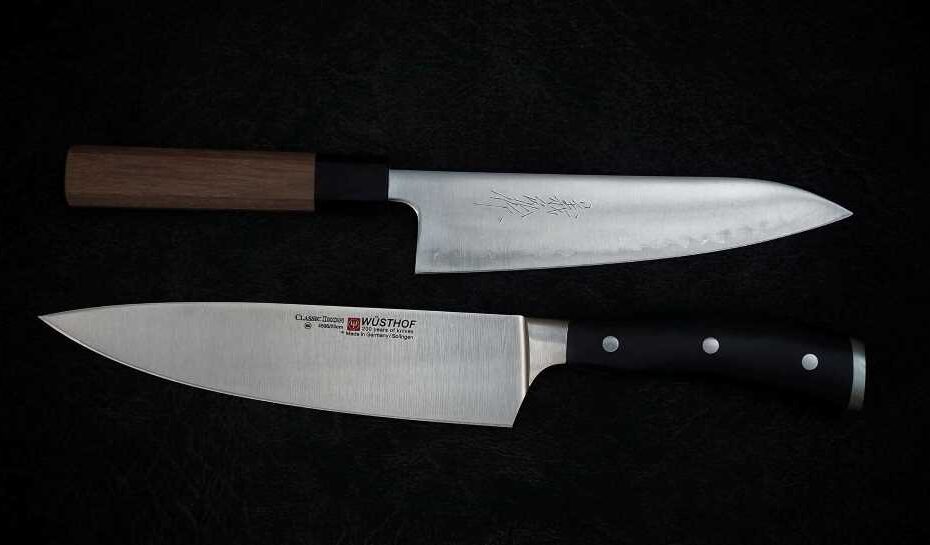
In the realm of culinary tools, the knife reigns supreme. From the humble paring knife to the imposing chef’s knife, these instruments are the backbone of any kitchen, professional or domestic. When it comes to choosing the right knife, the decision often boils down to two major categories: Japanese knives and Western knives. Each style has its own distinct characteristics, rooted in centuries of tradition and craftsmanship. Similarly, when comparing other types of blades, such as a carpet knife vs utility knife, it’s essential to understand their specific functions and how they cater to different needs in various tasks. In this article, we delve into the key differences between Japanese knives and Western knives, exploring their design, materials, and performance to help you make an informed choice.
Design and Aesthetics
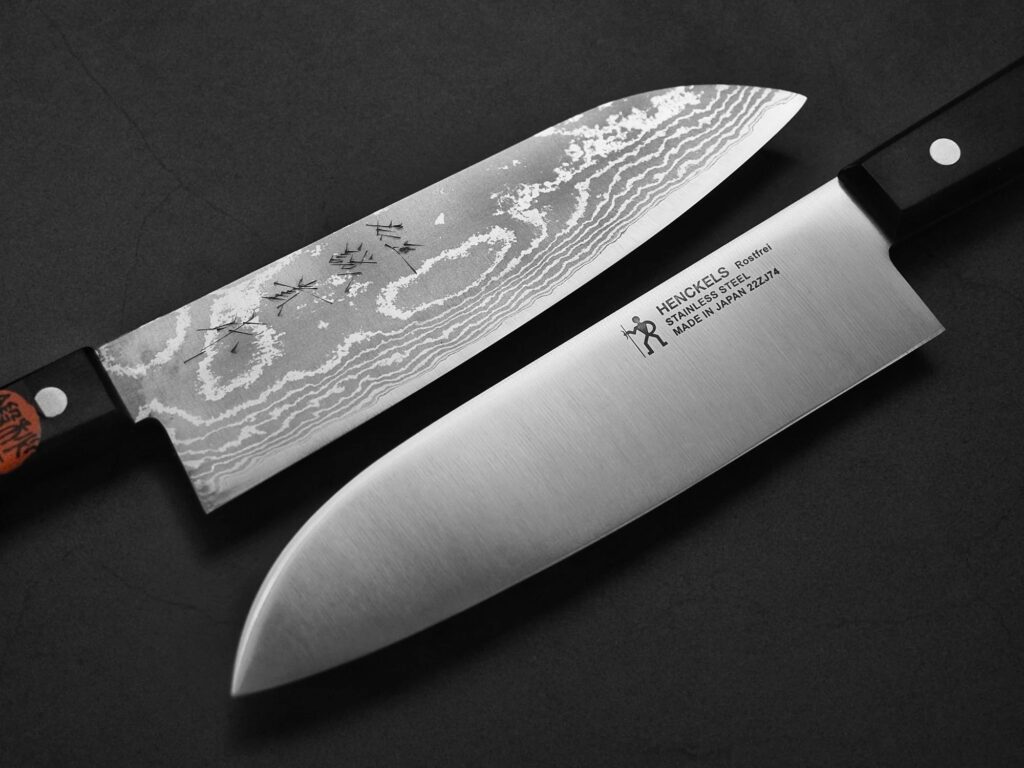
Blade Shape and Geometry
Japanese knives are renowned for their elegant, minimalist design, often characterized by a single-bevel blade. This means that the blade is sharpened only on one side, creating a razor-sharp edge that excels at precise cuts. The single-bevel design also lends itself to specific cutting techniques, such as the delicate slicing of sashimi or the intricate carving of vegetables.
Western knives, on the other hand, typically feature a double-bevel blade, sharpened on both sides. This creates a more robust, versatile edge that is suitable for a wide range of cutting tasks. The double-bevel design also makes the knives easier to sharpen and maintain for the average user.
Handle Design
Japanese knife handles are traditionally made of wood, often magnolia or ho wood, and are shaped to fit comfortably in the hand. They are typically octagonal in shape, providing a secure grip even when wet. The simplicity of Japanese handles complements the minimalist aesthetic of the blades.
Western knife handles, in contrast, are more diverse in materials and design. They can be made of wood, plastic, or composite materials, and come in various shapes and sizes to suit individual preferences. Western handles often feature ergonomic contours and textured surfaces to enhance grip and control.
Materials and Construction
Blade Steel
Japanese knives are typically crafted from high-carbon steel, which is known for its exceptional hardness and ability to hold a sharp edge. However, high-carbon steel is also more prone to rust and staining, requiring careful maintenance. Some Japanese knives also feature a laminated construction, with a core of high-carbon steel sandwiched between layers of softer stainless steel for added durability and flexibility.
Western knives, on the other hand, are often made from stainless steel, which is more resistant to rust and corrosion but may not hold an edge as long as high-carbon steel. Stainless steel is also easier to sharpen and maintain, making it a popular choice for home cooks.
Handle Materials
As mentioned earlier, Japanese knife handles are traditionally made of wood, while Western handles can be made of various materials, including wood, plastic, and composite materials. The choice of handle material often comes down to personal preference and aesthetic considerations.
Performance and Cutting Techniques
Sharpness and Edge Retention
Japanese knives, with their single-bevel blades and high-carbon steel, are renowned for their exceptional sharpness and ability to hold an edge. This makes them ideal for precise, delicate cuts, such as slicing fish or vegetables paper-thin. However, the extreme sharpness of Japanese knives also requires careful handling and maintenance to prevent chipping or damage.
Western knives, with their double-bevel blades and stainless steel construction, may not be as sharp as Japanese knives initially, but they tend to hold an edge longer and are more forgiving of less-than-perfect sharpening techniques. They are also more versatile for a wider range of cutting tasks, from chopping vegetables to slicing meat.
Cutting Techniques
The single-bevel design of Japanese knives lends itself to specific cutting techniques, such as the push cut, where the blade is pushed straight down through the food, and the pull cut, where the blade is pulled towards the user while slicing. These techniques require practice and precision but can yield exceptionally clean and precise cuts.
Western knives, with their double-bevel blades, are more suited to the rocking motion commonly used in Western kitchens. This technique involves rocking the blade back and forth while applying downward pressure, which is effective for chopping, slicing, and dicing a variety of foods.
Choosing the Right Knife
The choice between Japanese and Western knives ultimately depends on your individual needs and preferences. Consider the following factors when making your decision:
Cutting Tasks
If you frequently perform delicate slicing tasks or prepare Japanese cuisine, a Japanese knife with its razor-sharp edge and precise cutting ability may be the ideal choice. For general kitchen tasks and a wider range of cutting techniques, a Western knife with its versatility and ease of use may be more suitable.
Maintenance
Japanese knives, with their high-carbon steel blades, require more careful maintenance to prevent rust and staining. They should be hand-washed and dried immediately after use, and may require occasional sharpening by a professional. Western knives, made of stainless steel, are generally easier to maintain and can often be washed in a dishwasher.
Budget
Japanese knives, especially those made by renowned artisans, can be quite expensive. Western knives, while also available in a wide price range, tend to be more affordable, especially for entry-level and mid-range options.
Personal Preference
Ultimately, the choice between Japanese and Western knives comes down to personal preference. Some cooks prefer the feel and performance of Japanese knives, while others find Western knives more comfortable and versatile. If possible, try handling and using both types of knives before making your decision.
Conclusion
Japanese knives and Western knives each offer unique advantages and disadvantages, reflecting their distinct cultural origins and design philosophies. Japanese knives excel at precision and delicate cuts, while Western knives offer versatility and ease of use. By understanding the key differences between these two styles, you can make an informed choice that suits your culinary needs and preferences. Whether you’re a seasoned chef or a home cook, the right knife can elevate your cooking experience and unleash your culinary creativity.