
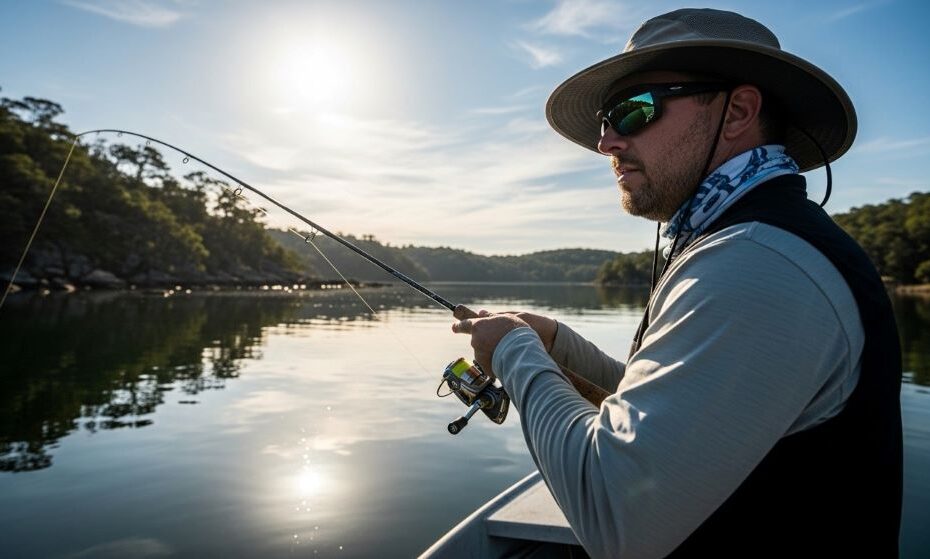
Spending a day on the water offers incredible relaxation and excitement. However, the sun’s reflection off water surfaces creates unique challenges for your eyes. Many anglers don’t realize that fishing exposes their eyes to more harmful rays than almost any other outdoor activity. The combination of direct sunlight and reflected glare can cause both immediate discomfort and long-term damage.
Understanding how to properly protect your vision during fishing trips is essential for maintaining healthy eyes throughout your life. This guide will help you make informed decisions about eyewear and other protective measures that keep your eyes safe while you enjoy your time on the water.
Why Fishing Creates Unique Eye Hazards
Water acts like a giant mirror, reflecting sunlight directly into your eyes. This reflected light adds to the direct sunlight you’re already receiving from above. Therefore, anglers face roughly double the ultraviolet exposure compared to other outdoor activities.
The sun emits various types of radiation, including ultraviolet A and ultraviolet B rays. Both types can harm your eyes, though they affect different parts. UVA rays penetrate deeper into the eye and may contribute to macular degeneration and cataracts over time. UVB rays primarily affect the front structures, potentially causing painful conditions like photokeratitis, which is essentially a sunburn of the cornea.
Bright conditions force your pupils to constrict, which is a natural protective response. However, this constant squinting causes eye strain and headaches. Additionally, squinting creates wrinkles around your eyes and doesn’t provide adequate protection against harmful rays.
Time of day matters significantly when considering sun exposure. The sun’s rays are most intense between 10 a.m. and 4 p.m. Many anglers prefer early morning or late evening fishing, which naturally reduces exposure. However, even during these times, reflected light from water remains a concern.
Geographic location also plays a role in determining risk levels. Fishing near the equator exposes you to stronger rays than fishing at higher latitudes. High-altitude lakes increase exposure because less atmosphere filters the sunlight. Snow and ice during winter fishing amplify reflection even more than water alone.
Understanding UV Protection Ratings
When shopping for protective eyewear, you’ll encounter various ratings and labels. Understanding these designations helps you choose glasses that truly protect your eyes rather than just darken your view.
The UV400 rating has become the gold standard for quality sun protection eyewear. This designation means the lenses block all light rays with wavelengths up to 400 nanometers. Since UVA and UVB rays fall below this threshold, UV400 sunglasses effectively block 100 percent of harmful ultraviolet radiation.
Some manufacturers list protection as a percentage instead. Look for glasses that block 99 to 100 percent of UVA and UVB rays. This percentage-based labeling provides the same protection as UV400 rating, just expressed differently.
Beware of glasses that only claim to block UVB rays. While UVB protection is important, leaving your eyes exposed to UVA radiation still poses significant health risks. Complete protection requires blocking both types.
Price doesn’t always indicate protection quality. Expensive designer sunglasses might offer no more UV protection than affordable options. Always check the label for specific UV ratings rather than assuming cost equals safety. However, higher-quality lenses often provide better optical clarity and durability alongside their protection.
Choosing the Right Lens Color for Fishing
Lens color affects more than just style. Different tints enhance your ability to see in various water conditions while still providing crucial protection when paired with proper UV blocking.
Gray lenses provide the most natural color perception. They reduce brightness without distorting colors, making them versatile for various fishing conditions. Gray works well for bright, sunny days on open water where accurate color recognition helps you identify fish species and structure.
Amber and copper lenses excel in variable light conditions. These colors enhance contrast, making it easier to spot fish in cloudy water or during overcast conditions. Many bass anglers prefer amber tints because they make it easier to see into the water and detect subtle changes in bottom structure.
Green lenses offer a good balance between contrast enhancement and natural color perception. They work particularly well in partly cloudy conditions and help reduce eye fatigue during long fishing sessions. Green tints also enhance red and green colors, which can be useful when watching strike indicators or lures.
Yellow lenses maximize contrast in low-light conditions. They’re ideal for dawn, dusk, or overcast days when you need every advantage to see clearly. However, yellow lenses provide too much light transmission for bright, sunny conditions.
Brown lenses combine the benefits of amber and gray. They enhance contrast while maintaining fairly natural colors. Brown works exceptionally well for freshwater fishing in varied light conditions.
Blue and purple mirror coatings can be added to any base lens color. These mirrors reflect additional light away from your eyes, providing extra comfort in extremely bright conditions. They also help reduce glare from water surfaces.
Polarization Makes a Critical Difference
Beyond UV protection, polarization represents the most important feature for fishing eyewear. Polarized lenses contain a special filter that blocks horizontal light waves, which are primarily responsible for glare from reflective surfaces like water.
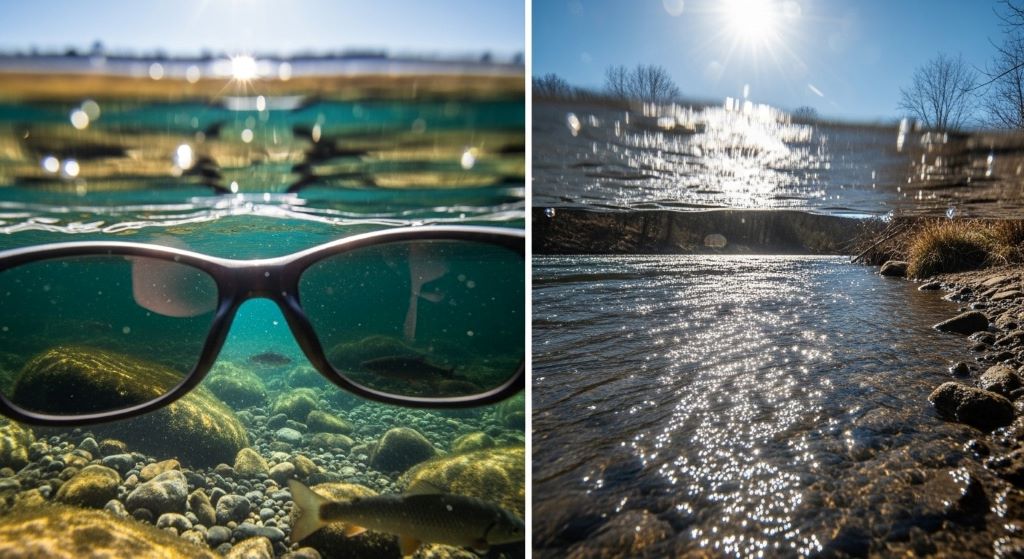
This technology dramatically reduces the bright, blinding glare that bounces off water. More importantly, polarization allows you to see beneath the surface. Without polarized lenses, reflected light prevents you from seeing into the water. With them, you can spot fish, underwater structures, and bottom features that would otherwise remain hidden.
The ability to see through the water’s surface provides significant fishing advantages. You can watch fish approach your lure, identify productive areas, and navigate safely around shallow hazards. Sight fishing becomes possible even in conditions where glare would normally make it impossible.
However, polarized lenses can make it difficult to read digital displays on fish finders and GPS units. Some newer devices have screens designed to work with polarization, but older models may appear dark or completely black when viewed through polarized glasses. Consider this factor when choosing your eyewear.
Not all polarized lenses offer the same quality. Cheaper polarized glasses might have uneven filtering or distortion. Quality polarized lenses provide consistent protection across the entire lens and maintain optical clarity without warping your view.
Proper Fit and Coverage Matter
Even the best eye protection while fishing loses effectiveness if the glasses don’t fit properly. Gaps around the frames allow light to enter from the sides, top, and bottom, exposing your eyes to harmful rays and glare.
Wraparound styles provide superior coverage by extending around the sides of your face. This design blocks peripheral light that would otherwise sneak around standard frames. Many fishing-specific eyewear options feature this wraparound construction.
The bridge of your glasses should sit comfortably on your nose without pinching or sliding. Adjustable nose pads help you customize the fit. Glasses that constantly slide down your nose will frustrate you and may fall off when you bend forward to land a fish.
Temple arms should fit snugly behind your ears without creating pressure points. Many fishing glasses include rubber grips on the temples to prevent slipping when you sweat or get splashed. This feature becomes especially important on boats where losing your glasses overboard could ruin your day.
Consider your face shape when selecting frames. Wider faces need larger frames, while narrow faces require more compact designs. Trying on multiple styles helps you find glasses that feel comfortable and look good.
For prescription eyewear users, several options exist. Prescription fishing sunglasses cost more but provide the best vision and protection. Clip-on polarized lenses offer a budget-friendly alternative, though they add weight and may not fit all frames perfectly. Fit-over sunglasses that wear like goggles over your regular glasses provide another solution, though some people find them bulky.
Additional Sun Protection Strategies
Quality eyewear forms the foundation of eye protection, but combining it with other strategies provides comprehensive safety during long days on the water.
Wide-brimmed hats significantly reduce the amount of direct sunlight reaching your eyes. The brim shades your entire face, preventing light from hitting your eyes from above. Many fishing hats include long bills that extend several inches, offering maximum shade. Some designs include side flaps for even more coverage.
Buffs or neck gaiters can be pulled up to cover your lower face, reducing reflection from below. While this might seem unnecessary, light reflecting off your chest, boat deck, or fishing vest can still reach your eyes. Covering these reflective surfaces helps in extremely bright conditions.
Seeking shade whenever possible gives your eyes periodic breaks from constant sun exposure. On boats without covers, consider installing a bimini top or similar shade structure. Bank anglers can position themselves under trees or bring portable canopies.
Take regular breaks from staring at bright water. Every hour or so, close your eyes for a few minutes or look at something in the shade. These short breaks help prevent eye fatigue and strain.
Stay hydrated throughout your fishing trip. Dehydration can cause dry eyes, which become more sensitive to sun and wind. Drinking plenty of water helps maintain healthy tear production, which naturally protects your eyes.
Understanding Long-Term Eye Damage Risks
Many anglers underestimate the cumulative effects of sun exposure on their eyes. Damage accumulates over years of fishing trips, eventually leading to serious vision problems.
Cataracts develop when proteins in your eye’s lens break down and clump together, causing cloudiness. UV exposure accelerates this process. Studies show that people who spend significant time outdoors without eye protection develop cataracts earlier and more frequently than those who protect their eyes.
Macular degeneration affects the central part of your retina, leading to loss of central vision. While age remains the primary risk factor, UV exposure contributes to earlier onset and faster progression. This condition can severely impact your ability to see details, read, and recognize faces.
Pterygium, sometimes called surfer’s eye, involves abnormal tissue growth on the white part of your eye. This fleshy growth can eventually extend onto the cornea, affecting vision. Wind, dust, and UV exposure all contribute to pterygium development. Anglers face particularly high risk because they’re exposed to all these factors simultaneously.
Photokeratitis causes immediate pain and damage. This condition, essentially a sunburn of your cornea, results from intense short-term exposure. Symptoms include pain, redness, tearing, and temporary vision loss. While it usually heals within a few days, repeated episodes can cause permanent damage.
Skin cancer can develop on your eyelids and around your eyes. The thin skin in these areas is particularly vulnerable to UV damage. Comprehensive sun protection, including sunglasses that cover the surrounding areas, reduces this risk.
Maintaining Your Protective Eyewear
Investing in quality fishing sunglasses requires proper care to maintain their protective properties and extend their lifespan.
Clean your lenses regularly with appropriate materials. Use microfiber cloths designed for eyewear, never paper towels or clothing, which can scratch lenses. Rinse salt water off immediately after fishing in marine environments, as salt residue can damage coatings.
Store glasses in a hard case when not wearing them. This protection prevents scratches and breakage. Keep the case somewhere secure on your boat or in your tackle bag where it won’t get crushed or knocked overboard.
Avoid leaving glasses in hot vehicles. Extreme heat can damage lens coatings and warp plastic frames. Similarly, don’t place glasses lens-down on any surface, as this invites scratches.
Inspect your glasses regularly for damage. Scratched lenses reduce optical clarity and can actually weaken UV protection in some cases. Loose screws should be tightened to prevent losing parts. Many opticians will tighten screws and adjust fit for free.
Replace glasses when they show significant wear. Even quality eyewear eventually degrades. If you notice the coating peeling, deep scratches affecting your vision, or frame damage, it’s time for new glasses. Your eye health is worth the investment.
Adapting Protection for Different Fishing Environments
Various fishing situations require adjusted approaches to eye protection while fishing.
Offshore fishing exposes you to intense sun with no shade available. Choose glasses with maximum coverage, dark lenses, and mirror coatings. Bring backup pairs in case you lose your primary glasses. Consider attaching a retention strap to prevent glasses from falling overboard.
Fly fishing often involves looking up at your line against bright skies. This activity requires excellent glare reduction while maintaining the ability to track your fly line. Many fly anglers prefer amber or copper lenses that enhance contrast without being too dark.
Ice fishing presents unique challenges with snow and ice creating intense reflection from all directions. Despite cold temperatures, UV exposure remains high. UV400 sunglasses become just as important in winter as summer. Consider photochromic lenses that adjust darkness based on light levels if you fish both inside and outside shelters.
Night fishing eliminates most UV concerns, but you still need eye protection from hooks and lures. Clear safety glasses with UV coating protect against accidents while allowing maximum light transmission. Some anglers prefer very light yellow tints that enhance contrast in low light.
Kayak fishing brings you closer to water level, increasing glare exposure. Wraparound styles with excellent side coverage work best. Ensure glasses fit securely since falling forward or capsizing could send loose glasses to the bottom.
Teaching Children Proper Eye Protection
Young anglers need eye protection even more than adults because their eyes are more vulnerable to UV damage. However, getting children to consistently wear protective eyewear requires different strategies.
Start with properly fitted glasses designed for children. Adult glasses won’t fit correctly and will constantly slide off, frustrating kids and leading them to remove them. Many manufacturers now offer quality children’s fishing sunglasses with full UV protection.
Make wearing glasses part of the fishing routine from the beginning. If kids see glasses as optional, they’ll resist wearing them. Present protective eyewear as essential equipment, just like a fishing rod or life jacket.
Let children choose their own glasses from appropriate options. Giving them some control over style increases the likelihood they’ll wear them willingly. Many kids’ fishing glasses come in fun colors or feature popular characters.
Set a good example by always wearing your own protective eyewear. Children imitate adults, especially parents. If you skip wearing glasses, your kids will too.
Explain protection in terms children understand. Younger kids respond to simple messages about keeping their eyes safe. Older children can learn about long-term health effects in more detail.
Conclusion
Protecting your eyes during fishing trips requires more than just wearing any sunglasses. Understanding UV protection ratings, particularly the importance of UV400 sunglasses, helps you choose eyewear that truly safeguards your vision. Combining quality eye protection while fishing with other strategies like wearing hats and seeking shade provides comprehensive safety.
Remember that lens color, polarization, and proper fit all contribute to both protection and fishing success. Different fishing environments may require adjusted approaches, but the fundamental need for eye protection remains constant. Additionally, the cumulative nature of UV damage makes consistent protection essential, not just during exceptionally bright days.
Taking care of your protective eyewear through proper cleaning and storage extends its effectiveness. Teaching young anglers about eye protection establishes healthy habits that benefit them throughout their lives. The small investment in quality protective eyewear and consistent use pays enormous dividends in maintaining healthy vision for decades of fishing enjoyment.
Your eyes are irreplaceable. Therefore, making eye protection a non-negotiable part of your fishing routine protects one of your most valuable assets while enhancing your ability to see fish and enjoy your time on the water.
Frequently Asked Questions
Do I need expensive sunglasses for proper eye protection while fishing?
No, price doesn’t determine UV protection quality. Many affordable sunglasses offer complete UV400 protection equal to expensive designer brands. However, higher-priced options often provide better optical clarity, durability, and more advanced features like superior polarization. Check the UV rating label rather than relying on price as an indicator of protection.
Can I wear regular sunglasses instead of fishing-specific eyewear?
Regular sunglasses with UV400 protection and polarization can work for fishing. However, fishing-specific glasses typically offer wraparound designs for better coverage, more durable frames resistant to water and impact, and lens colors optimized for seeing into water. If your regular sunglasses meet these criteria, they’ll work fine.
How do I know if my current sunglasses have adequate UV protection?
Check for labels indicating UV400 or 100 percent UVA/UVB protection. If you’ve lost the original documentation, many opticians offer free UV testing using specialized equipment. Without testing, you can’t know for certain. Given the importance of protection, consider replacing questionable glasses with new ones that clearly state their UV rating.
Will polarized lenses work for all types of fishing?
Polarized lenses benefit almost all fishing situations by reducing glare and allowing you to see into water. However, they can make reading some fish finder and GPS screens difficult. If you rely heavily on electronics, test your devices with polarized glasses before committing. Some anglers keep non-polarized glasses specifically for situations where screen visibility is crucial.
At what age should children start wearing protective fishing sunglasses?
Children should wear UV-protective sunglasses whenever they’re outdoors, including fishing trips. Start as early as infancy if they tolerate wearing them. Young eyes are more vulnerable to UV damage than adult eyes because their lenses are clearer and allow more UV penetration. Many manufacturers make sunglasses for babies and toddlers with secure straps to keep them in place.
Related Topics:
Best Natural Baits for Urban River Fishing
The Advantages of a Round Baitcasting Reel for Heavy Catfish