

Riding outdoors is one of life’s simple pleasures. The open road, fresh air, and the rhythm of your pedaling can all feel even better with the right soundtrack playing alongside you. However, choosing the right Bluetooth speaker for your bike is not as simple as grabbing the first option you find online. There are several important factors to consider before spending your money. This guide walks you through everything you need to know to make a smart, informed choice for your next outdoor adventure.
Why Audio Quality on a Bike Is Different from Everyday Listening
Listening to music while sitting in your living room is a very different experience from listening while cycling outdoors. Wind noise, traffic sounds, and the natural environment all compete with your speaker’s output. Therefore, a speaker that sounds impressive indoors may disappoint you completely on the road.
You need a speaker that can project sound clearly even in noisy conditions. Volume output matters a great deal. Additionally, the direction of the speaker matters too. Front-facing speakers tend to perform better for cyclists than speakers that project sound sideways or backward. Understanding this difference helps you filter out options that simply would not work for your riding style.
The Most Important Features to Look For
Not all Bluetooth speakers are built for outdoor use. Some are designed for indoor spaces or casual outdoor settings like patios and parks. Cycling, however, exposes your gear to much harsher conditions. Rain, dust, mud, vibration, and direct sunlight are all part of the picture.
Here are the key features every good bike speaker should have:
- Weather resistance rating: Look for an IPX5 rating at minimum. IPX7 is even better and means the speaker can handle submersion in water for a short period.
- Battery life: A speaker with at least eight hours of playback covers most full-day rides. Some models offer twelve hours or more.
- Mounting system: The speaker should attach firmly to your handlebars without wobbling or sliding during rough terrain.
- Bluetooth range: A range of ten meters or more gives you flexibility, especially if you want to pair the speaker with a phone in your jersey pocket.
- Volume and clarity: High decibel output ensures you can hear your music clearly even at higher speeds.
- Size and weight: A lighter speaker puts less strain on your handlebars and does not affect your bike’s balance.
Additionally, some speakers include built-in microphones for hands-free calls. This is a useful feature if you ride in areas where you might need to take a phone call without stopping.
Understanding Waterproof and Weather Resistance Ratings
One of the biggest concerns for any outdoor cyclist is what happens when the weather turns. Rain can appear without warning, and no one wants their speaker to fail mid-ride. This is where waterproof bike speakers become essential rather than optional.
The IP (Ingress Protection) rating system tells you exactly how resistant a speaker is to water and dust. The first digit after “IP” refers to dust protection. The second digit refers to water protection. An IPX5 speaker can handle water jets from any direction. An IPX7 speaker survives being submerged in up to one meter of water for thirty minutes.
However, not every speaker that claims to be waterproof actually carries a verified rating. Always check for a certified IP rating rather than vague marketing language like “water-resistant” or “splash-proof.” These terms have no standard definition and can be misleading. Therefore, sticking to speakers with a verified rating protects your investment.
Mounting Options and Stability on the Road
A great-sounding speaker is useless if it cannot stay attached to your bike. Mounting quality is one of the most overlooked factors when people shop for bike speakers. Many cyclists have experienced the frustration of a speaker rattling loose or shifting position during a bumpy ride.
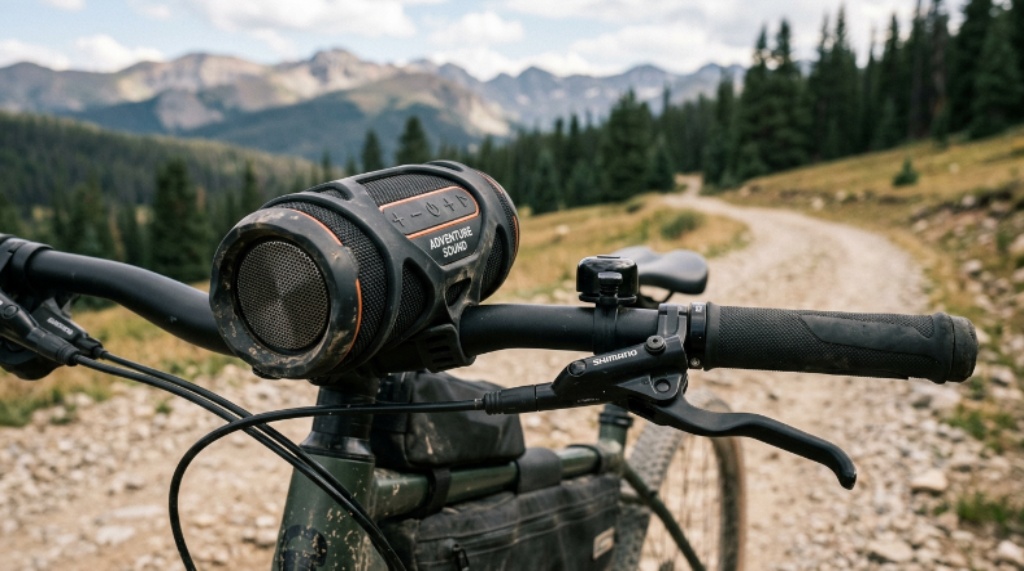
Look for speakers that use a universal handlebar mount with adjustable straps or silicone bands. These tend to grip more securely than plastic clip mounts. Some speakers are specifically designed with cylindrical shapes that wrap around the handlebar, which provides extra stability.
Furthermore, consider the placement on your bike. Handlebar mounting is the most common choice because it projects sound forward in your direction of travel. Some cyclists prefer frame mounting for a cleaner look, though this can reduce sound quality since the speaker faces downward or sideways.
Battery Life and Charging Convenience
Long rides demand long battery life. A speaker that dies after four hours is not suitable for serious outdoor cycling. Therefore, battery performance should be near the top of your checklist.
Most quality outdoor cycling speakers offer between eight and sixteen hours of playback on a single charge. Some premium models include solar-assisted charging or power bank functions that let you charge your phone from the speaker itself. These features are worth considering if you go on extended trips or bikepacking adventures.
Charging method matters too. USB-C charging is faster and more universally compatible than older Micro-USB connections. Additionally, check how long the speaker takes to fully charge. A speaker that takes eight hours to charge but only plays for six is a poor trade-off.
Sound Performance at High Speeds
Speed creates wind noise, and wind noise is the enemy of good audio. A speaker that sounds clear at ten kilometers per hour may become inaudible at thirty. Therefore, understanding how a speaker handles real-world cycling conditions is critical.
Outdoor cycling speakers with dual drivers or passive radiators tend to deliver richer, fuller sound at higher volumes. Look for speakers that offer a wide soundstage rather than a narrow, focused beam of sound. A wider soundstage means you still hear your music even when your head moves slightly or when the wind direction shifts.
Bass performance is another consideration. While deep bass is great for home listening, outdoor cycling conditions tend to scatter low frequencies. A speaker with a balanced mid-range response often sounds better on the road than one that emphasizes heavy bass.
Connectivity and Extra Features That Add Value
Modern Bluetooth speakers offer more than just wireless audio. Many models include features that specifically benefit cyclists. Understanding these extras helps you decide what is worth paying for and what is simply a gimmick.
Here are some connectivity and extra features worth considering:
- Bluetooth 5.0 or higher: Newer Bluetooth versions offer stronger connections, lower latency, and better energy efficiency.
- Voice assistant compatibility: Some speakers work with Siri or Google Assistant, allowing hands-free control without reaching for your phone.
- Built-in LED lights: A small number of models include front or rear LED lights. These serve as safety indicators during low-light rides.
- Stereo pairing: Some speakers can connect two units wirelessly for a richer stereo sound experience on the trail.
- FM radio: A few models include an FM tuner for areas with limited phone signal.
However, do not let extra features distract you from the core priorities. Sound quality, weather resistance, and battery life should always come first. Extra features are a bonus, not a replacement for solid fundamentals.
How Much Should You Spend?
Budget is always part of the conversation. Fortunately, the market for bike Bluetooth speakers covers a wide price range. You do not need to spend a lot to get a reliable, high-performing option.
Entry-level speakers in the fifteen to thirty dollar range can work well for casual riders. They may lack advanced weather ratings or premium sound quality, but they get the job done on dry days and easy trails.
Mid-range speakers in the forty to eighty dollar range typically offer better build quality, verified IP ratings, and improved battery life. This is where most cyclists find the best balance between cost and performance.
Premium speakers above one hundred dollars offer top-tier sound, advanced features, and superior durability. They are worth the investment for serious cyclists who ride frequently in challenging conditions.
Conclusion
Choosing the right Bluetooth speaker for your bike comes down to a few clear priorities. Sound quality, weather resistance, battery life, and mounting stability are the four pillars of a great outdoor riding speaker. Waterproof bike speakers with a verified IP rating protect your investment on unpredictable weather days. A reliable mounting system keeps your speaker exactly where it should be, no matter how rough the trail gets.
Additionally, consider battery life and Bluetooth version before finalizing your choice. Outdoor cycling speakers that balance all these features within your budget will serve you ride after ride. Take your time, read verified reviews, and focus on your specific riding habits. The right speaker turns every outdoor adventure into a more enjoyable experience.
Frequently Asked Questions
What IP rating should a bike speaker have for outdoor use?
At minimum, look for an IPX5 rating, which protects against water jets from any direction. If you ride in heavy rain or wet conditions regularly, an IPX7 rating offers stronger protection and is the safer choice.
Can I use any Bluetooth speaker on my bike?
Technically yes, but not every speaker is suited for cycling. Speakers without a secure mounting system, a weather-resistant rating, or enough volume output will underperform on the road. A purpose-built bike speaker is always the better option.
How long should a bike speaker’s battery last?
For most day rides, a minimum of eight hours is recommended. If you go on longer bikepacking trips or full-day adventures, look for models offering twelve hours or more of continuous playback.
Will wind noise block my speaker’s sound while cycling?
At higher speeds, wind noise can reduce audio clarity. Choose a speaker with higher volume output, dual drivers, and a wide soundstage to minimize this problem. Front-facing speakers mounted on handlebars tend to perform best in windy conditions.
Is it safe to listen to music while cycling outdoors?
Listening at a moderate volume is generally safe and widely practiced. However, always remain aware of your surroundings. Avoid using both ears with in-ear headphones if local laws restrict it, and keep the volume at a level that still allows you to hear traffic and other signals.