

Here’s what separates a casual spinner from a serious cyclist training indoors: the equipment. Not the legs, not the lungs — the gear that turns a spare room into a legitimate training facility. The right indoor cycling equipment doesn’t just make workouts more comfortable — it makes them measurably more effective by providing accurate data, realistic road feel, and the durability to handle 10+ hours of weekly punishment. Most cyclists waste money on flashy gadgets while ignoring the foundational pieces that actually drive performance gains. If your current setup leaves you dreading trainer sessions instead of looking forward to them, your equipment is the bottleneck not your motivation.
The global indoor cycling equipment market reached $1.8 billion in 2024, and for good reason. Serious cyclists now expect lab-grade accuracy from their bike training equipment at home. Smart trainers deliver power accuracy within ±1%, heart rate monitors rival clinical ECG readings, and training platforms simulate real-world courses with gradient-matched resistance. This isn’t the era of dumb magnetic trainers and boredom. This is precision training — and choosing the right indoor cycling equipment determines whether you’re building fitness or just sweating.
What Indoor Cycling Equipment Do Serious Cyclists Actually Need?
Serious cyclists need five core pieces of indoor cycling equipment: a smart trainer, power meter or power-accurate trainer, heart rate monitor, proper cooling system, and a training platform subscription.
Beyond those essentials, the following equipment elevates your setup from functional to professional:
- Smart trainer (direct-drive preferred) — the foundation of any serious indoor setup
- Training mat — noise dampening, floor protection, sweat barrier
- Industrial fan (1500+ CFM) — not a desk fan, a real cooling solution
- Chest-strap heart rate monitor — optical wrist sensors lag during intervals
- Rocker plate (optional) — adds lateral movement for comfort on long rides
- Dedicated training tire or direct-drive cassette — saves your good tires
- Sweat guard/frame protector — prevents corrosion damage to headset and stem
- Large screen or tablet mount — for training apps and virtual riding
The total investment for a serious setup ranges from $800 to $2,500 depending on trainer choice and accessories. That’s less than a single carbon wheelset — and arguably delivers more performance improvement per dollar.
Which Smart Trainer Is Best for Serious Indoor Cycling?
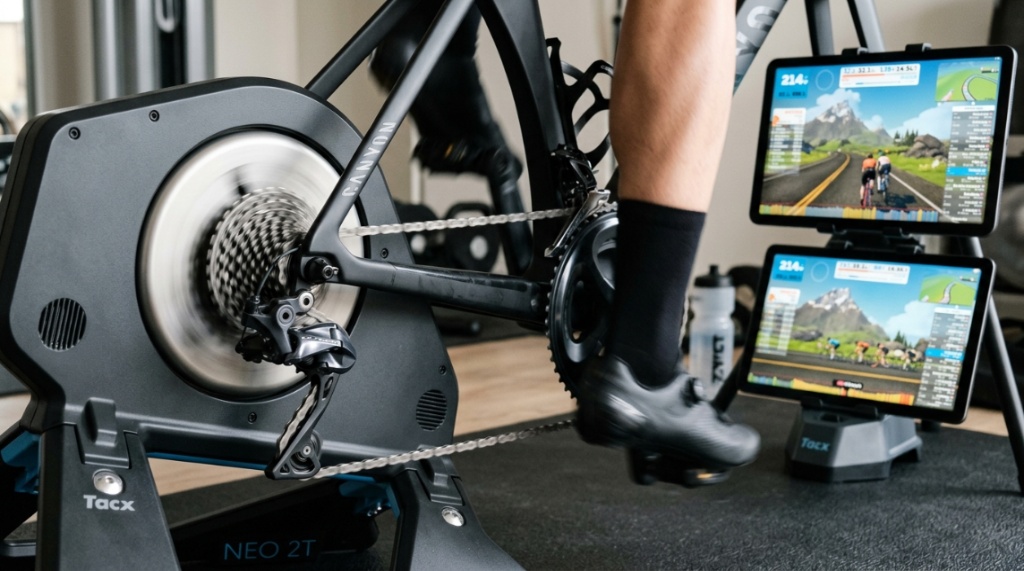
For serious cyclists, a direct-drive smart trainer with ±1% power accuracy and at least 2,000 watts maximum resistance is the minimum standard.
Here’s how the top trainers compare in 2025:
| Trainer | Type | Power Accuracy | Max Wattage | Max Gradient | Noise Level | Price Range |
|---|---|---|---|---|---|---|
| Wahoo KICKR v6 | Direct-drive | ±1% | 2,200W | 20% | Very quiet | $1,200–$1,300 |
| Tacx NEO 3M | Direct-drive | ±1% | 2,200W | 25% | Nearly silent | $1,400–$1,500 |
| Elite Justo | Direct-drive | ±1% | 2,300W | 24% | Quiet | $900–$1,000 |
| Saris H3 | Direct-drive | ±2% | 2,000W | 20% | Quiet | $700–$800 |
| Wahoo KICKR CORE | Direct-drive | ±2% | 1,800W | 16% | Quiet | $600–$700 |
The Wahoo KICKR v6 and Tacx NEO 3M lead the market for serious training. The Elite Justo offers exceptional value if budget matters. Avoid wheel-on trainers if you’re training more than 5 hours per week — the tire wear, noise, and power inaccuracy aren’t worth the savings.
Why Does Power Accuracy Matter in Bike Training Equipment?
Power accuracy matters because your entire training plan depends on precise zones. A ±1% accurate trainer means your 250W sweet spot interval is actually 247–253W. A ±5% trainer means it could be 237–263W — that’s the difference between zone 3 and zone 4.
Inaccurate power data causes these problems:
- FTP tests produce wrong numbers, making all training zones incorrect
- Recovery rides become tempo rides (too hard)
- Threshold intervals become sweet spot (too easy)
- Progress tracking becomes unreliable — you can’t tell if you’re improving or if the trainer is drifting
- Racing on platforms like Zwift becomes unfair if your power reads high
For serious cyclists, ±1% accuracy is non-negotiable. It’s the difference between training with purpose and training with guesswork.
What’s the Best Training Platform for Structured Cycling Workouts?
TrainerRoad is the best platform for pure structured training. Zwift is best for motivation and virtual racing. Intervals.icu is best for free analytics and plan building.
Here’s how the major platforms compare:
- TrainerRoad ($20/month) — AI-powered adaptive training plans, minimal distractions, pure performance focus. Best for disciplined riders who want results.
- Zwift ($15/month) — Virtual worlds, group rides, races. Gamification keeps you engaged. Structured workouts available but not the primary focus.
- Rouvy ($15/month) — Augmented reality routes filmed on real roads. Great for riders who find virtual worlds boring.
- Wahoo SYSTM ($15/month) — Combines structured plans with cinematic workout videos. Good variety.
- Intervals.icu (free) — Powerful analytics, custom workout builder, training plan tools. No virtual riding, but unbeatable for data analysis.
Most serious cyclists use a combination: TrainerRoad or SYSTM for weekday structured sessions, Zwift for weekend social rides or races. The platform matters less than consistency — pick one and stick with it.

How Important Is Cooling for Indoor Cycling Performance?
Cooling is the single most underrated piece of indoor cycling equipment. Without adequate airflow, your core temperature rises rapidly, heart rate drifts upward, and power output drops by 10–20% compared to outdoor riding.
The science is clear: when body temperature exceeds 38.5°C, your brain reduces muscle recruitment as a protective mechanism. Outdoors, you generate 30–50 km/h of airflow naturally. Indoors, you generate zero unless you create it artificially.
Cooling requirements for serious indoor training:
- Minimum: One large floor fan (18–20 inch) pointed at your torso — delivers roughly 1,000–1,500 CFM
- Better: Two fans — one for torso, one for face/head
- Best: Three-fan setup or a dedicated high-velocity trainer fan like the Wahoo KICKR Headwind (speed-reactive airflow)
Riders who add proper cooling typically see an immediate 5–15 watt improvement at the same heart rate. That’s free fitness — just from moving air.
Do You Need a Rocker Plate for Long Indoor Rides?
A rocker plate isn’t essential, but it significantly improves comfort for rides longer than 60 minutes by allowing natural lateral bike movement.
When you ride outdoors, your bike moves beneath you constantly — leaning into turns, swaying during climbs, shifting with body weight. A fixed trainer eliminates all lateral movement, which creates unnatural pressure points on your sit bones, hands, and lower back.
Rocker plates (ranging from $200 for DIY to $800+ for commercial options) restore that natural movement. Benefits include:
- Reduced saddle discomfort on rides over 60 minutes
- Less lower back fatigue during sustained efforts
- More realistic climbing feel (bike sways naturally)
- Better core engagement throughout the ride
If you regularly ride 90+ minutes indoors, a rocker plate is worth the investment. For sessions under 60 minutes, it’s a luxury rather than a necessity.
What Heart Rate Monitor Works Best for Indoor Cycling?
A chest-strap heart rate monitor outperforms optical wrist sensors for indoor cycling because sweat and high-intensity efforts cause optical sensors to lose accuracy.
Top choices for serious indoor cyclists:
- Polar H10 — gold standard accuracy, dual Bluetooth + ANT+ connectivity, built-in memory
- Garmin HRM-Pro Plus — adds running dynamics if you cross-train, excellent accuracy
- Wahoo TICKR X — reliable, comfortable strap, dual connectivity
Optical sensors (Apple Watch, Garmin wrist units) lag 5–15 seconds during rapid intensity changes — which is exactly when accurate data matters most. During VO2 max intervals, that lag makes your data nearly useless for pacing. Spend $60–$100 on a chest strap. It’s the highest-value piece of bike training equipment you can buy.
Choosing the right ecosystem means looking beyond the bike frame to the peripheral gear that keeps long, grueling trainer sessions engaging. Serious endurance riders know that proper ventilation and high-fidelity audio are just as vital as flywheel weight for surviving multi-hour blocks. If you want to take your audio setup out of the pain cave and onto the open road, investing in the Best Bike Speakers Bluetooth Wireless for Outdoor Adventures ensures your high-energy training playlists deliver crisp, clear sound whether you are grinding on a stationary trainer or hammering real-world gravel trails.
How Should You Set Up Your Indoor Training Space?
Your training space needs four things: ventilation, entertainment, accessibility, and protection from sweat damage.
Practical setup guidelines:
- Location: Garage, basement, or spare room with good airflow. Avoid carpeted rooms — sweat destroys carpet.
- Floor protection: Use a dedicated trainer mat (at least 6′ x 3′). Protects floors and reduces vibration noise.
- Screen placement: Eye level, 3–5 feet away. A TV or large tablet mounted at handlebar height prevents neck strain.
- Towel station: Keep 2–3 towels within reach. You’ll soak through one in a hard session.
- Hydration: Two bottle cages minimum. Indoor sessions require 750ml–1.5L per hour.
- Electrical: Ensure outlets for trainer, fans, screen, and any sensors that need charging.
A well-organized pain cave makes the difference between dreading indoor sessions and actually enjoying them. Invest 30 minutes in setup — it pays dividends across hundreds of future workouts.
Conclusion
Serious cycling fitness demands serious indoor cycling equipment. The right smart trainer, accurate power data, proper cooling, and a structured training platform transform your spare room into a performance lab that rivals any cycling studio. You don’t need to spend thousands — but you do need to invest strategically in the pieces that directly impact training quality.
Start with a direct-drive smart trainer and a chest-strap heart rate monitor. Add proper cooling. Subscribe to one training platform and follow a structured plan. These four decisions alone will produce more fitness gains than any amount of random outdoor miles. The equipment exists to remove friction between you and consistent training. Choose wisely, set up once, and focus on what actually matters — putting in the work.
What does your current indoor setup look like? Drop your trainer model and favorite training app in the comments — let’s compare notes and help each other build the ultimate pain cave.
Frequently Asked Questions
How much should I spend on indoor cycling equipment as a serious cyclist?
Budget $1,000–$2,500 for a complete serious setup. The trainer itself accounts for 50–60% of that cost. A direct-drive smart trainer ($600–$1,500), chest strap HR monitor ($60–$100), training mat ($50–$80), quality fan ($50–$150), and platform subscription ($15–$20/month) covers everything essential.
Is a direct-drive trainer really worth the extra cost over wheel-on?
Yes, for serious cyclists. Direct-drive trainers offer better power accuracy (±1% vs ±3–5%), quieter operation, zero tire wear, more realistic road feel, and higher maximum resistance. The $300–$500 price difference pays for itself within months through better training data and eliminated tire replacement costs.
Can I use my road bike on an indoor trainer or do I need a dedicated bike?
You can absolutely use your road bike. Most serious cyclists use their primary bike on the trainer to maintain identical fit and position. If you train indoors more than 5 hours weekly, a dedicated trainer bike (even a cheap frame with proper fit) saves the hassle of mounting/dismounting and protects your good bike from excessive sweat exposure.
What’s the most important accessory people overlook?
Cooling. A proper high-CFM fan is the most impactful and most overlooked piece of bike training equipment. Without adequate airflow, your performance drops 10–20% and perceived effort skyrockets. A $40 industrial floor fan improves your indoor experience more than a $500 gadget upgrade.
How often should I replace or maintain my indoor cycling equipment?
Smart trainers need belt replacement every 15,000–20,000 km (varies by model). Calibrate monthly for accuracy. Replace chest strap HR monitor batteries every 6–12 months. Trainer tires (wheel-on) last 3–6 months of regular use. Clean sweat from all equipment after every session to prevent corrosion.
Do I need a power meter if my smart trainer already measures power?
Not necessarily. A quality smart trainer (±1% accuracy) provides reliable power data for indoor training. However, if you race outdoors and want consistent power numbers across indoor and outdoor rides, a pedal-based or crank-based power meter ensures your data matches regardless of where you ride.
What’s better for fitness: a smart bike or a smart trainer with my own bike?
A smart trainer with your own bike is better for serious cyclists because it preserves your exact outdoor position and allows seamless indoor/outdoor transitions. Smart bikes (Wahoo KICKR Bike, Tacx NEO Bike) are convenient but expensive ($2,500–$3,500) and lock you into a position that may not match your road bike perfectly.