

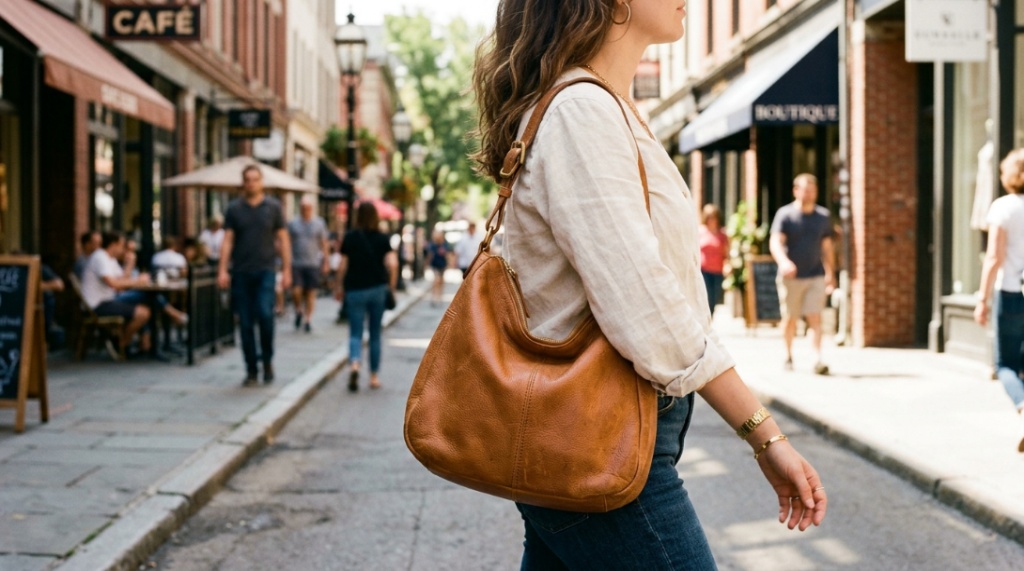
The average American woman switches between two to three bag styles weekly — most commonly between a hobo and a tote — because neither alone covers every situation perfectly. Deciding whether hobo bags for women or tote bags serve daily life better depends on your specific carry needs, body mechanics, daily environments, and how much switching between bags you’re willing to tolerate. A hobo bag is a soft, crescent-shaped shoulder bag with a single strap and a slouchy body designed to conform to your hip.
A tote bag is a structured or semi-structured open-top bag with two parallel handles designed for carrying in hand or on the forearm. The real debate isn’t about fashion preference — it’s about ergonomic function, organizational capacity, and lifestyle alignment. The wrong choice means daily frustration: shoulder pain from poor weight distribution, items lost in bottomless caverns, or bags that fight your routine instead of supporting it. This comparison breaks down the objective differences between these two essential casual shoulder bags so you can choose based on function rather than impulse.
What Are the Fundamental Structural Differences Between Hobo and Tote Bags?
The fundamental differences are shape (crescent vs. rectangular), body structure (soft/unstructured vs. semi-rigid/structured), carrying method (single shoulder strap vs. dual handles), and interior organization (minimal vs. compartmentalized).
Side-by-side structural comparison:
| Feature | Hobo Bag | Tote Bag |
|---|---|---|
| Shape | Crescent/half-moon, curved bottom | Rectangular/square, flat bottom |
| Structure | Soft, unstructured, conforms to contents | Semi-rigid to rigid, maintains shape |
| Closure | Zip, magnetic snap, or gathered top | Open top (most common) or snap/zip |
| Carrying method | Single shoulder strap (on-shoulder) | Two handles (hand, forearm, or shoulder) |
| Weight distribution | Concentrated on one shoulder point | Distributed across hand or two shoulder points |
| Access style | Reach in from top, items shift with movement | Wide open access, items stay in place |
| Body conformity | Molds against hip, moves with body | Maintains independent shape, swings when walking |
| Interior visibility | Low (deep crescent, items settle to curve) | High (wide opening, flat base keeps items visible) |
| Style register | Relaxed, bohemian, casual-chic | Professional, organized, polished-casual |
These structural differences create fundamentally different daily experiences. Neither is objectively better — but one will match your specific lifestyle, body mechanics, and organizational preferences far better than the other.
Which Bag Is More Comfortable for All-Day Carry?
Hobo bags are more comfortable for extended walking and standing because the single-strap-on-shoulder design distributes weight along your frame’s natural carrying axis — but tote bags are more comfortable for short-carry situations where hand-holding and setting down frequently matters more.
Comfort depends on your day’s structure:
- If you walk 30+ minutes continuously: Hobo wins. The shoulder strap frees both hands and the bag’s body sits against your hip, creating a low center of gravity. Totes require hand or forearm carrying that fatigues arm muscles within 15–20 minutes of continuous walk.
- If you transit between desk/table/car frequently: Tote wins. It sits flat when set down, sits upright on any surface, and picks up with minimal adjustment. Hobos collapse when set down and require repositioning of the strap each time you retrieve them.
- If you carry heavy loads (5+ lbs): Tote with wide handles distributes load across both hands or forearms. Heavy hobo bags concentrate weight on one shoulder, creating long-term neck and back strain. Chiropractors specifically flag single-strap heavy bags as posture risks.
- If you carry light loads (under 3 lbs): Hobo offers superior comfort — the shoulder strap disappears from awareness at light weights, and the bag moves naturally with your body rather than swinging independently.
Ergonomic research published in the Journal of Physical Therapy Science indicates that single-shoulder bags exceeding 10% of body weight (roughly 12–15 lbs for most women) create measurable spinal asymmetry over time. For daily use, this means hobo bags work best when contents stay under 4–5 lbs. Heavier daily carries favor tote distribution — or alternating hobo strap between shoulders regularly.
Which Bag Offers Better Organization for Daily Essentials?
Tote bags generally offer superior organization through structured interiors, multiple pockets, and flat bases that keep items visible and accessible — while hobo bags sacrifice organization for a fluid, easygoing design that prioritizes aesthetics over rigid compartmentalization.
Organizational comparison by daily task:
- Quick phone retrieval: Tote wins — wider opening and visible interior let you spot and grab. Hobo requires fishing through a curved interior where items migrate to the crescent bottom.
- Keeping items upright: Tote wins decisively — flat base prevents water bottles, cosmetics, and containers from tipping. Hobo’s curved bottom means everything gravitates toward the center, potentially causing spills.
- Finding small items (keys, lipstick, pen): Tote wins if pocketed. Hobo’s open interior lets small items disappear into the slouchy body, requiring full excavation to locate them.
- Laptop/tablet carry: Tote wins — flat rectangular interior mirrors device shape. Hobo’s crescent doesn’t accommodate rectangular objects as naturally, creating diagonal placement that wastes space.
- Flexible contents that change daily: Hobo handles this well — the soft body accommodates irregular shapes (umbrella, water bottle, scarf) without fighting a rigid structure. Tote’s defined shape may not flex for oddly shaped items.
Solution for hobo organization: bag organizer inserts (felt or nylon) designed for hobo shapes add pockets and structure without altering exterior appearance. A $20–$40 organizer transforms hobo interior functionality dramatically — making the organizational gap between hobo and tote nearly negligible.
Which Bag Looks Better in Different Professional Settings?
Tote bags read more professional in corporate and business-casual environments because their structured shape communicates organization — while hobo bags suit creative, startup, and casual professional settings where relaxed confidence signals cultural fit.
Setting-by-setting style assessment:
- Corporate/legal/finance offices: Tote preferred. Structured leather totes (Givenchy Antigona, Saint Laurent Shopper, Dagne Dover) communicate the organized precision these environments value. Hobo bags may read too casual for client-facing roles.
- Tech companies/startups: Hobo works perfectly. California tech culture prizes effortless style over rigid formality. A leather hobo signals creative confidence without trying too hard — exactly the vibe these environments reward.
- Creative industries (design, media, fashion): Hobo preferred. The artistic silhouette aligns with creative-field aesthetics. Designer hobos (Bottega Veneta, The Row) carry particular authority in these spaces.
- Healthcare/education: Either works depending on specific role. Administrative roles lean tote; clinical/classroom roles lean hobo for comfortable all-day carry between locations.
- Freelance/remote work (café, coworking): Personal preference dominates — no dress code pressure. Choose based on functional needs rather than perception management.
The increasing casualization of professional dress codes has softened this distinction. A quality leather hobo from a recognized brand now reads appropriately in environments that would have demanded a structured tote five years ago. Context still matters, but the gap is narrowing.
How Do the Two Bags Compare on Capacity and Daily Load?
Tote bags typically offer 20–40% more usable capacity than similarly sized hobo bags because rectangular interiors maximize volume efficiency — while hobo bags’ curved shape creates dead space in the crescent’s outer edges.
Capacity comparison with real items:
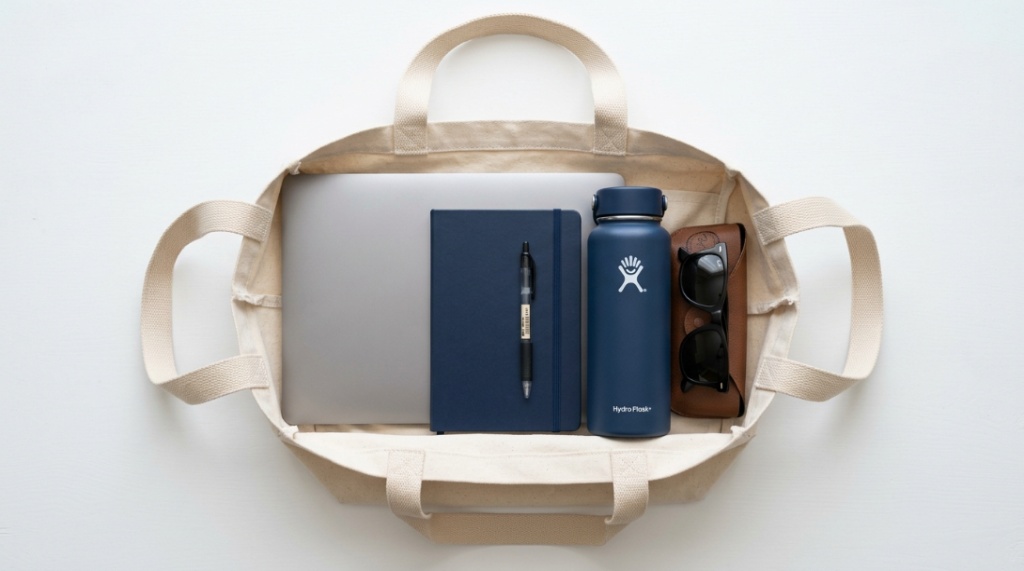
- Medium tote (13″ × 12″ × 5″): Fits laptop up to 14″, water bottle, wallet, phone, cosmetics pouch, sunglasses case, snack, notebook, and still has room. Flat base means items don’t compete for center space.
- Medium hobo (14″ × 11″): Fits wallet, phone, water bottle, cosmetics pouch, sunglasses, keys, book or small tablet. The crescent curve means wider items must orient centrally — effectively reducing usable width by 2–3 inches compared to listed dimensions.
Weight capacity difference: totes handle heavier loads more comfortably due to dual handles and base support. A loaded tote at 8 lbs sits naturally in hand or on forearm. A loaded hobo at 8 lbs creates noticeable shoulder strain within 30 minutes of continuous carry.
Practical guideline: if your daily carry regularly exceeds 5 lbs total (contents + bag), a tote provides better physical experience. Under 5 lbs total, a hobo delivers comfort and style with no compromise. Weigh your typical load on a kitchen scale — most women are surprised how quickly contents accumulate beyond comfortable hobo-carrying range.
Which Bag Is More Versatile Across Different Activities?
Hobo bags offer superior versatility across varied social activities — transitions from work to dinner to weekend naturally — while tote bags offer superior functional versatility for different load types (groceries, gym, work materials, travel).
Versatility breakdown:
- Social versatility (hobo wins): A leather hobo works at the office, at dinner, at weekend markets, at brunch — it blends across formality levels because its relaxed elegance never feels overdressed or underdressed. A tote at a cocktail dinner feels utilitarian. A hobo at a cocktail dinner feels intentional.
- Functional versatility (tote wins): A tote handles groceries, gym clothes, a laptop with notebooks, a day trip’s supplies, or a beach visit’s essentials. Its structured open-top design accommodates whatever you throw in. A hobo filled with groceries looks strained and functions poorly.
- Travel versatility: Tote excels as a personal item under airplane seats and as a day bag with high-capacity needs. Hobo excels as a crossover piece that works for sightseeing without looking touristy.
- Seasonal versatility: Both perform year-round in leather. Hobos slightly edge out in summer (lighter visual weight) while totes edge out in winter (accommodate bigger items like scarves and gloves without looking stuffed).
The honest answer for most women: owning both serves your full lifestyle better than forcing one to cover all scenarios. A quality leather hobo for social/casual days and a structured tote for work/errand/heavy-carry days provides complete coverage without compromise in either direction.
How Do Prices Compare Between Quality Hobo Bags and Tote Bags?
Quality hobo bags and tote bags exist at identical price points across all tiers — the style choice doesn’t inherently cost more or less, though tote bags have slightly more budget options available due to their simpler construction requirements.
Price comparison by tier:
- Budget ($30–$80): Both widely available. Totes dominate this range in quantity and selection. Budget hobos often sacrifice material quality to achieve the curved construction at low cost.
- Mid-range ($100–$350): Excellent options in both styles. Quality leather hobos and totes from brands like Madewell, Coach, and Cuyana deliver strong value. Selection roughly equal.
- Premium ($350–$800): Both styles well-represented from brands prioritizing craftsmanship. Hobo options may be slightly fewer as not all brands produce this silhouette consistently.
- Luxury ($800+): Both available from all major designers. Hobo bags often carry slight premiums at this tier because their construction requires specialized leather selection (soft enough to slouch beautifully while remaining durable).
Cost-per-use consideration: if you’d use a hobo for 250 days per year (social + casual environments) and a tote for 200 days per year (work + errands), spending equally on both makes sense. If one would see more use than the other dramatically, allocate more investment toward your primary daily carrier.
Choosing the right everyday handbag comes down to balancing style with your daily cargo needs. While a slouchy hobo bag offers an effortless, fashionable look for casual outings, professionals and educators often require something much more robust to carry laptops, grading papers, and daily essentials. If your routine demands maximum organization and heavy-duty reliability, upgrading to a Durable Teacher Tote Bag ensures you never have to sacrifice space or functionality during a busy workday.
Conclusion
The hobo bag vs. tote bag debate doesn’t have a universal winner — it has a personal winner based on your specific daily pattern. Choose a hobo bag if your day involves moderate loads under 5 lbs, values effortless social versatility, prefers hands-free shoulder carrying, and works in casual-to-creative professional environments. Choose a tote bag if your day involves heavy loads, requires organizational visibility, demands professional structure, or regularly carries rectangular items like laptops and files.
For most women living varied lives, the answer isn’t either/or — it’s both, deployed strategically. A quality leather hobo for social-forward days and a structured tote for utility-forward days covers your entire lifestyle without asking either bag to perform outside its strengths. Invest in whichever you’d carry more frequently, and let the other fill the gaps where your primary bag doesn’t excel.
Frequently Asked Questions
Can a hobo bag work as a work bag?
Yes, if your work environment is business-casual or creative-leaning and your daily carry stays under 5 lbs. A medium-large leather hobo (14–15 inches) can accommodate a tablet, notebook, and standard work essentials. For traditional corporate settings or heavy laptop carry, a structured tote typically serves better both ergonomically and aesthetically.
Are hobo bags bad for your back and shoulders?
They can be if overloaded or worn exclusively on one shoulder. Keep total weight under 5 lbs, alternate shoulders throughout the day, and choose wide-strap designs (1.5+ inches) to minimize pressure concentration. Under these conditions, hobo bags create no more ergonomic risk than other single-strap designs. Chronic heavy loads (7+ lbs) on one shoulder can create muscular imbalance over time regardless of bag style.
Which bag style holds its value better for resale?
Designer hobo bags currently hold resale value slightly better than tote bags due to their fashion-forward positioning and trend resurgence. Classic tote styles (Goyard St. Louis, Louis Vuitton Neverfull) are exceptions that hold exceptional value. Generally, both styles retain 40–65% of retail value when from established luxury brands, with condition and brand recognition being more important than silhouette type.
Is a hobo bag or tote better for travel?
Totes are better for travel logistics: they fit under airplane seats easily (rectangular shape matches the space), hold more volume for day-trip supplies, and provide quick-access visibility for passports and documents. Hobo bags are better as travel style pieces — they look natural with any outfit while exploring a new city. Pack a tote for flights, carry a hobo for sightseeing.
What’s the best bag for someone who switches between gym, work, and social events in one day?
A medium-large tote handles this multi-stop day best due to capacity versatility — gym shoes, work laptop, and social essentials all fit in a structured tote without the bag looking strained. After the gym-and-work portions end, transfer just your evening essentials into a compact hobo or clutch for the social segment. This two-bag strategy eliminates compromise.
Can men carry hobo bags?
Hobo bags are marketed primarily toward women, but unisex and men’s versions exist from brands like Lemaire, Loewe, and The Row. The relaxed silhouette works across genders in fashion-aware environments. For men seeking similar functionality in a more traditionally masculine presentation, crossbody messenger bags and soft leather shoulder bags offer comparable ergonomics with different visual coding.
Which bag is easier to keep clean?
Tote bags are generally easier to clean because their rigid structure allows the interior to be wiped down while the bag holds its shape. Hobo bags collapse, making interior cleaning awkward — you’re effectively cleaning a floppy surface that won’t stay still. For both styles, choose wipeable materials (treated leather, nylon) over fabric if cleanliness is a priority. Machine-washable canvas totes have a significant cleaning advantage over leather of any style.