
Every vehicle owner faces the challenge of keeping tires properly inflated. Underinflated or overinflated tires create safety risks and reduce fuel efficiency. Fortunately, modern portable inflators make this essential task convenient and accessible. These compact devices empower drivers to maintain optimal tire conditions anywhere, anytime.
Understanding how to use these tools effectively saves money and enhances driving safety. Regular pressure checks prevent premature tire wear and improve vehicle handling. Moreover, proper inflation reduces the risk of blowouts and extends tire lifespan significantly. This guide will walk you through everything you need to know about maintaining correct tire pressure with portable inflation equipment.
Why Tire Pressure Matters for Your Vehicle
Tire pressure directly affects multiple aspects of vehicle performance. When tires lack sufficient air, they create excessive rolling resistance. This forces your engine to work harder, consuming more fuel in the process. Additionally, underinflated tires wear unevenly, particularly on the outer edges. This premature wear shortens tire life and necessitates earlier replacement.
Safety concerns emerge when pressure drops too low. Underinflated tires generate excessive heat during operation. This heat buildup increases the risk of tire failure at high speeds. Furthermore, low pressure reduces steering responsiveness and extends braking distances. These factors combine to create potentially dangerous driving conditions.
Conversely, overinflated tires present their own challenges. Excessive pressure reduces the contact patch between tire and road. This decreases traction and compromises handling, especially in wet conditions. Additionally, overinflated tires wear primarily in the center of the tread. They also deliver a harsher ride by transmitting more road imperfections to passengers.
Temperature fluctuations naturally affect tire pressure throughout the year. Air contracts in cold weather, reducing pressure by approximately one pound per square inch for every ten-degree temperature drop. Therefore, seasonal changes require attention and adjustment. Regular monitoring becomes especially important during extreme weather transitions.
Proper inflation improves fuel economy by reducing rolling resistance. Studies show that correctly inflated tires can improve gas mileage by up to three percent. Over time, these savings add up substantially. Moreover, you reduce your environmental impact through decreased fuel consumption.
Understanding Pressure Specifications for Different Vehicles
Vehicle manufacturers determine optimal tire pressure through extensive testing and engineering analysis. These specifications balance performance, safety, comfort, and efficiency. However, many drivers mistakenly reference the maximum pressure stamped on tire sidewalls. This number indicates the tire’s maximum capacity, not the recommended operating pressure for your specific vehicle.
The correct pressure information appears in several locations on your vehicle. Check the driver’s side door jamb for a sticker containing tire specifications. This sticker lists recommended pressures for front and rear tires. Additionally, some vehicles include this information inside the fuel door or glove compartment. Your owner’s manual also provides comprehensive tire pressure recommendations.
Different driving conditions sometimes warrant pressure adjustments. Carrying heavy loads requires slightly higher pressure to support additional weight safely. Consult your vehicle’s documentation for load-adjusted recommendations. Similarly, extended highway driving at high speeds may benefit from minor pressure increases. However, never exceed the maximum pressure rating on your tires.
Seasonal adjustments help maintain optimal performance year-round. As mentioned earlier, cold weather causes pressure drops. Therefore, increase pressure slightly during winter months to compensate. Conversely, monitor pressure more frequently during summer heat. Hot pavement and ambient temperatures can cause pressure increases that require attention.
Spare tires often require different pressure than regular tires. Temporary spare tires typically need significantly higher pressure, often around sixty pounds per square inch. Full-size spares usually match the pressure of your other tires. Always verify spare tire pressure during regular maintenance checks. A flat spare provides no help during emergencies.
Selecting the Right Portable Inflator for Your Needs
The market offers numerous portable inflator options with varying features and capabilities. Understanding these differences helps you choose the best tool for your situation. Consider several factors before making your purchase decision.
Power source options include twelve-volt vehicle outlets, rechargeable batteries, and household electrical connections. Twelve-volt models plug into your car’s power outlet, providing convenience on the road. However, they require the vehicle’s electrical system to operate. Battery-powered models offer complete independence from external power sources. They work anywhere but require periodic recharging. Some advanced models include multiple power options for maximum versatility.
Airflow capacity determines how quickly the inflator can fill your tires. Measured in cubic feet per minute or liters per minute, higher ratings mean faster inflation. Compact models typically deliver fifteen to twenty liters per minute. This speed suffices for occasional use and minor pressure adjustments. Heavy-duty models can exceed thirty-five liters per minute, making them suitable for larger tires or frequent use.
Pressure gauge accuracy ensures you inflate tires to correct specifications. Digital gauges generally provide more precise readings than analog versions. Look for models displaying pressure in both PSI and other measurement units. Additionally, backlit displays enhance visibility during nighttime use. Some premium models include automatic shutoff features that stop inflation at preset pressures.
Build quality affects longevity and reliability. Metal construction withstands rough handling better than plastic components. However, metal models weigh more and cost extra. Consider your usage frequency when balancing durability against portability. Occasional users might accept lighter construction, while frequent users benefit from robust designs.
Storage considerations influence practical usability. Compact models fit easily in trunks or under seats. Larger units may require dedicated storage space. Additionally, evaluate cord and hose length. Longer hoses reach all tires comfortably, including dual rear wheels on trucks. Some models include carrying cases that organize accessories neatly.
Step-by-Step Guide to Checking Tire Pressure
Accurate pressure measurement requires proper technique and timing. Following these steps ensures reliable readings and appropriate adjustments. Make pressure checks part of your regular vehicle maintenance routine.
First, check pressure when tires are cold. Driving heats tires and increases internal pressure temporarily. This heat-induced pressure rise produces inaccurate readings. Therefore, measure pressure before driving or at least three hours after your last trip. Morning checks before starting your day work perfectly.
Second, remove the valve cap from the tire you’re checking. Place the cap somewhere safe where it won’t roll away or get lost. These small caps protect valve cores from dirt and moisture. Additionally, they provide a secondary seal against air loss. Replace damaged or missing caps promptly.
Third, firmly press your pressure gauge onto the valve stem. You should hear a brief hiss as the gauge seats properly. However, if hissing continues, you’re losing air unnecessarily. Adjust the gauge angle until it seals completely. Digital gauges typically beep or display a reading when properly connected.
Fourth, read the pressure display and compare it to your vehicle’s recommended specification. Note any significant deviations that require adjustment. Additionally, record readings for all tires to identify patterns. Consistent low pressure in one tire might indicate a slow leak requiring professional attention.
Fifth, repeat this process for all tires, including your spare. Comprehensive checks prevent surprises during emergencies. Moreover, comparing pressures between tires reveals potential issues. Significant variations might indicate alignment problems or uneven wear patterns worth investigating.
Using Your Portable Inflator Effectively
Operating a portable inflator correctly maximizes its effectiveness and lifespan. These guidelines ensure safe, efficient operation while preventing common mistakes. Practice these techniques to become proficient with your inflation equipment.
Begin by reading the manufacturer’s instructions thoroughly. Each model has specific operational requirements and safety warnings. Understanding these details prevents damage and ensures optimal performance. Additionally, familiarize yourself with all controls before your first real-world use. Practice at home eliminates confusion during roadside emergencies.
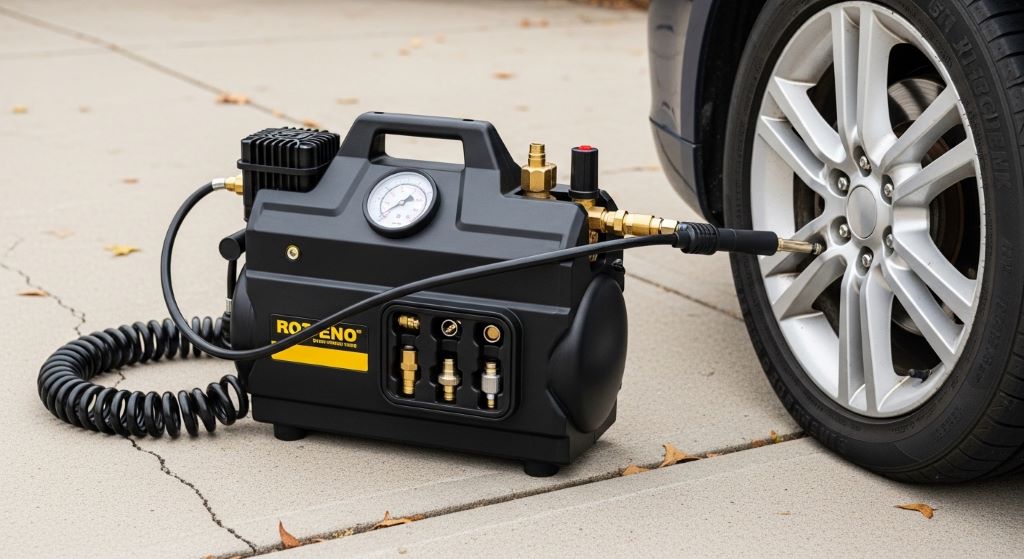
Connect the inflator hose securely to the tire valve. Most modern inflators use quick-connect fittings that snap onto valves easily. Ensure the connection is tight to prevent air loss. Furthermore, verify the power source is adequate before starting. Weak batteries or loose power connections cause poor performance.
Set your target pressure if your inflator includes automatic shutoff features. This convenient function stops inflation automatically when reaching the desired pressure. However, monitor the process visually as well. Equipment malfunctions occasionally occur, making human oversight valuable. Never leave an operating inflator unattended.
Start the inflation process and observe the pressure gauge. Most tires require one to three minutes for significant pressure increases. However, larger tires or severely underinflated conditions take longer. Additionally, pause periodically to check progress and prevent overinflation. Small adjustments are easier than removing excess air.
After reaching the correct pressure, disconnect the inflator promptly. Replace the valve cap immediately to maintain the seal. Moreover, move to the next tire and repeat the process. Working systematically around your vehicle ensures you don’t miss any tires. Finally, store your inflator properly to keep it ready for next time.
Recognizing Signs of Tire Pressure Problems
Identifying pressure issues early prevents more serious problems from developing. Your vehicle provides several indicators that tire pressure needs attention. Learning to recognize these signs helps you respond promptly.
Visual inspection reveals obvious pressure problems. Underinflated tires appear flatter or bulge noticeably at the bottom. The sidewalls may look slightly collapsed or wrinkled. Additionally, excessive tread contact with the road creates abnormal wear patterns. Regular visual checks catch these issues before they worsen.
Your vehicle’s tire pressure monitoring system provides electronic warnings. This dashboard light illuminates when pressure drops below safe thresholds. However, don’t rely solely on this system. Many activate only after pressure drops significantly. Manual checks catch minor variations before they trigger warnings.
Handling characteristics change when tire pressure is incorrect. Underinflation causes sluggish steering response and increased body roll during turns. The vehicle may pull to one side if pressure is uneven. Conversely, overinflated tires create a harsh, bouncy ride quality. Additionally, they reduce traction on wet or slippery surfaces.
Fuel economy changes sometimes indicate pressure problems. Decreased gas mileage without other explanation often relates to underinflated tires. The additional rolling resistance forces your engine to consume extra fuel. Therefore, unexplained efficiency drops warrant tire pressure inspection.
Unusual tire noise suggests potential pressure issues. Underinflated tires create increased road noise and a thumping sound. This occurs because excessive tread flexing generates vibrations. Moreover, severely low pressure produces a flapping noise as the tire distorts during rotation. Any abnormal sounds deserve immediate investigation.
Maintaining Your Portable Inflator for Longevity
Proper care extends your inflator’s functional life and ensures reliability. These maintenance practices keep your equipment ready for whenever you need it. Investing a few minutes in upkeep pays dividends through years of dependable service.
Clean your inflator regularly to prevent dirt accumulation. Dust and debris can clog air intakes and damage internal components. Use a soft cloth to wipe exterior surfaces after each use. Additionally, compressed air can blow dust from vents and crevices. However, avoid using water directly on electrical components.
Inspect hoses and connections for wear or damage. Cracks in rubber hoses allow air leaks that reduce efficiency. Similarly, worn connections may not seal properly on valve stems. Replace damaged components immediately rather than struggling with poor performance. Most manufacturers sell replacement parts for their products.
Store your inflator in appropriate conditions. Extreme temperatures can damage batteries and electronic components. Therefore, keep the unit in climate-controlled spaces when possible. Additionally, avoid storing inflators in direct sunlight. Ultraviolet exposure degrades plastic and rubber materials over time.
Check battery charge levels regularly for cordless models. Lithium batteries perform best when maintained between twenty and eighty percent charge. Allowing batteries to completely discharge shortens their lifespan. Moreover, charge batteries before extended storage periods. This prevents deep discharge that permanently damages battery cells.
Test your inflator periodically even when not needed. Monthly operation ensures everything works when emergencies arise. Additionally, testing identifies problems while you have time to address them. Discovering equipment failure during a roadside emergency creates unnecessary stress and danger.
Seasonal Considerations for Tire Pressure Management
Different seasons present unique tire pressure challenges. Understanding these variations helps you maintain optimal inflation year-round. Adapting your maintenance routine to seasonal changes prevents problems before they develop.
Winter’s cold temperatures cause significant pressure drops. As mentioned in our tire PSI guide, expect to lose one to two pounds per ten-degree temperature decrease. Therefore, check pressure more frequently during autumn’s temperature swings. Additionally, add a few extra pounds to compensate for cold weather. This prevents the tire pressure light from activating during your commute.
Snow and ice create additional traction demands. Proper inflation becomes even more critical during winter driving. Underinflated tires perform poorly on slippery surfaces. Moreover, they increase stopping distances when you can least afford it. Keep your portable inflator easily accessible during winter months.
Spring’s warming temperatures reverse winter’s pressure loss. Rising temperatures cause air expansion inside tires. Therefore, pressure increases naturally as weather warms. Monitor tires carefully during spring to prevent overinflation. Additionally, spring is ideal for comprehensive tire inspections. Check for winter damage and uneven wear patterns.
Summer heat creates the highest tire pressures of the year. Hot pavement and ambient temperatures increase internal tire temperature. This heat causes air expansion beyond normal levels. Furthermore, extended highway driving at high speeds generates additional heat. Check pressure more frequently during summer road trips.
Autumn’s temperature swings require vigilant monitoring. Daily temperature variations of thirty degrees or more are common. These fluctuations cause pressure to rise and fall significantly. Additionally, autumn is perfect for preparing your vehicle for winter. Verify your portable inflator works properly before cold weather arrives.
Advanced Tips for Tire Pressure Optimization
Beyond basic maintenance, several advanced techniques improve tire performance further. These car maintenance tips enhance safety, efficiency, and tire longevity. Implementing these practices demonstrates thorough vehicle stewardship.
Rotate tires regularly according to manufacturer recommendations. Rotation distributes wear evenly across all tires. Additionally, different positions experience different wear patterns. Front tires typically wear faster due to steering forces. Regular rotation maximizes tire lifespan and maintains consistent performance.
Balance pressure adjustments with load changes. Carrying heavy cargo or towing trailers requires pressure increases. Consult your owner’s manual for specific load-adjusted recommendations. However, remove this extra pressure when resuming normal driving. Operating with unnecessarily high pressure when unloaded increases wear and reduces comfort.
Consider nitrogen inflation for enhanced stability. Nitrogen molecules are larger than oxygen molecules. Therefore, they escape through tire materials more slowly. This results in more stable pressure over time. However, nitrogen inflation requires special equipment and costs more than regular air. Evaluate whether the benefits justify the expense for your situation.
Track tire pressure over time to identify trends. Maintaining a simple log reveals patterns and potential problems. Consistently low pressure in one tire suggests a slow leak. Additionally, historical data helps you understand how your specific vehicle responds to temperature changes. This knowledge improves your maintenance timing.
Invest in a quality standalone pressure gauge for verification. Even good inflators sometimes have gauge calibration drift. A separate, accurate gauge provides verification. Moreover, professional-grade gauges often exceed built-in inflator gauge accuracy. Use your standalone gauge periodically to verify inflator readings remain accurate.
Common Mistakes to Avoid
Even experienced drivers sometimes make tire pressure errors. Recognizing these common mistakes helps you avoid them. Learning from others’ experiences prevents unnecessary problems and expenses.
Inflating tires to the maximum sidewall pressure is a frequent error. As mentioned earlier, this number represents tire capacity, not operating pressure. Following this number typically results in significant overinflation. Additionally, it creates harsh ride quality and accelerated center tread wear. Always reference your vehicle’s specifications instead.
Checking pressure only when the tire pressure light activates is insufficient. This warning system typically activates only after substantial pressure loss. By the time it illuminates, damage may already be occurring. Moreover, gradual pressure loss goes undetected without manual checks. Establish a regular checking schedule regardless of warning lights.
Adjusting pressure on hot tires produces inaccurate results. The heat-induced pressure increase disappears as tires cool. Therefore, you end up with underinflated tires once they return to ambient temperature. Always wait for tires to cool before making pressure adjustments. This ensures accurate inflation levels.
Forgetting to replace valve caps seems minor but matters. These caps protect valve cores from dirt and moisture intrusion. Contaminated valve cores leak air slowly. Additionally, caps provide backup sealing against air loss. Replace lost caps immediately with metal versions for maximum durability.
Neglecting the spare tire is surprisingly common. Many drivers check their four main tires regularly but ignore the spare. However, a flat spare provides no help during emergencies. Moreover, spare tire pressure often differs from regular tires. Include the spare in your regular pressure checks.
Conclusion
Maintaining proper tire pressure using a portable inflator is an essential skill for every driver. Regular pressure checks enhance safety, improve fuel efficiency, and extend tire life. Additionally, portable inflators provide convenience and independence from gas station air pumps. These compact tools empower you to maintain optimal tire conditions anywhere.
Understanding manufacturer specifications and following our tire PSI guide ensures correct inflation. Seasonal temperature changes require adjustment and vigilant monitoring throughout the year. Furthermore, recognizing pressure problem signs helps you respond before issues escalate. Quality portable inflators make this critical maintenance task simple and accessible.
Proper technique when checking and adjusting pressure produces accurate results. Moreover, maintaining your inflator through regular cleaning and storage protects your investment. Avoiding common mistakes prevents damage and unnecessary expenses. These car maintenance tips combine to create a comprehensive tire care strategy.
The small effort required for regular tire pressure maintenance yields substantial returns. You enjoy safer driving, better fuel economy, and longer tire life. Additionally, portable inflators provide peace of mind during travel. Taking control of this basic maintenance task demonstrates responsible vehicle ownership and enhances your overall driving experience.
Frequently Asked Questions
How often should I check my tire pressure?
Check your tire pressure at least once monthly and before long trips. Temperature changes, normal air permeation, and small leaks cause gradual pressure loss over time. Monthly checks catch these changes before they affect safety or performance. Additionally, inspect pressure when seasons change, as temperature swings cause significant variations. If you notice handling changes or the tire pressure warning light activates, check immediately regardless of your regular schedule.
Can I use my portable inflator for other items besides tires?
Yes, most portable inflators work well for various inflation tasks. You can inflate sports balls, bicycle tires, air mattresses, and pool toys. Many models include multiple nozzle attachments for different valve types. However, verify your inflator’s pressure range matches the item you’re inflating. Some inflators designed primarily for car tires may not provide the high pressure needed for bicycle tires or the precise low pressure required for sports balls.
What should I do if my tire keeps losing pressure?
First, inflate the tire to the correct pressure and monitor it closely over several days. If pressure drops rapidly, you likely have a puncture or significant leak requiring professional repair. However, if pressure decreases slowly over weeks, you might have a minor valve leak or rim seal issue. Visit a tire shop for thorough inspection and repair. Additionally, check the valve core for looseness, as tightening it sometimes solves slow leaks.
Is it safe to drive with slightly underinflated tires?
Driving short distances with minor underinflation is generally safe but not recommended. However, even five pounds below specification increases tire wear and reduces fuel efficiency. More significant underinflation creates serious safety risks including overheating, blowouts, and poor handling. If you discover underinflation, inflate tires to proper pressure as soon as possible. Never ignore significantly low pressure, as this creates dangerous driving conditions.
Do I need different pressure for highway versus city driving?
Most vehicles use the same tire pressure for all driving conditions. However, some manufacturers recommend slightly higher pressure for sustained high-speed highway driving or heavy loads. Check your owner’s manual for specific guidance. Generally, maintain standard pressure and adjust only when the manual specifically recommends it. Unnecessary pressure changes can reduce comfort and tire life without providing meaningful benefits.
Related Topics:
Best Car Cleaning Kits for a Spotless Shine at Home
How Regular Exterior Car Care Protects Vehicle’s Value