

Traveling anglers face a unique challenge: bringing enough gear to fish successfully while avoiding excessive baggage fees and staying within budget. The key lies in smart planning, strategic gear selection, and understanding what you truly need versus what’s simply nice to have. This guide will help you pack efficiently without breaking the bank.
Many fishing enthusiasts believe they need to invest thousands of dollars in specialized travel gear. However, with careful consideration and smart choices, you can assemble a complete travel fishing kit that performs well without emptying your wallet. The secret is prioritizing versatile equipment and making strategic compromises.
Understanding Your Fishing Destination
Before purchasing anything, research your destination thoroughly. Different locations demand different approaches, and understanding what you’ll encounter helps you avoid buying unnecessary items.
Check local regulations first. Some areas restrict certain types of lures or bait. Knowing these rules prevents you from packing prohibited items that you’ll have to leave behind anyway. Additionally, research whether you need fishing licenses and how much they cost.
Consider the species you’ll target. A trip focused on panfish requires vastly different gear than one targeting large game fish. Understanding your quarry helps you select appropriate equipment that won’t weigh you down or cost more than necessary.
Weather patterns affect your packing list significantly. Tropical destinations need different clothing and gear protection than temperate or cold-weather locations. Check historical weather data for your travel dates rather than relying on general climate information.
Local tackle availability matters more than most travelers realize. Popular fishing destinations typically have well-stocked shops where you can purchase terminal tackle, bait, and even rent specialized equipment. Therefore, you might not need to bring everything from home.
Choosing Compact Rods That Perform
Modern rod technology has revolutionized travel fishing. Compact rods now offer performance that rivals traditional one-piece rods, making them ideal for travelers who need to save space and reduce baggage costs.
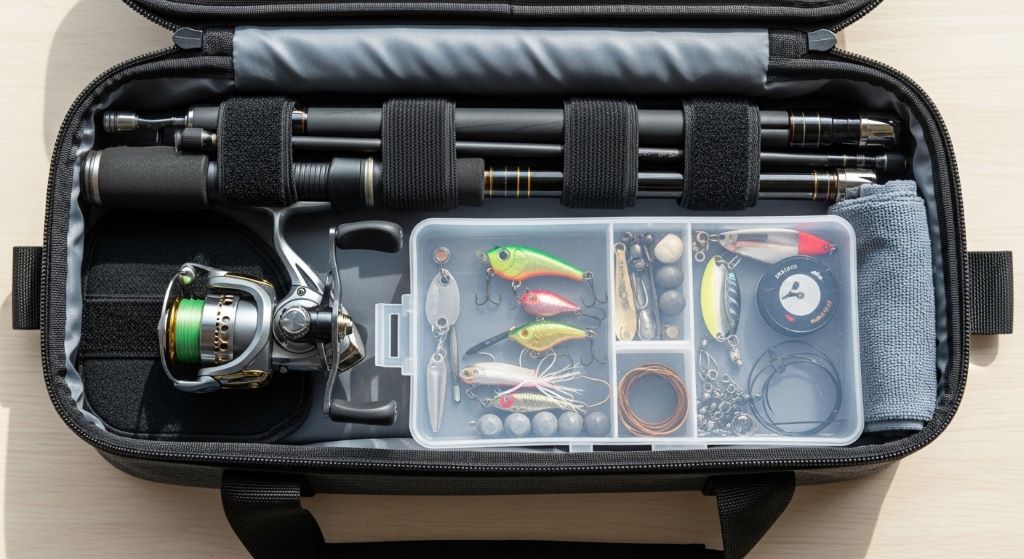
Multi-piece rods break down into four, five, or even seven sections. These designs pack into small cases that fit easily in luggage or backpacks. Quality multi-piece rods use precision ferrule systems that maintain sensitivity and power despite the connections.
Telescoping rods collapse into themselves, creating an even more compact package. While older telescoping designs had poor performance, modern versions have closed the gap considerably. They work particularly well for casual fishing or situations where you need maximum portability.
Length considerations vary based on your fishing style. A seven-foot rod works well for most situations and packs efficiently. Avoid the temptation to bring multiple rod lengths. Instead, choose one versatile option that handles your primary fishing scenarios.
Action and power ratings determine how your rod performs. Medium or medium-light action rods offer the most versatility for travel situations. They handle a wide range of lures and fish species without requiring multiple specialized rods.
Budget-friendly options exist across all rod categories. Many reputable manufacturers offer travel-specific models under one hundred dollars that perform admirably. Read reviews from actual travelers rather than just tournament anglers, as their needs better match yours.
Selecting Lightweight Fishing Gear for Easy Transport
Weight becomes your enemy when traveling, especially if flying. Every ounce counts toward baggage limits and affects your comfort while moving through airports or hiking to remote fishing spots.
Reels made from modern composite materials weigh significantly less than metal alternatives while maintaining durability. Look for reels with graphite or carbon composite bodies. These materials reduce weight without sacrificing performance for most fishing applications.
Line choices impact both weight and performance. Braided line offers superior strength-to-diameter ratios, meaning you can use lighter test weights while maintaining fish-fighting capability. Additionally, a single spool of braid often serves multiple purposes better than carrying several spools of monofilament.
Tackle boxes designed for travel use space efficiently while protecting your gear. Soft-sided tackle bags weigh less than hard cases and conform to available space in your luggage. Choose bags with customizable dividers that adjust as your needs change.
Clothing appropriate for fishing need not be expensive or specialized. Quick-dry fabrics work well and pack small. A single fishing shirt can be washed in a hotel sink and dried overnight, eliminating the need for multiple garments.
Minimalist tool kits containing only essential items save both weight and money. A good pair of pliers, a small knife, and a hook remover handle most situations. Multitools with fishing-specific features can replace several individual items.
Building a Versatile Lure Selection
Lures represent one area where smart selection dramatically reduces costs and weight. Rather than bringing dozens of options, focus on proven patterns that work in multiple situations.
Soft plastic baits pack efficiently and work for numerous species. A few bags of worms and creature baits in natural colors handle most freshwater situations. They’re also inexpensive and widely available, so replacing lost lures doesn’t hurt your budget.
Spinnerbaits and inline spinners offer excellent versatility. A small selection in different sizes and colors covers various water conditions and fish species. These lures are relatively inexpensive and durable enough to withstand travel and heavy use.
Topwater lures provide exciting fishing when conditions are right. However, limit yourself to one or two proven designs rather than bringing your entire collection. Poppers and walk-the-dog style baits work in more situations than highly specialized topwater lures.
Jigs might be the most versatile lure type available. A handful of jig heads in different weights, paired with interchangeable soft plastic trailers, creates endless combinations. This system weighs little and costs far less than buying dozens of pre-rigged lures.
Crankbaits and hard baits should be chosen carefully. They take up more space and cost more than soft plastics. Bring only the specific types proven effective at your destination. Local fishing reports often reveal which hard baits produce consistently.
Essential Accessories Without the Premium Price
Accessories make fishing more enjoyable and successful, but you don’t need top-of-the-line versions of everything. Smart anglers know where to splurge and where to save.
Terminal tackle including hooks, weights, and swivels costs little and weighs almost nothing. Buy quality hooks because they directly connect you to fish, but generic weights and swivels from discount retailers work fine for most situations.
Line clippers or scissors are essential but need not be expensive. A simple set of nail clippers works perfectly and costs a fraction of specialized fishing scissors. They’re also TSA-approved for carry-on luggage.
Fishing licenses are mandatory but vary wildly in cost. Some states offer short-term tourist licenses that cost less than full-season resident licenses. Research your options and purchase the most economical license that covers your trip duration.
Sunscreen and insect repellent are crucial for comfort but don’t need to be fishing-specific brands. Regular store-brand versions work just as well and cost significantly less. Purchase travel sizes to save space and weight.
Leaders and swivels prevent line twist and add abrasion resistance. However, you can often make your own leaders from bulk fluorocarbon line for a fraction of pre-tied leader prices. This approach also lets you customize leader length for specific situations.
Packing Strategies That Save Money
How you pack matters as much as what you pack. Strategic packing helps you avoid baggage fees while protecting your gear during transit.
Using existing luggage eliminates the need to purchase expensive rod tubes or specialized fishing luggage. Many compact rods fit diagonally in standard suitcases. Surround them with clothing for protection, and you’ve saved the cost of a rod tube plus checked bag fees.
Wearing your bulkiest items during travel frees up luggage space. Put on your fishing vest, jacket, and heaviest shoes when going through airports. This strategy keeps you within weight limits without leaving important items behind.
Shipping gear ahead sometimes costs less than airline baggage fees, especially for longer trips. Calculate the total cost including insurance before dismissing this option. However, only ship items you can afford to lose, as packages occasionally go missing.
Borrowing or renting specialized gear at your destination often makes more financial sense than buying items you’ll rarely use. Many guide services and tackle shops rent quality equipment for reasonable daily rates.
Sharing gear among travel companions reduces duplication. If traveling with friends or family, coordinate your packing so you’re not bringing multiple versions of the same items. This teamwork saves money and luggage space for everyone.
Budget-Friendly Gear Protection
Protecting your investment doesn’t require expensive cases designed specifically for fishing gear. Creative solutions work just as well while costing far less.
PVC pipe creates excellent rod protection for minimal cost. Cut it slightly longer than your packed rod, add end caps, and you have a durable rod tube for under ten dollars. Sand any rough edges and add padding inside for extra protection.
Pool noodles provide inexpensive padding for rods packed in luggage. Slice them lengthwise and wrap them around your rod sections. This simple solution prevents damage and costs just a few dollars.
Ziplock bags protect lures, line, and electronics from moisture. They weigh nothing, take up minimal space, and cost pennies. Use different sizes for different items, keeping everything organized and dry.
Soft cases made from basic materials work well for reels. An old sock or small towel wrapped around your reel provides adequate protection inside luggage. There’s no need for expensive neoprene reel covers unless you’re shipping gear separately.
Making Smart Purchases
When you do need to buy new gear, timing and sourcing can significantly impact your costs. Patient shoppers find excellent deals on quality equipment.
Off-season sales offer the best prices on fishing gear. Retailers discount heavily when demand drops. Buy winter gear in summer and vice versa, planning ahead for future trips.
Previous year models perform nearly identically to current versions but cost substantially less. Manufacturers release new models regularly, creating discounts on perfectly good older inventory. Ask retailers about closeout items that might not be prominently displayed.
Online marketplaces and forums connect you with used gear from responsible owners. Many anglers upgrade frequently, selling barely used equipment at significant discounts. Exercise caution and inspect items carefully, but deals abound for savvy shoppers.
Local classifieds and garage sales sometimes yield amazing finds. People cleaning out garages or downsizing often sell quality fishing gear for very little money. Being flexible about brand preferences helps you capitalize on these opportunities.
Conclusion
Packing travel fishing essentials without overspending requires planning, research, and smart decision-making. By focusing on versatile equipment like compact rods and lightweight fishing gear, you can assemble a complete kit that performs well without excessive costs or weight.
Remember that successful fishing depends more on skill and knowledge than on having the most expensive equipment. Invest time understanding your destination and selecting appropriate gear rather than simply buying everything that might be useful. This approach saves money while actually improving your fishing success.
Strategic packing and creative protection methods help you avoid baggage fees and keep your gear safe without purchasing specialized travel accessories. Additionally, knowing when and where to shop ensures you get quality equipment at the best possible prices.
The goal is enjoying fishing while traveling, not stressing about gear or finances. With these strategies, you can focus on creating memorable fishing experiences without worrying about your budget or luggage weight. Start planning your next fishing adventure with confidence, knowing you have the knowledge to pack smart and spend wisely.
Frequently Asked Questions
What’s the most important piece of fishing gear for travelers on a budget?
A quality multi-piece rod represents the best investment for traveling anglers. It serves as the foundation of your setup and directly impacts your fishing success. While you can economize on many other items, a decent rod that packs small and performs well is worth prioritizing. Look for mid-priced options from reputable manufacturers rather than the cheapest available or unnecessarily expensive models.
How can I avoid airline baggage fees when traveling with fishing gear?
Pack your fishing gear inside standard luggage rather than bringing separate rod tubes or tackle bags. Modern compact rods fit in regular suitcases when packed diagonally. Distribute weight across bags to stay under limits, wear bulky items during travel, and consider shipping gear ahead for longer trips if it costs less than baggage fees.
Is it worth buying fishing-specific travel gear or can I use regular equipment?
Regular equipment often works perfectly well for travel fishing. You don’t necessarily need specialized travel rods, reels, or accessories. However, multi-piece rods do offer advantages over one-piece designs for packing. For most other gear, your existing equipment will work fine. Focus on minimizing what you bring rather than buying travel-specific versions of everything.
Should I bring all my fishing gear or buy items at my destination?
Bring versatile core items like your rod, reel, and essential lures. Purchase expendable items like terminal tackle, bait, and budget lures at your destination. This strategy reduces travel weight while supporting local businesses. Additionally, local tackle shops provide valuable information about current fishing conditions and effective techniques you might not learn otherwise.
How much should I budget for a week-long fishing trip including gear?
Budget varies widely based on destination and whether you already own basic equipment. If starting from scratch, expect to spend between two hundred and five hundred dollars for decent quality compact rods, reels, and essential tackle. For those with existing gear, you might spend fifty to one hundred dollars on destination-specific items and licenses. Accommodation and travel costs obviously add significantly to the total budget.
Related Topics:
Best Natural Baits for Urban River Fishing
The Advantages of a Round Baitcasting Reel for Heavy Catfish