
A bad night of sleep in the wilderness can ruin an entire trip. Sore necks, stiff shoulders, and restless hours are common complaints among campers. Most people invest in quality sleeping bags and sleeping pads but overlook one simple item that makes a big difference — the pillow. Choosing the right compact camping pillow is not complicated. However, it does require knowing what to look for. This guide walks you through everything you need to make a confident, well-informed decision.
Why Your Pillow Choice Matters More Than You Think
Many campers stuff a rolled-up fleece jacket under their head and call it good. That approach works for one night, maybe two. Beyond that, your neck pays the price.
The muscles along your neck and upper back need consistent support during sleep. Without it, they remain tense all night. You wake up stiff, fatigued, and less ready for the trail ahead. Therefore, a purpose-built camping pillow is not a luxury item. It is a practical piece of gear that directly affects your energy and comfort.
Additionally, modern camping pillows are designed to be small and light. They no longer feel like a compromise. Many of today’s options rival the comfort of pillows you use at home, despite packing down to the size of a water bottle.
The Two Main Types of Camping Pillows
Understanding pillow types is the first step toward choosing the right one. Each type has clear strengths and trade-offs depending on how you camp and sleep.
Inflatable Camping Pillows
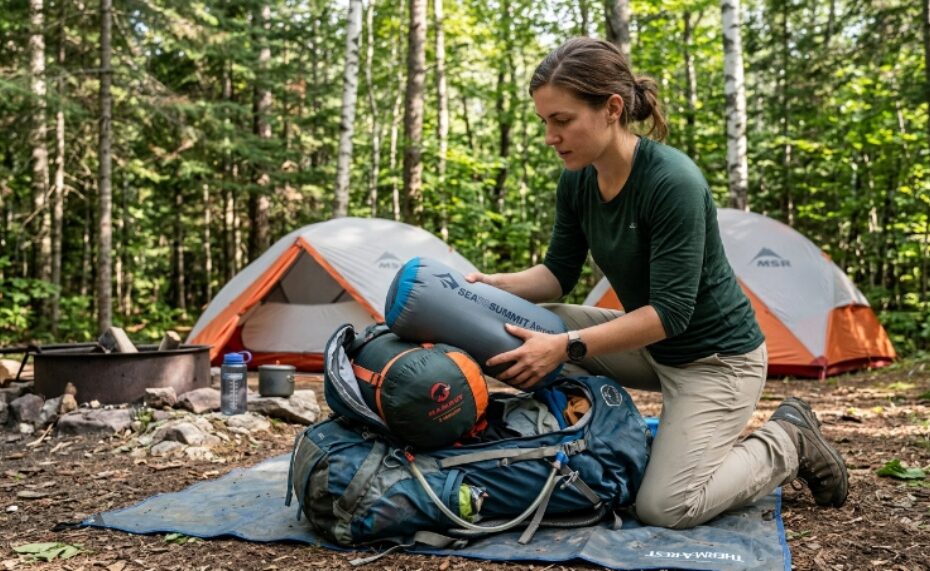
An inflatable camping pillow is the most packable option available. You blow it up with a few breaths, adjust the firmness to your liking, and deflate it completely when you are done. It rolls or folds down to almost nothing in your pack.
These pillows are ideal for ultralight hikers and backpackers who count every gram. However, some sleepers find them too firm or slippery against the skin. A few brands add a soft fabric cover to address this. That small addition makes a noticeable difference in comfort.
The main risk with inflatable pillows is puncture. A small hole can leave you without support mid-trip. Therefore, always carry a basic repair patch kit when using one in the backcountry.
Compressible Camping Pillows
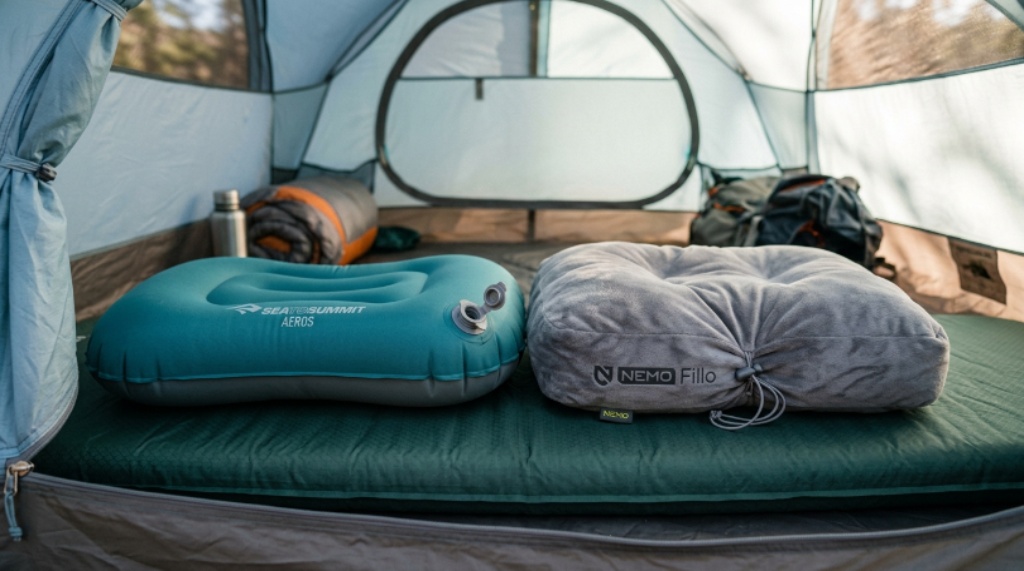
A compressible pillow is filled with down, synthetic fiber, or foam. It compresses into a stuff sack for transport and expands back to its full shape when released. These pillows feel much closer to a traditional home pillow.
They are softer, warmer, and generally more comfortable than inflatable options. However, they pack down larger and weigh more. For car campers or those on shorter trips with generous pack space, this trade-off is worth it.
Some pillows combine both designs. They use an inflatable core with a compressible outer layer. This hybrid approach offers a balance of packability and comfort that works well for most campers.
Key Features to Look for Before You Buy
Once you know which type suits your camping style, focus on the specific features that determine whether a pillow will actually support your neck well.
- Size and loft: A pillow that is too flat will not support your neck. One that is too thick pushes your head forward. Look for a loft height that matches how you sleep — side sleepers generally need more height than back sleepers.
- Shape: Rectangular pillows offer the most versatility. Contoured or ergonomic shapes can offer better neck alignment, but they work best when matched to your sleeping position.
- Surface material: Smooth nylon slides around in a sleeping bag. A pillow with a soft, grippy fabric stays in place through the night.
- Weight: For backpacking, aim for a pillow under four ounces. For car camping, weight matters much less.
- Packability: Check how small the pillow compresses. If it takes up a quarter of your pack, it is not doing its job as a compact piece of gear.
- Washability: Pillows collect sweat, oil, and dirt over time. A removable, machine-washable cover makes maintenance far easier.
How Sleeping Position Affects Your Choice
Your sleeping position is one of the most important factors in choosing the right pillow. Many buyers ignore this completely and end up with something that does not serve them well.
Side sleepers need more loft to fill the gap between their shoulder and ear. A flat or under-inflated pillow leaves this space unsupported and causes the neck to bend sideways. This leads to soreness by morning.
Back sleepers need moderate support that keeps the head from tilting too far forward or dropping too far back. A medium-loft pillow works best here.
Stomach sleepers need very little height. A thin, soft option is ideal. However, sleeping on your stomach is generally hard on the spine regardless of your pillow. Therefore, if comfort is a priority, consider training yourself to sleep on your back or side.
Materials and Insulation: What Is Inside Matters
The fill material inside a compressible pillow affects both comfort and performance in cold conditions.
Down fill is soft, lightweight, and compressible. It adds a small amount of warmth, which can be welcome on cold nights. However, it loses its loft when wet and takes a long time to dry. Therefore, it is less ideal for humid or rainy environments unless it is treated with a water-resistant coating.
Synthetic fill is more resistant to moisture. It dries faster and maintains some loft even when damp. It is slightly heavier than down but performs more consistently across different weather conditions.
Foam-based pillows are less common but offer firm, consistent support. They do not compress as well as fiber-filled options. However, some campers prefer the stable, predictable feel of foam, especially those who experience chronic neck issues.
Reading a Travel Gear Review the Right Way
A good travel gear review can save you from making a costly mistake. However, not all reviews are equally useful. Learning to read them critically helps you filter out noise and focus on what matters.
Look for reviews written by people who share your camping style. A thru-hiker’s opinion on packability is more relevant than a car camper’s, and vice versa. Pay attention to comments about long-term durability rather than just first impressions. Additionally, look for patterns in negative feedback. If multiple reviewers mention the same issue — such as a valve that leaks or a cover that pills quickly — that issue is likely real.
Be cautious of reviews that only describe how a product looks or smells out of the box. A pillow earns its reputation over several nights of use, not one afternoon on a couch.
Budget Versus Premium: Is the Price Difference Worth It?
Camping pillows range from under ten dollars to over sixty. The price gap reflects real differences in materials, construction, and durability. However, spending more does not always mean sleeping better.
Budget pillows can work perfectly well for casual campers or occasional users. They may lack premium fabrics or long-term durability, but for a few trips a year, they are a reasonable choice.
Premium pillows justify their price for frequent campers. Better valves on inflatables, higher-quality fill in compressible models, and more durable stitching all add up over time. If you camp more than five or six times a year, investing in a quality pillow makes sense.
Conclusion
Choosing the right compact camping pillow comes down to understanding your needs and matching them to the right design. An inflatable camping pillow suits ultralight hikers who prioritize minimal pack weight. A compressible pillow works better for those who value softness and a more home-like feel. Hybrid options offer a middle ground that many campers find ideal.
Beyond pillow type, focus on loft, shape, surface material, and fill. Match your choice to your sleeping position and the conditions you camp in most often. Read a thorough travel gear review or two before committing, and pay attention to long-term feedback from real users.
Sleep is one of the most important parts of any outdoor adventure. A compact pillow that truly supports your neck costs little space in your pack but pays back enormously on the trail.
Frequently Asked Questions
What is the most packable type of camping pillow?
An inflatable camping pillow is the most packable option. It deflates completely and compresses to a very small size, making it the preferred choice for ultralight backpackers and thru-hikers.
Are compressible pillows comfortable enough for side sleepers?
Yes. A compressible pillow with enough loft provides good support for side sleepers. Look for one that expands to at least three to four inches in height to fill the gap between your shoulder and head properly.
How do I stop my camping pillow from sliding around in my sleeping bag?
Choose a pillow with a soft, textured fabric cover rather than smooth nylon. Grippy materials stay in place much better through the night and feel more comfortable against your skin.
Can I use a camping pillow for air travel or long bus rides?
Yes. Compact camping pillows work well for travel beyond the campsite. Inflatable models are especially convenient because you can adjust the firmness and deflate them completely when not in use.
How do I clean my camping pillow after a trip?
Most compressible pillows with removable covers can be machine washed on a gentle cycle. Inflatable pillows should be wiped down with a damp cloth and mild soap. Always allow your pillow to dry completely before storing it to prevent mold or mildew.