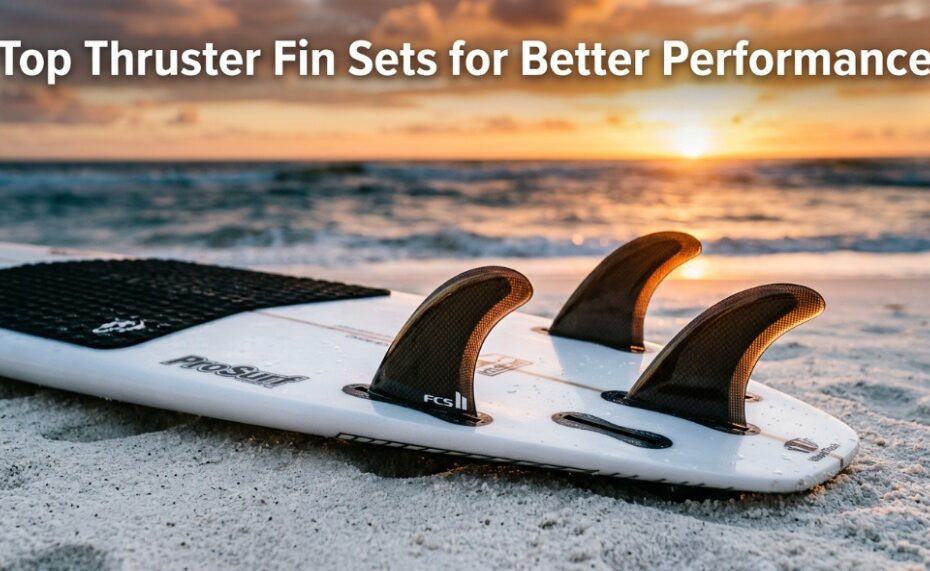
Thruster fin sets are the most popular surfboard fin configuration because they balance speed, control, drive, and maneuverability in almost every wave condition. A quality tri-fin setup gives surfers better rail-to-rail transitions, tighter turns, and more predictable performance compared to many alternative fin systems.
Why Do Thruster Fin Sets Matter for Surf Performance?
Thruster fin sets directly affect how your surfboard accelerates, turns, grips the wave face, and responds during maneuvers. Choosing the wrong fins can make even a premium surfboard feel slow, unstable, or difficult to control.
Many surfers spend thousands on boards while ignoring the importance of fins. That mistake often leads to weak bottom turns, poor drive down the line, and unnecessary drag in critical sections. The difference between average and high-performance surfing frequently comes down to the fin setup under your board.
The modern thruster design changed competitive surfing forever after Australian surfer Simon Anderson introduced the three-fin concept in the early 1980s. Today, the thruster remains the standard setup used across professional surfing, including events organized by the World Surf League (WSL).
A properly matched thruster fin set can improve:
- Speed generation
- Wave hold during powerful turns
- Responsiveness in steep sections
- Stability in larger surf
- Control during aerial maneuvers
- Consistency across varying wave conditions
For surfers looking to maximize board performance, upgrading fins is often one of the fastest and most affordable improvements available.
What Is a Thruster Fin Set?
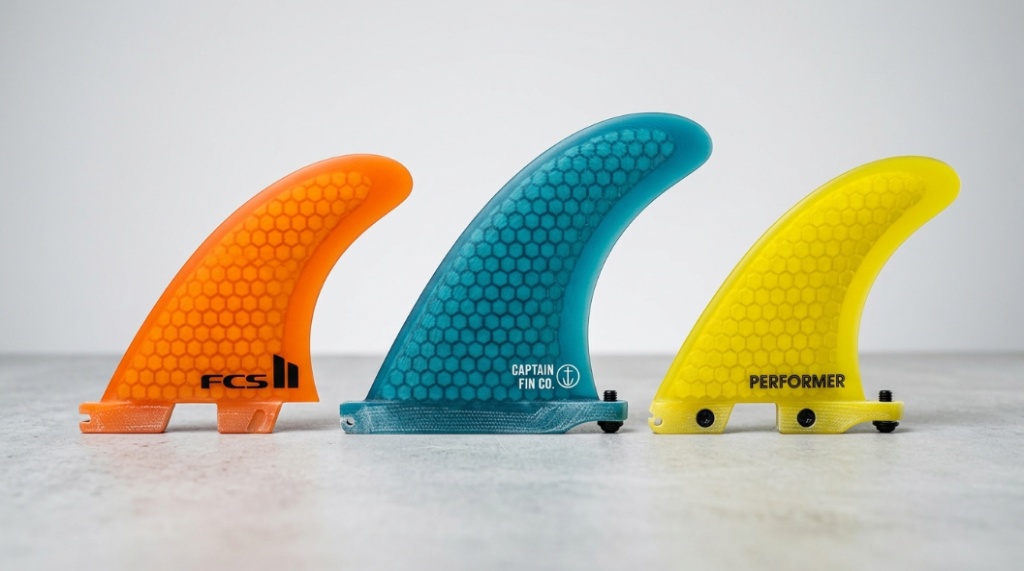
A thruster fin set is a three-fin configuration featuring one center fin and two side fins designed to balance speed, maneuverability, and control.
The tri-fin setup became the industry standard because it combines the drive of larger single fins with the looseness of twin-fin designs. In a thruster arrangement, the side fins generate speed and hold, while the center fin adds stability and directional control.
Most modern shortboards use thruster fin systems because they perform well in:
- Beach breaks
- Point breaks
- Reef breaks
- Small waves
- Overhead surf
Thruster fins are commonly made from:
- Fiberglass
- Honeycomb composites
- Carbon fiber blends
- Thermoplastic materials
High-end performance fins usually combine lightweight cores with rigid flex patterns to improve energy transfer during turns.
What Are the Best Thruster Fin Sets for Better Performance?
The best thruster fin sets combine speed, control, release, and responsiveness based on wave conditions, surfer weight, and riding style.
Different fin templates create different sensations underfoot. Some emphasize drive and hold, while others prioritize looseness and rapid pivots.
1. Futures F6 Thruster
The Futures F6 is known for balanced all-around performance with excellent speed generation and reliable control.
This fin works especially well for intermediate and advanced surfers riding performance shortboards. Its neutral template allows smooth transitions without feeling too stiff.
- Best for: Everyday performance surfing
- Wave range: Waist-high to overhead
- Strength: Versatility
- Material: Honeycomb composite
2. FCS II Performer Tri Set
The FCS II Performer series offers predictable control with balanced drive and release.
These fins are ideal for surfers who want consistency across mixed conditions. The Inside Foil Technology (IFT) helps maintain speed through turns.
- Best for: All skill levels
- Wave range: Small to medium surf
- Strength: Stability and flow
- Material: Performance Core
3. Captain Fin Dane Reynolds Template
Dane Reynolds’ template delivers explosive turns and quick release for progressive surfing.
The upright profile allows tighter arcs and responsive snaps in critical sections. Many surfers prefer these fins for punchy beach breaks.
- Best for: Progressive surfing
- Wave range: Chest-high to overhead
- Strength: Quick responsiveness
- Material: Fiberglass
4. Channel Islands AMK Template
The AMK thruster set provides strong drive and hold during powerful carves.
Developed alongside professional surfers, this template suits surfers who push hard off the bottom and prefer committed rail surfing.
- Best for: Power surfing
- Wave range: Medium to large waves
- Strength: Drive and hold
- Material: Carbon hybrid
5. Firewire Velocity Fin Set
The Firewire Velocity setup emphasizes speed generation in weaker waves.
These fins help maintain momentum in flatter sections where many traditional fins lose acceleration.
- Best for: Small-wave performance
- Wave range: Knee-high to shoulder-high
- Strength: Speed and glide
- Material: Lightweight composite
How Do Thruster Fins Improve Surfboard Control?
Thruster fins improve control by increasing directional stability and creating balanced water flow during turns.
The side fins generate lift and projection, while the center fin prevents excessive sliding. Together, they create controlled resistance that allows surfers to push harder through maneuvers.
Compared to twin-fin setups, thrusters generally offer:
- More predictable turning
- Better grip on steep faces
- Improved hold during bottom turns
- Greater stability in powerful surf
This is why most competitive surfers still prefer thrusters in demanding conditions.
What Size Thruster Fin Set Should You Choose?
The ideal thruster fin size depends primarily on surfer weight, board dimensions, and wave conditions.
Using fins that are too small can reduce hold and drive. Oversized fins may feel stiff and difficult to pivot.
| Surfer Weight | Recommended Fin Size | Typical Label |
|---|---|---|
| Under 65 kg | Small | S |
| 65–80 kg | Medium | M |
| 80–95 kg | Large | L |
| 95+ kg | Extra Large | XL |
However, wave type also matters. Smaller fins often feel faster in weak waves, while larger fins provide extra hold in heavy surf.
Should Beginners Use Large Thruster Fins?
Beginners usually benefit from medium-to-large thruster fins because they provide added stability and smoother tracking.
Larger fins help reduce unwanted sliding and make pop-ups feel more controlled while learning.
Which Fin Material Performs Best?
Fiberglass and carbon-composite fins generally provide the best high-performance feel due to their controlled flex and responsiveness.
Fin flex influences how energy transfers during turns. Stiffer fins create immediate response and drive, while softer fins feel smoother and more forgiving.
Fiberglass Fins
Fiberglass fins provide consistent flex and reliable hold. Many professional surfers still prefer fiberglass because of its predictable feel.
Carbon Fiber Fins
Carbon fins are lighter and stiffer, making them ideal for explosive surfing and quick acceleration.
Honeycomb Fins
Honeycomb cores reduce weight while maintaining moderate flex patterns. These fins balance speed and comfort well.
Plastic or Composite Fins
Entry-level composite fins are affordable but typically lack the responsiveness of premium materials.
Are Thruster Fins Better Than Quad Fins?
Thruster fins offer better control and predictability, while quad fins generally provide more speed and down-the-line drive.
The best option depends on surfing style and wave conditions.
| Feature | Thruster Setup | Quad Setup |
|---|---|---|
| Control | Excellent | Good |
| Speed | Good | Excellent |
| Pivot Turns | Excellent | Moderate |
| Wave Hold | Very Good | Good |
| Small-Wave Performance | Good | Excellent |
| Critical Surf | Excellent | Good |
Professional surfers often switch between both systems depending on conditions, but the tri-fin setup remains the default choice for all-around surfing.
What Fin Shape Works Best for Performance Surfing?
Balanced rake, moderate base width, and responsive tip flex usually create the best all-around performance fin template.
Several design features affect performance:
Rake
More rake creates longer drawn-out turns and increased hold. Upright fins create tighter, quicker turns.
Base Width
A wider base generates more drive and acceleration.
Foil
The foil controls water flow and lift. Inside foils improve speed and responsiveness.
Tip Flex
Flexible tips create smoother release during turns, while stiff tips increase immediate response.
Many modern performance fins combine multiple flex zones to balance speed and control.
How Often Should You Replace Thruster Fins?
Thruster fins should be replaced when they show cracks, major chips, looseness, or noticeable performance loss.
Even small damage can disrupt water flow and reduce efficiency. Surfers who travel frequently or surf powerful waves often replace fins more regularly.
Signs your fins need replacement include:
- Visible stress cracks
- Loose fin bases
- Uneven wear
- Reduced responsiveness
- Excessive flex
Regular inspection helps maintain consistent performance and prevents unexpected breakage in the water.
What Are the Best Thruster Fins for Small Waves?
Smaller, more upright thruster fins generally perform best in weak or mushy waves because they increase responsiveness and reduce drag.
Many surfers choose lightweight honeycomb or carbon-blend fins for small-wave sessions because they generate speed more easily.
Key features for small-wave fins:
- Reduced surface area
- Upright templates
- Lighter construction
- Faster release
Popular small-wave options include:
- FCS Reactor
- Futures Rasta Quad/Tri hybrids
- Firewire Velocity
- Captain Fin CF Pivot templates
Do Expensive Performance Fins Actually Make a Difference?
Yes, premium performance fins often improve responsiveness, speed generation, and energy transfer compared to budget fins.
The difference becomes especially noticeable for intermediate and advanced surfers. High-end fins use refined materials, engineered flex patterns, and hydrodynamic foils developed through extensive testing.
Professional surfers and shapers frequently compare fins to tires on a performance car. Even the best surfboard cannot perform properly with poor fins.
According to surfing retailers and manufacturer testing, many surfers report noticeable improvements after upgrading from stock plastic fins to premium fiberglass or carbon models.
How Can You Match Thruster Fins to Your Surfing Style?
Choosing the right thruster fins depends on whether you prioritize speed, control, carving, aerials, or small-wave flow.
For Power Surfers
Larger fins with more rake provide strong hold and projection during deep carves.
For Progressive Surfers
Upright templates allow fast direction changes and quick release for airs and snaps.
For Everyday Surfing
Balanced all-around templates offer consistency across changing conditions.
For Small-Wave Surfers
Lighter fins with reduced drag improve speed generation in weaker surf.
Experimenting with fin combinations is one of the most effective ways to fine-tune board performance without buying multiple surfboards.
Conclusion: Which Thruster Fin Set Is Best for Better Performance?
The best thruster fin set is the one that matches your weight, surfing style, wave conditions, and board design. For most surfers, a balanced tri-fin setup delivers the ideal combination of speed, control, responsiveness, and versatility.
Modern performance fins have evolved far beyond basic plastic templates. Today’s designs use advanced materials, engineered flex patterns, and hydrodynamic foils that significantly influence how a surfboard performs.
If you want tighter turns, stronger drive, cleaner rail transitions, and better confidence in critical sections, upgrading your fins is one of the smartest equipment changes you can make.
Start with an all-around thruster template, test different materials and sizes, and pay attention to how your board responds in different wave conditions. Small adjustments in fin setup often create major improvements in surfing performance.
The right fins will not magically improve technique overnight, but they can unlock the full potential of your board and help you surf with more speed, flow, and control.
Frequently Asked Questions About Thruster Fin Sets
What is the advantage of a thruster fin setup?
A thruster fin setup provides balanced speed, control, and maneuverability. It offers better stability and predictable turning compared to many alternative fin configurations.
Are thruster fins good for beginners?
Yes. Thruster fins are excellent for beginners because they provide consistent control, smoother tracking, and better stability during takeoffs and turns.
Do larger fins increase speed?
Larger fins can improve drive and hold, but they may also create more drag. Speed depends on balancing fin size with wave conditions and surfer weight.
Which fin material is best for performance surfing?
Fiberglass and carbon-composite fins are widely considered the best materials for high-performance surfing because they offer superior flex control and responsiveness.
Can changing fins improve my surfboard?
Yes. Upgrading fins can significantly improve responsiveness, speed generation, turning ability, and overall board feel without replacing the surfboard itself.
Are quad fins faster than thrusters?
Quad fins generally generate more down-the-line speed, especially in smaller waves. Thrusters typically offer better control and pivot performance.
How long do surfboard fins last?
Quality surfboard fins can last several years with proper care. However, cracks, chips, looseness, or excessive wear are signs that replacement may be necessary.
📌 Related Reads
Discover: Best Swivel Leash for Safer Surf Sessions
Explore: How to Select the Best Hats for Golfers of All Skill Levels